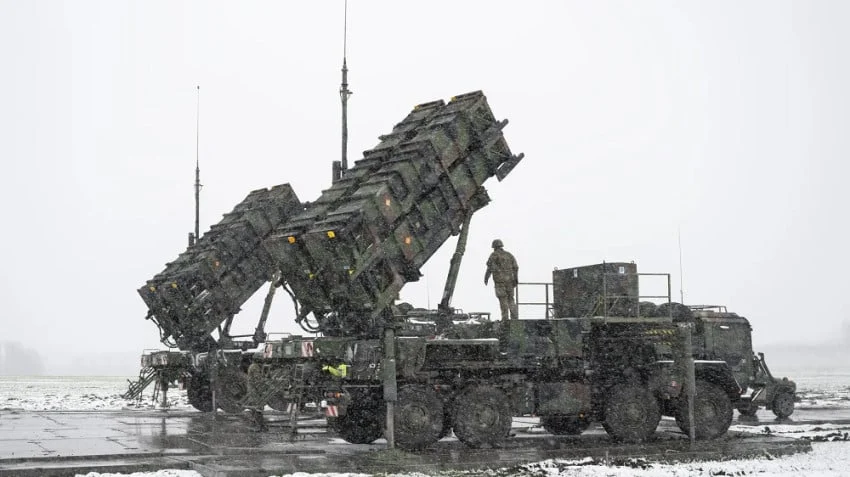
WASHINGTON — Sustained and extensive military assistance provided to Ukraine has severely strained the operational capabilities, resource allocation, and overall combat readiness of United States military forces stationed in Europe. According to a recently published comprehensive report by the Pentagon’s Office of Inspector General, the ongoing transfer of weapons, munitions, and financial resources to Kyiv has created a significant strain on the United States Army Europe and Africa, commonly known as USAREUR-AF. The oversight body’s findings indicate that supporting the Ukrainian armed forces without dedicated, long-term congressional funding streams has forced military commands to continuously redirect critical operational funds away from routine troop deployments, necessary training exercises, and the procurement of vital equipment spare parts.
The newly released report underscores a growing institutional crisis within the Department of Defense. As Washington navigates a complex political landscape defined by shifting legislative priorities and a newly inaugurated presidential administration under Donald Trump, military planners are increasingly forced to balance global deterrence responsibilities against the immediate, high-volume demands of the war in Eastern Europe. The findings highlight a systemic vulnerability: the continuous depletion of active military stocks and the subsequent financial shortfalls required to replenish America’s own strategic reserves.
Background Context of US Military Assistance to Ukraine
Since the escalation of the conflict in February 2022, the United States has positioned itself as the principal international benefactor to Ukraine. Successive legislative packages authorized under the administration of former President Joe Biden have funneled unprecedented amounts of military, economic, and humanitarian assistance into the war effort. According to official figures compiled by government oversight bodies and the Department of Defense, total U.S. commitments to Ukraine have surpassed $198 billion.
This vast sum encompasses multiple avenues of support, including the Presidential Drawdown Authority (PDA), which allows the president to transfer weapons directly from existing U.S. military stockpiles without prior congressional approval during emergencies. While PDA has proven vital in providing Kyiv with immediate artillery shells, air defense systems, and anti-tank weaponry, it has concurrently introduced severe logistical challenges for the Pentagon. Every artillery round, missile battery, and armored vehicle drawn from U.S. bases represents a direct subtraction from the military’s own inventory—inventories that are carefully calculated to meet national defense strategies against peer competitors such as China and Russia.
Chronology and Legislative Gridlock Over Fiscal Allocations
The roots of the current operational strain within USAREUR-AF trace back to intense legislative debates in the United States Congress regarding fiscal allocations for fiscal years 2025 and 2026. Throughout 2023 and 2024, partisan divisions deepened significantly over the concept of open-ended military assistance to Ukraine. A substantial bloc of lawmakers, primarily within the Republican Party, began to voice staunch opposition to approving large-scale emergency spending bills that lacked clear strategic timelines, financial accountability mechanisms, or burden-sharing agreements with European allies.
When Congress ultimately failed to approve a dedicated, comprehensive funding package specifically earmarked for Ukraine for the 2025 and 2026 fiscal years, the administrative burden shifted directly onto regional military commands. Without dedicated appropriations to cover the costs associated with supporting Kyiv’s forces, USAREUR-AF leadership was compelled to absorb these expenses internally.
The inspector general’s report details how this funding gap triggered immediate, compounding consequences. Resources originally designated for European theater security cooperation, routine multinational exercises, and standard troop rotation maintenance were systematically repurposed. Consequently, units returning from grueling deployments across Eastern Europe and the Baltic states frequently left behind unpaid maintenance invoices and unfulfilled logistical orders, creating a backlog that directly impedes the modernization and repair cycles of vital military hardware.
Four Core Reasons Why Ukrainian Aid Strains the US Military
The Pentagon watchdog’s assessment categorizes the structural and operational pressures facing the armed forces into four distinct challenges, painting a detailed picture of systemic strain:
- The Complete Absence of Dedicated Congressional Allocations
The foundational catalyst for the current readiness crisis is the absence of targeted, recurring funding for Ukraine within the 2025 and 2026 federal budgets. Because Congress did not pass specialized appropriations to offset the costs incurred by USAREUR-AF, the command structure was forced to improvise. Operating funds that sustain day-to-day military readiness, administrative overhead, and regional posture operations were diverted to manage the immense logistical footprint required to process, transport, and monitor military aid entering Eastern Europe.
The inspector general explicitly noted in congressional testimony that this persistent resource gap has exerted a measurable, negative impact on the overall readiness posture of USAREUR-AF, degrading tactical training effectiveness and diminishing the command’s capacity to execute comprehensive contingency operation plans.
- Depletion and Diversion of Critical Reserve Inventories and Spare Parts
To maintain a continuous flow of high-demand munitions and tactical vehicles to the front lines in Ukraine, the Department of Defense repeatedly tapped into active departmental reserves and strategic contingency stocks. Beyond complete weapons systems, the logistical pipeline absorbed funds that were explicitly budgeted for routine operational deployments and the acquisition of critical spare parts.
Prior quarterly evaluations conducted by the inspector general’s office revealed that USAREUR-AF had previously redirected a cumulative total of $364.6 million from non-Ukraine accounts to sustain the sudden influx of operational requirements generated by the conflict. This financial juggling act left active-duty units operating with diminished equipment availability rates, increased mechanical failure risks during training exercises, and deferred maintenance schedules that compound over time.
- The Stockpile Replenishment Deficit and Financial Shortfalls
Perhaps the most formidable long-term challenge identified in the report is the profound financial barrier associated with restocking depleted arsenals. The Pentagon is legally and strategically obligated to backfill the equipment and ammunition transferred to foreign partners to ensure that American forces maintain technological and numerical superiority in any future conflict. However, the inspector general documented an alarming deficit of approximately $38.6 billion required strictly to replenish U.S. military stocks that have been drawn down for Ukraine.
This immense multi-billion-dollar funding shortfall reflects the skyrocketing costs of modern defense manufacturing, prolonged production lead times for complex guidance systems and artillery shells, and the strain placed on the domestic defense industrial base. Defense contractors, operating under legacy multi-year contracts, have struggled to scale production rapidly enough to simultaneously supply Ukraine, meet domestic military procurement goals, and satisfy foreign military sales agreements.
- Political Friction, Burden-Sharing Debates, and Administrative Limitations
The operational difficulties within the Department of Defense coincide with a major political transition in Washington. Following his return to the presidency, Donald Trump adopted a staunchly skeptical stance regarding multi-billion-dollar foreign aid packages, consistently advocating for a drastic reduction in U.S. financial exposure to the war. The administration has sought to pivot the primary financial and logistical burden of supporting Kyiv onto European members of the North Atlantic Treaty Organization (NATO), arguing that continental security is primarily a European responsibility.
Despite this clear political directive, the current administration faces strict legal constraints. Of the total funding approved under previous legislative acts, approximately $65 billion remained available for potential disbursement as of late September. Crucially, however, roughly $60.71 billion of that remaining pool was already tightly bound by binding legal contracts, intergovernmental agreements, and formal procurement obligations entered into during the Biden administration. Consequently, executive branch officials possess a severely restricted legal window to unilaterally cancel, freeze, or redirect these ongoing financial commitments without risking severe contractual breaches and domestic legal challenges.
European Allies and the Burden-Sharing Dilemma
The inspector general’s findings have reignited intense policy debates in Washington and European capitals regarding the concept of burden-sharing. For years, U.S. officials have urged European NATO allies to elevate their defense spending above the target threshold of two percent of Gross Domestic Product (GDP). While several European nations, particularly those situated on the alliance’s eastern flank such as Poland and the Baltic states, have dramatically increased their defense budgets and military contributions, critics argue that Western European industrial powers have been comparatively slow to ramp up domestic munitions manufacturing.
The report’s documentation of U.S. military strain provides empirical backing to lawmakers who argue that American security cannot be sustained at the expense of its own force readiness. Proponents of this view assert that the United States must prioritize the modernization of its Indo-Pacific posture to deter potential peer adversaries, contending that the protracted expenditure of American artillery, missile defense assets, and logistical bandwidth in Europe risks leaving the nation strategically overextended.
Broader Strategic Implications and Future Outlook
The publication of the Pentagon inspector general’s report serves as a stark reminder of the hidden costs associated with prolonged proxy conflicts and large-scale foreign military assistance. While the aid has undeniably bolstered Ukraine’s defensive capabilities against Russian forces, the institutional toll on the United States military is no longer a theoretical concern; it is a measurable reality documented by internal defense watchdogs.
As Congress approaches future budgetary negotiations and the executive administration formulates its long-term foreign policy strategy toward Eastern Europe, defense analysts suggest that future assistance models will likely undergo a fundamental transformation. Any subsequent support for Kyiv is expected to rely heavily on strictly enforced European co-financing, increased utilization of European defense industrial capacity, and rigid legislative guardrails designed to insulate active-duty U.S. military units from resource depletion.
Ultimately, the findings compel defense planners to confront a difficult strategic calculus: balancing the moral and geopolitical imperatives of supporting an allied nation under attack against the non-negotiable requirement of maintaining the absolute combat readiness, logistical resilience, and operational dominance of the United States Armed Forces.