The Government of Norway has announced an additional US$100 million in climate funding for Indonesia, recognizing the nation’s significant and verifiable achievements in reducing greenhouse gas emissions within the forestry and land-use sectors between 2020 and 2023. This financial commitment marks the fifth phase of a long-standing environmental partnership between the two countries, reinforcing international confidence in Indonesia’s climate governance and forest conservation strategies.
The formal announcement was delivered during a bilateral meeting at the Indonesian Pavilion on the sidelines of the United Nations Climate Change Conference (COP31) in Antalya, Turkey. The infusion of funds underscores a shared dedication to transforming verified environmental data into tangible, sustainable climate action.
Financial Structure and Results-Based Framework
The newly announced contribution operates under the Results-Based Contribution (RBC) mechanism, representing the fifth installment of financial support disbursed by Oslo. Notably, this phase introduces a valuation of US$10 per ton of carbon dioxide equivalent (CO2e), doubling the rate utilized across the previous four funding cycles, which stood at US$5 per ton CO2e.
This upward adjustment reflects both the stringent verification standards met by Indonesia and a growing global recognition of the economic value inherent in tropical rainforest preservation. Prior to this announcement, Indonesia had already accumulated a total of US$216 million through four preceding tranches of Norwegian results-based payments, covering verified emission reductions achieved across the 2016–2017 and 2019–2020 monitoring periods.
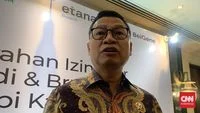
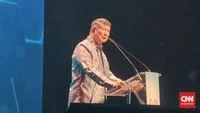
Hashim S. Djojohadikusumo, the Indonesian Presidential Special Envoy for Climate and Energy, formally welcomed the contribution during the bilateral discussions in Turkey. He emphasized that international financial support is a critical catalyst for bolstering domestic conservation efforts and mitigating global climate anomalies. According to Hashim, sovereign nations serving as custodians of tropical rainforests must receive fair financial backing, as their ecological stewardship delivers compounding benefits to the global ecosystem.
"On this occasion, we welcome the announcement of an additional contribution of US$100 million from Norway as the fifth contribution in this partnership," Hashim stated. "This continued support reflects our shared trust and commitment to turning verified achievements into sustainable climate action. For Indonesia, protecting forests means protecting communities, safeguarding water and food security, and strengthening national resilience. Economic progress must go hand in hand with environmental protection."
Strategic Context and Broader Financial Mechanisms
Beyond the bilateral arrangement with Norway, Indonesia is actively spearheading broader multilateral funding architectures to secure long-term capital for ecological preservation. A core pillar of this strategy is the Tropical Forest Forever Facility (TFFF), an international financing mechanism designed to reward developing nations for maintaining and expanding their tropical forest cover.
As a member of the TFFF governing board, Indonesia has committed a substantive investment of US$1 billion to the facility. Jakarta has signaled its readiness to operationalize this commitment in tandem with parallel contributions from Brazil, aiming to establish a transparent, equitable global fund that respects national development priorities without imposing prohibitive bureaucratic burdens.
Concurrently, Indonesia is scaling up its domestic carbon market infrastructure, emphasizing high-integrity standards. Policymakers have maintained that market-based mechanisms should serve exclusively as complementary instruments rather than serving as a substitute for the core obligations of developed nations to provide public climate finance.
Domestic Implementation: FOLU Net Sink 2030 and Social Forestry
At the domestic level, Indonesia’s climate mitigation trajectory is anchored by the Forestry and Other Land Use (FOLU) Net Sink 2030 operational plan. This comprehensive framework aims to ensure that the greenhouse gas absorption capacity of Indonesia’s forestry and land-use sectors surpasses or equals total emissions by the end of the decade.
Implementation of the FOLU Net Sink target relies on aggressive multi-sectoral coordination, encompassing the reduction of deforestation rates, the prevention of forest degradation, the conservation of carbon-rich peatlands and mangrove ecosystems, and the large-scale restoration of damaged ecosystems.
Moh Jumhur Hidayat, Minister of Environment and Head of the Environmental Control Agency (KLH/BPLH), highlighted that achieving the targets outlined in Indonesia’s Nationally Determined Contribution (NDC) requires synchronized execution across both public and private spheres.
"The forestry and land-use sector plays a foundational role in our climate strategy," Hidayat explained. "Through targeted interventions—including the curtailment of illegal logging, the protection of peat and mangrove biomes, and systematic ecological rehabilitation—we are solidifying our climate resilience. The KLH/BPLH remains committed to safeguarding the integrity of our NDC metrics through robust Measurement, Reporting, and Verification systems."
To fortify these ambitions, structural adjustments are underway in the enforcement and grassroots engagement sectors. President Prabowo Subianto has issued directives to exponentially expand the nation’s corps of forest rangers and wildfire prevention personnel, scaling the workforce from 5,000 to 70,000 individuals. This workforce augmentation is designed to enhance territorial monitoring, curb illegal land conversion, and mitigate the risk of seasonal forest and land fires.
Furthermore, grassroots participation remains a cornerstone of conservation policy. The government’s Social Forestry program has successfully granted legal management access over 8.3 million hectares of forest land to approximately 1.4 million rural households.
Deputy Minister of Forestry Rohmat Marzuki pointed to grassroots initiatives, such as the Fire Care Communities (Masyarakat Peduli Api), as vital components of decentralized environmental management. "Local communities living inside and adjacent to forested regions are indispensable partners in sustainable forest stewardship," Marzuki noted. "By embedding their traditional knowledge into formal protection frameworks, we not only protect our ecosystems but also secure sustainable economic opportunities for rural livelihoods."
International Validation and Future Implications
The international community has closely monitored Indonesia’s policy pivots, viewing the recent financial disbursement from Oslo as a testament to effective policy execution. Sigrun Aasland, Norway’s Minister of Climate and Environment, commended Jakarta for its persistent dedication to lowering carbon output while balancing socio-economic imperatives.
"Indonesia has demonstrated that ambitious policies and targeted implementation can deliver profound, measurable results for the climate, the natural environment, and local communities," Aasland remarked. "Through this results-based contribution, we formally acknowledge and applaud Indonesia’s progressive journey in safeguarding its vital forest resources."
Looking ahead, the alignment of these international funds with domestic regulatory frameworks remains paramount. Indonesian authorities have stressed that all results-based disbursements must strictly adhere to the national Economic Value of Carbon framework, existing NDC targets, MRV protocols, and the National Registry System for Climate Change Control. This strict regulatory integration is designed to eliminate accounting discrepancies, prevent double counting, and ensure complete transparency.
As global climate negotiations continue to grapple with financing deficits, Indonesia’s dual approach—securing bilateral results-based funding while pioneering multilateral mechanisms like the TFFF—offers a blueprint for tropical nations aiming to monetize ecological preservation while driving sustainable domestic growth.