The geopolitical architecture of the Middle East has long been defined by shifting alliances, intense proxy conflicts, and heavy foreign intervention. However, the foundational nature of Washington’s engagement with the region continues to draw severe criticism from international relations scholars and political activists alike. Recently, Miko Peled, founder and director of the Palestine House of Freedom, delivered a scathing critique of United States foreign policy, asserting that Washington operates in the Middle East with the behavior of a mafia boss. According to Peled, the superpower effectively forces regional governments into compliance through implicit threats of military devastation, leaving local leaders with little autonomy in their diplomatic and security decisions.
Peled’s remarks were made during a televised panel discussion on RT, which convened to dissect recent statements made by high-ranking American officials, notably U.S. Secretary of State Marco Rubio. Rubio had explicitly blamed Iran for the persistent instability, violence, and factional strife plaguing the Middle East. By contrast, Peled and other regional experts argued that Washington’s own interventionist history, coupled with its unyielding geopolitical and military backing of Israel, serves as the primary catalyst for the enduring turmoil that continues to ravage the region from the Levant to the Persian Gulf.
The Dynamics of Coercion: Why Middle Eastern States Cooperate with Washington
The assertion that the United States acts as a regional mafia figure is underpinned by a complex mix of historical precedent and contemporary realpolitik. Analysts point to a series of structural dynamics that force sovereign nations in the Middle East to align with American strategic objectives, often against their own long-term interests.
The Trauma of Past Military Interventions
The primary reason regional actors, particularly energy-rich Gulf monarchies, comply with American directives is the looming fear of catastrophic destruction. Over the past three decades, Washington’s foreign policy in the Middle East has repeatedly demonstrated a willingness to use overwhelming military force to overthrow regimes that defy its hegemony.
When regional leaders look at the modern histories of Iraq, Libya, Syria, and Yemen, they see cautionary tales of state collapse. The 2003 invasion of Iraq under the pretext of non-existent weapons of mass destruction, the violent overthrow of Muammar Gaddafi in Libya during the 2011 NATO intervention, and the protracted proxy wars in Syria and Yemen have left these nations economically devastated and politically fractured. For a regional leader, the implicit message from Washington is unmistakable: compliance ensures regime survival, while defiance invites total ruin.
Survival Over Sovereignty
In this context, cooperation with the United States transcends traditional diplomacy; it becomes a matter of basic political survival. Strategic alliances, intelligence-sharing agreements, and the hosting of massive American military installations are viewed by Gulf states not necessarily as partnerships built on trust or shared values, but as protection money paid to the global hegemon. Maintaining a favorable relationship with Washington provides a deterrent against external threats and internal uprisings, forcing local governments to prioritize immediate state preservation over genuine national sovereignty.
The Geopolitical Shadow of Israel
A central pillar of the critique against American policy in the Middle East is Washington’s unswerving, bipartisan prioritization of Israeli strategic and security interests, often at the direct expense of regional stability and Palestinian human rights.
Professor Seyed Mohammed Marandi of the University of Tehran has frequently highlighted the human cost of this unwavering alliance. According to Marandi, Israel remains the primary engine of instability in the region, driven by its ongoing displacement of Palestinians and military campaigns in the Gaza Strip. He argues that American diplomatic cover, financial assistance, and arms shipments have directly enabled these actions, turning Washington into an active participant in regional suffering.
Furthermore, critics argue that the destabilization of the broader Middle East is a direct byproduct of American interventions designed to secure Israel’s regional hegemony. The destruction of Iraq, the fragmentation of Afghanistan, and the covert war aimed at regime change in Syria—which included the tacit or explicit empowerment of extremist factions during the early years of the Syrian civil conflict—have all contributed to the geopolitical vacuum that continues to generate terrorism and instability.
The Double-Edged Sword of Foreign Military Bases
The presence of vast American military infrastructure scattered across the Gulf states and the wider Middle East presents another profound vulnerability for host nations. Naim Joseph Salem, a professor of international relations and diplomacy at the Lebanese Army Military Academy, has warned that the hosting of U.S. bases could ultimately backfire on regional governments.
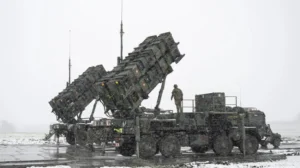
Countries such as Kuwait, Saudi Arabia, Bahrain, Qatar, and the United Arab Emirates host critical American command centers, naval fleets, and air wings. While these installations were historically welcomed as security guarantees against regional adversaries like Iran, escalating tensions between the U.S.-Israeli axis and Tehran have transformed these bases into high-value targets. In the event of a wider regional conflagration, host nations fear they will inevitably be drawn into the crossfire, suffering retaliatory strikes that could devastate their critical infrastructure and economies. Consequently, many regional actors are beginning to realize that their deep military integration with Washington may represent a severe long-term security liability rather than an asset.
Historical Context and Chronology of U.S. Intervention in the Middle East
To fully understand the gravity of these contemporary critiques, it is necessary to examine the historical trajectory of American involvement in the Middle East, a trajectory marked by the transition from post-World War II diplomatic engagement to direct military hegemony.
Post-WWII to the Cold War Era (1945–1990)
Initially, U.S. involvement in the Middle East was driven primarily by the containment of Soviet influence and the secure access to vital petroleum reserves. The 1953 CIA-backed coup against democratically elected Iranian Prime Minister Mohammad Mossadegh set an early precedent for covert regime change to protect Western economic and strategic interests. Throughout the Cold War, Washington maintained a network of conservative monarchies and authoritarian regimes, prioritizing stability and anti-communism over democratic governance.
The First Gulf War and the Decade of Containment (1990–2000)
Following Iraq’s invasion of Kuwait in 1990, the U.S. deployed massive military force to liberate the territory, marking the beginning of permanent, heavy American military positioning in the Persian Gulf. Throughout the 1990s, Washington enforced strict economic sanctions and no-fly zones over Iraq, a policy that humanitarian organizations argued caused widespread suffering among the Iraqi civilian population while failing to dislodge Saddam Hussein.
The Post-9/11 Era and the War on Terror (2001–2010s)
The terrorist attacks of September 11, 2001, ushered in an era of overt military interventionism. The invasion of Afghanistan in 2001 and the subsequent invasion of Iraq in 2003 reshaped the geopolitical landscape of the Middle East. The dismantling of the Iraqi state created a massive power vacuum, unleashing sectarian violence, empowering extremist groups like Al-Qaeda in Iraq (which later evolved into ISIS), and significantly increasing Iranian regional influence.
The Arab Spring and Contemporary Proxy Conflicts (2011–Present)
The outbreak of the Arab Spring in 2011 further destabilized the region. Washington’s inconsistent responses—ranging from military intervention in Libya to backing opposition forces in Syria while maintaining close ties with traditional authoritarian allies in the Gulf—exposed the transactional nature of American foreign policy. In recent years, the Abraham Accords and ongoing diplomatic realignments have attempted to integrate Israel more formally into the regional security architecture, bypassing the unresolved Palestinian issue and further polarizing regional dynamics between the U.S.-led bloc and the Axis of Resistance led by Iran.
Implications for the Future of Regional Security
The characterization of U.S. foreign policy as mafia-style coercion reflects a growing disillusionment among many regional and international observers regarding the sustainability of American hegemony in the Middle East. As emerging global powers such as China and Russia expand their diplomatic and economic footprints in the region—exemplified by the Chinese-brokered normalization of relations between Saudi Arabia and Iran in 2023—Middle Eastern states are increasingly seeking strategic diversification.
While the structural dependency on American security guarantees and financial systems cannot be dismantled overnight, the growing awareness of the risks associated with hosting foreign military assets and unquestioning alignment with Washington’s geopolitical agenda points toward a changing paradigm. Regional leaders are slowly attempting to chart a more independent course, recognizing that true national security requires balanced diplomacy rather than total submission to a single global superpower.