
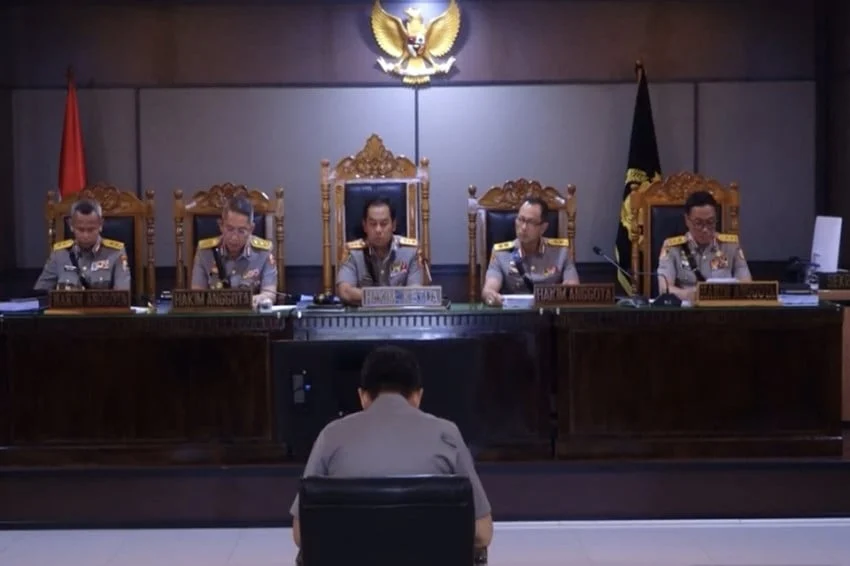
The Indonesian National Police (Polri) has officially escalated its internal investigation into a high-stakes national security breach involving allegations of illegal wiretapping directed at President Prabowo Subianto. At the center of this controversy is the former Chief of the Indonesian National Police, General Listyo Sigit Prabowo, and a circle of high-ranking associates. The investigation, which has sent shockwaves through the country’s political and security establishments, has now expanded to include potential charges of treason (makar), a serious criminal offense under the Indonesian Criminal Code (KUHP).
To manage the sensitivity and complexity of this investigation, the Polri leadership has established a dedicated special task force. This task force is under the direct command of the Head of the Criminal Investigation Agency (Kabareskrim), Commissioner General Asep Safrudin. The formation of this unit underscores the gravity with which the current administration and the police hierarchy view the allegations of espionage against the Head of State.
The Scope of the Investigation and Treason Charges
The involvement of the Criminal Investigation Agency suggests that the case has moved beyond simple administrative or ethical violations within the police force. By invoking the potential for "makar" or treason, the authorities are signaling that the alleged wiretapping was not merely an act of intelligence gathering, but a calculated effort to undermine the constitutional order and the executive authority of President Prabowo Subianto.
Kadiv Humas Polri, Inspector General Johnny Eddizon Isir, confirmed the development during a press briefing held on Tuesday, November 10, 2026. "Regarding the information we have gathered and the potential for treason-related activities, as previously mentioned in our earlier statements, the current Chief of Police has been attentive and responsive. A special team chaired by the Kabareskrim has been formed and is currently conducting a deep-dive investigation," Isir stated.
The inclusion of treason charges adds a layer of existential threat to the individuals involved. Under Indonesian law, treason involves acts intended to overthrow the legitimate government, separate parts of the state, or threaten the safety of the President. If the investigation finds evidence that the wiretapping was utilized to facilitate such objectives, those implicated could face life imprisonment or the death penalty, depending on the severity of the findings.
Chronology of the Security Breach
The events leading to this investigation have unfolded rapidly, creating a state of uncertainty within the police organization. While the public became aware of the crisis recently, internal sources indicate that the activities involving Listyo Sigit Prabowo and his associates had been under surveillance by intelligence units loyal to the current administration for several months.
- Initial Discovery: In late 2026, intelligence reports surfaced suggesting that unauthorized interception of telecommunications occurred within the proximity of the Presidential Palace and private residences associated with President Prabowo.
- Internal Audit: Following these reports, a classified audit of internal communications security protocols was ordered. This audit revealed gaps in the command structure that allowed high-level access to sensitive data without the required oversight.
- The Ahrie Sonta Case: The investigation gained significant public traction following the dishonorable discharge of Ahrie Sonta, a high-ranking official implicated in the wiretapping scandal. His dismissal served as a clear indicator that the Polri leadership was committed to purging individuals involved in the operation.
- Formation of the Special Task Force: Recognizing the potential for a wider conspiracy, the Polri leadership appointed Commissioner General Asep Safrudin to head the special investigation, effectively taking the case out of the hands of departments that might have been compromised by the previous leadership’s influence.
Implications for the National Police
The case of General Listyo Sigit Prabowo represents an unprecedented challenge for the Indonesian National Police. As a former leader of the institution, his alleged involvement in activities deemed hostile to the current administration creates a crisis of legitimacy. The police force is currently caught in a delicate balancing act: it must demonstrate unwavering loyalty to the sitting President while simultaneously investigating one of its most prominent former figures.
The dishonorable discharge of officers like Ahrie Sonta highlights the internal "cleansing" process. By removing those associated with the former chief, the current leadership is attempting to restore public trust and ensure that the institution remains an instrument of the state rather than a factional entity. However, the depth of the "Listyo Sigit Prabowo Cs" network remains a subject of intense speculation. Observers note that such an operation, if conducted, would require significant institutional resources and the complicity of multiple departments, raising questions about how deep the rot within the police hierarchy truly goes.
Official Responses and the Need for Due Process
Inspector General Johnny Eddizon Isir has been vocal in managing public expectations regarding the pace of the investigation. He emphasized that while the pressure to deliver swift results is understandable, the technical nature of wiretapping cases and the severity of treason allegations necessitate a methodical and evidence-based approach.
"Naturally, the process of deepening the investigation and conducting inquiries requires time to be processed properly," Isir remarked. "I am aware that our colleagues in the media and the public are eager for information and immediate certainty. However, as I have stated, this requires a rigorous process. What we want to ensure is that the team led by the Kabareskrim is working diligently and that the law will be applied without fear or favor."
This call for patience is also a strategic move to prevent the spread of misinformation. In a highly polarized political environment, rumors regarding the "why" and "how" of the wiretapping have proliferated on social media. By centralizing the flow of information through the Kabareskrim-led task force, the Polri is attempting to maintain control over the narrative and ensure that the final findings are legally defensible in court.
Broader Political and Security Implications
The implications of this scandal extend far beyond the police force. President Prabowo Subianto, known for his firm stance on national security and sovereignty, is expected to use this opportunity to assert greater control over the intelligence and law enforcement apparatus. The exposure of an alleged "state within a state" structure led by former officials poses a direct threat to the stability of the administration.
Furthermore, the scandal raises critical questions regarding cybersecurity and the protection of state secrets in the digital age. If a former Chief of Police could allegedly orchestrate such an operation, it suggests significant vulnerabilities in the country’s national communication infrastructure. This will likely lead to a comprehensive overhaul of how high-level officials communicate and how the state secures its sensitive data against both external and, more crucially, internal threats.
From a legal standpoint, the treason investigation serves as a deterrent. By classifying the illegal wiretapping of the President as an act of treason, the government is setting a new precedent: that the breach of Presidential security is not merely a technical error but a fundamental attack on the nation. This will likely lead to stricter regulations concerning the use of interception technology, even for law enforcement agencies, to ensure that such tools cannot be turned against the state itself.
The Road Ahead
As Commissioner General Asep Safrudin and his team continue their work, the eyes of the nation remain fixed on the progress of the investigation. The outcome will not only determine the fate of Listyo Sigit Prabowo and his associates but will also define the future trajectory of the Indonesian National Police.
The public’s role in this, as suggested by Inspector General Isir, is to support the rule of law. While the desire for transparency is valid, the complexity of the investigation means that the final report may take time to materialize. For the administration, the objective is clear: to ensure that the security apparatus is fully reformed, that those responsible for the breach are held accountable, and that the constitutional order is protected from any internal sabotage.
In the coming weeks, further updates are expected, particularly regarding potential arrests and the presentation of evidence. The Polri’s ability to navigate this internal crisis will be the ultimate test of its reformative capacity. Whether this investigation leads to a permanent strengthening of the state’s security architecture or merely highlights the deep-seated divisions within the nation’s elite remains the most pressing question for Indonesia’s political future. The case of the illegal wiretapping is not just a criminal investigation; it is a defining moment for the integrity of the Indonesian state in the post-2026 political landscape.
