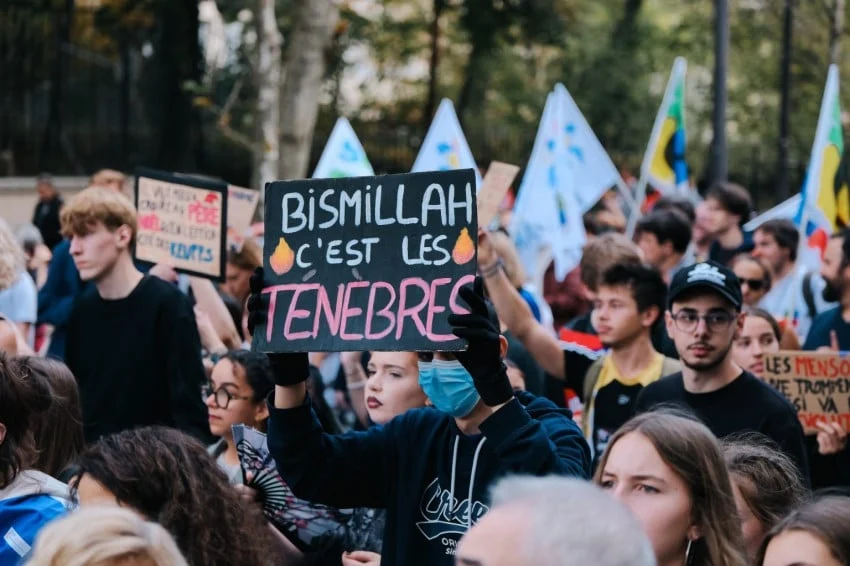
Paris stands on the precipice of renewed civil unrest as French authorities scramble to contain a fresh wave of nationwide protests. Tensions have reached a fever pitch following a last-minute decision by the Paris Prefecture of Police to prohibit a major demonstration route, a move that has drawn immediate legal challenges from trade unions and civil rights organizations. This volatile situation comes just one week after the country experienced widespread chaos, characterized by systemic looting, property damage, and intense clashes between protesters and law enforcement across multiple urban centers.
The current atmosphere in the French capital is marked by a deep-seated friction between the state’s mandate to maintain public order and the constitutionally protected right to assembly. As the government attempts to stabilize the situation, it has unveiled a multi-faceted security strategy, including the mobilization of 70,000 police officers, the implementation of restricted movement zones, and an emphasis on preemptive dialogue to prevent a repeat of the violence that crippled the nation’s commercial sectors earlier this month.
The Anatomy of the Conflict: A Timeline of Escalation
To understand the current crisis, one must look at the chronology of events that have led to this mobilization. The unrest did not emerge in a vacuum; it is the culmination of weeks of socioeconomic discontent.
- October 10: Initial calls for nationwide strikes and demonstrations are issued by major labor unions, citing rising inflation and concerns over government labor reforms.
- October 17: A pivotal day of protest turns into a night of widespread violence. Authorities report that over 3,000 retail outlets were vandalized or looted across France. Security forces, numbering 60,000, struggled to contain the scale of the disruption.
- October 20: Preparations for the upcoming Saturday march begin. Organizers announce a route from the iconic Place de la Bastille to the Place de la Nation.
- October 21 (Friday evening): The Paris Police Prefecture issues a surprise decree banning the planned route, citing intelligence regarding the high risk of violence. Instead, they mandate an alternative, less central route along the outer ring roads in southeastern Paris.
- October 22 (Saturday morning): Unions file urgent appeals with administrative courts to challenge the ban, arguing that the change in route constitutes an infringement on democratic rights.
Strategic Security Deployment: The "70,000" Initiative
Interior Minister Laurent Nuñez has confirmed that the government is adopting an unprecedented level of vigilance for this weekend’s events. The deployment of 70,000 police and gendarmerie personnel is designed to act as both a deterrent and a rapid-response mechanism.
The tactical composition of this force is significant. Beyond standard patrol officers, the government has authorized the deployment of specialized intervention units—forces trained specifically in riot control and high-intensity urban conflict. Furthermore, the presence of armored personnel carriers and water cannon vehicles is a clear signal that the Ministry of Interior is prepared for the eventuality of barricades and physical confrontation.
While the sheer number of personnel is striking, it is historically grounded. This scale of deployment mirrors the security operations executed on July 14, when national Bastille Day celebrations intersected with the heightened security requirements of a major international sporting event. The government’s reliance on these figures suggests that they view the current domestic situation as having the same risk profile as a high-stakes national holiday.
The Legal and Operational Deadlock
The primary point of contention currently rests on the deviation of the protest route. The Paris Police Prefecture justifies the change by stating that the traditional Bastille-to-Nation corridor is "high-risk" due to the narrow streets and the proximity to high-value commercial property, which served as targets for looters on October 17.
However, organizers argue that the state-mandated alternative route is intentionally designed to make the protest invisible and logistically difficult to manage. A spokesperson for one of the leading labor unions stated, "By pushing us to the periphery, the government is not preventing violence; they are creating a logistical bottleneck that will only exacerbate the frustration of our members."
From a tactical perspective, the police are concerned that the traditional route allows for "hit-and-run" tactics by fringe elements who embed themselves within peaceful marches. By utilizing the wider, more open outer highways, the police believe they can better monitor the crowd and isolate potential agitators before they reach the city center.
Socioeconomic Context: Why France is at a Boiling Point
The current unrest is not merely a reaction to a specific policy but reflects a broader malaise within French society. Economic data indicates that the cost-of-living crisis, exacerbated by energy price fluctuations and stagnant wage growth, has hit the lower-middle class particularly hard.
Recent analysis from the National Institute of Statistics and Economic Studies (INSEE) shows that purchasing power for the average household has seen its sharpest decline in three decades. When coupled with the recent legislative push for pension reform, the sense of disenfranchisement has catalyzed segments of the population that feel unheard by the traditional parliamentary process.
The violence seen on October 17—where 3,000 shops were impacted—highlights a specific frustration with symbols of wealth and consumption. The looting was not merely opportunistic; for many observers, it served as a manifestation of a deeper, anti-systemic rage that views current economic structures as fundamentally exclusionary.
Official Responses and Government Strategy
President Emmanuel Macron’s administration has maintained a dual-track strategy: firm enforcement of the law alongside a public commitment to dialogue. Prime Minister Elisabeth Borne has held a series of emergency meetings with union leaders and local government officials to discuss the "national consultation" process.
The government’s strategy to prevent further unrest relies on six core pillars:
- Massive Security Presence: 70,000 personnel to saturate the urban landscape.
- Route Modification: Restricting protest movement to areas easier for law enforcement to control.
- Use of Technology: Enhanced surveillance, including aerial drone monitoring to track movement patterns of protesters in real-time.
- Preemptive Arrests: Targeted apprehension of individuals identified as "high-risk" instigators by intelligence agencies.
- Community Liaison: Utilizing local mediators to engage with union representatives to maintain order during the march.
- Public Communication: Constant updates from the Ministry of Interior to keep the general public informed about transit disruptions and safety zones.
Implications for the Future of French Civil Discourse
The ongoing tension poses significant questions about the future of the "French model" of public protest. France has a long, storied history of civil resistance as a legitimate tool for political change. However, when peaceful protest becomes conflated with mass destruction and looting, the state’s reaction tends to become more militarized.
Political analysts suggest that the government is walking a tightrope. If they are too permissive, they risk further destruction of private property and loss of public confidence in their ability to govern. If they are too restrictive, they risk alienating the moderate base of the protest movement, potentially pushing more people toward radicalization.
The legal challenges currently unfolding in the administrative courts will set a precedent for how future protests are managed. If the court upholds the ban on the route, it may empower the government to adopt more restrictive measures in the future. Conversely, if the court finds the ban to be an overreach, it will force the Ministry of Interior to rethink its tactical approach to crowd control.
As Saturday progresses, the world will be watching to see if these six strategies effectively mitigate the potential for violence. The eyes of the international community are fixed on Paris, not just because of the immediate security threat, but because the outcome of this weekend will likely dictate the tenor of the political landscape in France for the remainder of the year. Whether through the success of the massive security deployment or the efficacy of the ongoing dialogue, the objective for the French state remains clear: to restore the balance between the rights of the citizen and the safety of the republic.