
The Indonesian government has officially commenced a comprehensive financial assessment to determine the feasibility and budgetary requirements for eliminating tuition fees across all state-owned universities (Perguruan Tinggi Negeri/PTN). This initiative, spearheaded by the Ministry of Higher Education, Science, and Technology (Kemendiktisaintek), marks a pivotal shift in the nation’s human capital development strategy, directly aligning with the policy agenda set forth by President Prabowo Subianto.
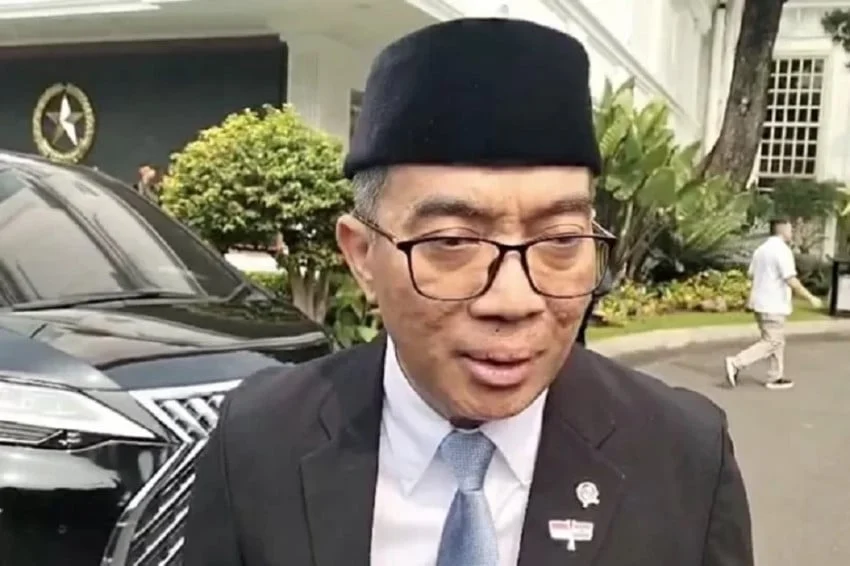
During a recent session at the Parliament Complex in Senayan, Jakarta, on September 21, 2026, Minister of Higher Education, Science, and Technology, Prof. Brian Yuliarto, confirmed that his ministry is currently in the advanced stages of calculating the per-student operational costs required to sustain a tuition-free model. This announcement serves as the first concrete signal that the executive branch is moving from conceptual planning to operational modeling regarding universal access to higher education.
The Strategic Vision Behind Tuition-Free Higher Education
The move to eliminate tuition fees in PTNs is rooted in the broader national objective of boosting the Gross Enrollment Ratio (GER) for higher education. For years, Indonesia has faced the "middle-income trap" challenge, where the quality of the workforce has not kept pace with the requirements of an increasingly digitized and technological global economy. By removing financial barriers, the government aims to democratize access to education, ensuring that socioeconomic status does not preclude qualified students from pursuing tertiary degrees.
President Prabowo Subianto’s administration has consistently emphasized that human capital is the primary engine of the "Golden Indonesia 2045" vision. Education, specifically in the fields of Science, Technology, Engineering, and Mathematics (STEM), is viewed as the cornerstone of this transformation. By subsidizing the entire cost of public higher education, the state intends to unlock the potential of millions of youth who might otherwise be relegated to the informal labor market due to the high costs associated with university enrollment.
Chronology and Legislative Momentum
The trajectory toward this policy began shortly after the inauguration of the current administration. Throughout 2025, there were several high-level discussions regarding the restructuring of the education budget. The dialogue gained significant traction when the President requested the formation of a specialized task force comprising academics and economic experts to review the sustainability of university funding models.
In early 2026, the government began auditing the financial health of various PTNs, assessing the gap between current state subsidies (BOPTN) and the actual cost of operations. The recent statement by Prof. Brian Yuliarto acts as a culmination of these months of internal audits. It signals that the government has moved past the stage of policy debate and is now evaluating the fiscal mechanics—specifically, how to replace student-paid tuition with a sustainable federal funding mechanism without compromising the quality of research and academic facilities.
Financial Implications and Budgetary Challenges
The task of making higher education free is not merely a matter of political will but a massive fiscal undertaking. Currently, public universities rely on a "tripartite" funding model: government grants, research grants, and tuition fees (Uang Kuliah Tunggal/UKT). Eliminating UKT requires the state to bridge a multi-trillion rupiah deficit.
Economic analysts point out that this policy will require a significant reallocation of the national budget (APBN). Given that the education sector already receives a constitutionally mandated 20% of the state budget, the challenge lies in optimizing this existing allocation rather than simply increasing the deficit.
The calculation currently being conducted by Kemendiktisaintek involves several key variables:
- Operational Cost per Student: Differentiated by discipline (e.g., medical schools and engineering labs have higher overheads than social science programs).
- Infrastructure Maintenance: Assessing the long-term needs for laboratories, libraries, and campus facilities that were previously supported by tuition revenue.
- Scholarship Integration: Evaluating how existing scholarship programs, such as KIP-Kuliah, will be integrated or re-purposed within a system where tuition is already zero.
- Faculty Remuneration: Ensuring that the quality of teaching staff remains competitive, as tuition often contributes to supplementary performance incentives.
Official Stance and Stakeholder Reactions
Minister Brian Yuliarto’s remarks have been met with cautious optimism by the academic community. While student bodies have long lobbied for lower costs, university rectors have expressed concerns regarding the "autonomy" of public universities. In many cases, tuition revenue provides the flexibility for universities to innovate, conduct independent research, and attract international faculty.
The government has assured that the transition will be methodical. "We have calculated the needs per student to ensure that the quality of education does not suffer during the transition," said Prof. Yuliarto. He noted that the ministry is exploring various scenarios, including a phased rollout starting with specific high-demand sectors or socio-economically vulnerable demographics, before moving toward a universal model.
Conversely, some fiscal experts caution against the inflationary pressure this might place on private universities. If public education becomes free, the demand for private institutions could plummet, potentially threatening the survival of smaller, non-elite private colleges. The Ministry of Education is expected to address these market distortions as part of the broader regulatory framework accompanying the policy.
The Role of Technology and Efficiency
A critical component of this initiative involves the digitization of campus management. The Ministry is looking to implement a centralized, data-driven financial management system for all PTNs to reduce administrative waste. By streamlining procurement and standardizing operational costs, the government believes it can achieve economies of scale that were previously impossible when each university managed its finances in silos.
Furthermore, the integration of "Science and Technology" into the Ministry’s name underscores a mandate to link higher education outcomes directly to industry needs. The "free" education model is expected to come with a "social contract" where graduates are incentivized to contribute to national priority sectors, such as renewable energy, agriculture, and digital infrastructure.
Broader Implications for Indonesia’s Future
If successfully implemented, the policy would place Indonesia among a small group of nations that provide universal free tertiary education. This would be a significant landmark in the country’s development history, effectively leveling the playing field for students from rural and underprivileged backgrounds.
However, the success of this program will hinge on three critical factors:
- Fiscal Discipline: Ensuring that the state can maintain these subsidies amidst fluctuating global commodity prices and tax revenue challenges.
- Quality Control: Preventing the "commoditization" of education, where the drive for volume (access) results in a decline in the quality of degrees.
- Economic Absorption: Ensuring that the influx of highly educated graduates can be absorbed by an economy that is shifting toward higher value-added services and manufacturing.
As the government continues its internal deliberations, the public awaits the formal rollout plan. The calculations conducted by the Kemendiktisaintek are expected to be presented to the President and the House of Representatives (DPR) in the upcoming fiscal budget cycle.
In conclusion, the directive from President Prabowo to make public higher education free is a bold, structural reform that could redefine the socio-economic landscape of Indonesia for decades to come. While the financial, logistical, and academic hurdles are substantial, the government’s commitment to calculating these costs indicates a serious intent to move from the rhetoric of "equal opportunity" to the reality of institutionalized access. The coming months will likely see further details on the implementation roadmap, funding sources, and the potential timeline for the first phase of this historic policy.
