
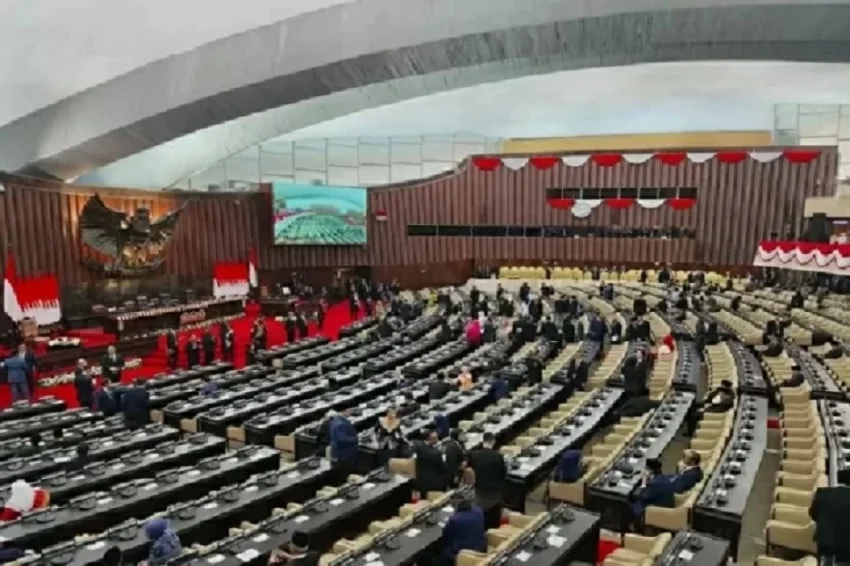
The resignation of a Vice President in Indonesia initiates a rigid constitutional process that ensures political stability and prevents a power vacuum. Contrary to common misconceptions, the President does not possess the unilateral authority to appoint a successor. Instead, the mandate to fill the vacancy rests exclusively with the People’s Consultative Assembly (Majelis Permusyawaratan Rakyat or MPR), a mechanism explicitly outlined in the 1945 Constitution. As political discourse regarding potential vacancies gains momentum, understanding the legal framework governing this succession is essential for analyzing the resilience of Indonesia’s democratic institutions.
The Constitutional Mandate: Article 8, Paragraph 2
The bedrock of the succession process is found in Article 8, Paragraph 2 of the 1945 Constitution of the Republic of Indonesia. The provision states: "In the event of a vacancy in the office of Vice President, the President shall submit two candidates to the People’s Consultative Assembly for the purpose of electing a new Vice President no later than sixty days after the vacancy occurs."
This constitutional safeguard serves as a check and balance, ensuring that the legislative body—representing the broader political spectrum—maintains oversight in the appointment of the second-highest office in the land. The sixty-day timeframe is a critical constraint, designed to force a swift resolution to leadership uncertainty, thereby maintaining the continuity of the executive branch.
Chronology and Procedural Stages
When a Vice President formally submits a resignation, the process of transition follows a strictly codified path:
- Formal Declaration of Vacancy: The process begins with the official acceptance of the resignation. Once the Vice President steps down, the seat is declared vacant.
- Executive Proposal: Within the sixty-day window, the sitting President is required to nominate two potential candidates for the position. These candidates must meet the eligibility requirements established under Article 6 of the Constitution, which include requirements of citizenship, age, health, and political experience.
- The MPR Plenary Session: Upon receiving the nominations, the MPR leadership must convene a special plenary session. The assembly, consisting of members of the House of Representatives (DPR) and the Regional Representative Council (DPD), serves as the electoral college.
- Deliberation and Voting: The MPR members engage in a voting process to select one of the two nominees. The decision is made through a democratic vote within the assembly.
- Inauguration: Once the winner is determined, the new Vice President is sworn into office, restoring the dual leadership of the executive branch.
Historical Context and Precedents
Indonesia’s history provides critical context for these constitutional rules. While the resignation of a Vice President is a rare event, the nation has navigated significant executive transitions in the past, most notably during the Reformasi era. The current constitutional framework was significantly bolstered by the constitutional amendments conducted between 1999 and 2002. These amendments aimed to clarify the roles of state institutions and prevent the concentration of power, ensuring that the appointment of a Vice President—a figure who could potentially succeed the President—is a matter of collective deliberation rather than executive fiat.
In previous instances, such as the transition during the late 1990s and early 2000s, the MPR played a central role in stabilizing the government during periods of intense political upheaval. The reliance on the MPR ensures that the successor possesses a degree of legitimacy conferred by the legislative branch, which is crucial for maintaining public trust.
Official Responses and Political Implications
Recent discourse regarding potential resignations within the current administration has triggered significant reactions from political stakeholders. Key figures in the current government, including ministers and legislative leaders, have emphasized the necessity of adhering to the letter of the law.
Budi Arie, a prominent official, has publicly acknowledged the administrative legitimacy of resignation claims, highlighting that the government is prepared to follow the established constitutional path if a vacancy were to materialize. Meanwhile, within the House of Representatives, various factions have expressed concerns regarding the stability of the executive. The emergence of proposals for the impeachment of high-ranking officials suggests a heightened state of legislative activity, where the process of selecting a new Vice President would inevitably become a focal point of intense political negotiation.
The prospect of a Vice Presidential election in the MPR would require the President to navigate a complex landscape of coalition politics. Since the MPR consists of diverse political parties, the President’s two nominees must be acceptable to a majority of the assembly. This necessity compels the President to engage in consensus-building, as a purely partisan choice might face rejection or gridlock within the MPR.
Fact-Based Analysis of Broader Impact
The implications of a Vice Presidential vacancy extend far beyond the executive office. Economically, prolonged uncertainty regarding the line of succession can impact market confidence and investor sentiment. Investors generally prioritize political stability; therefore, the swift execution of the constitutional mandate is vital for maintaining economic equilibrium.
From a social perspective, the process serves as a litmus test for the maturity of Indonesia’s democratic governance. If the process is handled transparently and within the prescribed constitutional timeline, it reaffirms the strength of the rule of law. Conversely, any attempt to bypass these procedures or manipulate the selection process could lead to political polarization and civil unrest.
Furthermore, the dual-nominee system prescribed by the Constitution is strategically designed to prevent a "take it or leave it" scenario. By requiring the President to submit two names, the Constitution grants the MPR genuine agency. The assembly is not merely a rubber stamp; it is a deliberative body that must vet the candidates based on their capacity to support the President and serve the national interest.
Legislative Oversight and the Role of the MPR
The role of the MPR in this process cannot be overstated. As the highest legislative body, it holds the power to amend the Constitution and impeach the President and/or Vice President. Given the current political climate—marked by discussions regarding the impeachment of various officials—the MPR acts as the ultimate arbiter of political continuity.
The 120 members of the DPR who have been noted for their involvement in parliamentary motions underscore the activist nature of the current legislature. Should a Vice Presidential vacancy occur, these members would likely demand a rigorous vetting process for the President’s nominees, ensuring that the new Vice President is not only a political ally of the President but also a figure capable of maintaining national unity during a transition.
Challenges and Future Considerations
The sixty-day window for the selection process is both a strength and a potential challenge. While it prevents long-term vacancy, it also places immense pressure on the President and the MPR to move quickly. In a highly polarized political environment, reaching a consensus on a candidate within two months requires significant diplomatic effort.
Additionally, the criteria for candidacy—which require a candidate to be a citizen since birth, a practitioner of the state ideology of Pancasila, and a person of integrity—must be strictly upheld. Any perception that the selection process is being used to settle political scores or secure partisan dominance could undermine the legitimacy of the incoming Vice President.
Conclusion
The resignation of a Vice President in Indonesia is not merely an administrative event; it is a constitutional event that tests the integrity of the state’s political architecture. By mandating a role for the MPR, the 1945 Constitution ensures that the office of the Vice President is filled through a transparent and collective process. As the nation continues to navigate its democratic journey, the adherence to these mechanisms remains the primary defense against political instability. Whether through the careful selection of candidates by the President or the rigorous deliberation by the MPR, the ultimate goal remains the preservation of national governance and the continuity of the executive branch in accordance with the law.
The mechanism is robust, the timeline is clear, and the responsibility is shared. For Indonesia, the path forward in the event of a vacancy is not through the corridors of the palace alone, but through the halls of the parliament, where the collective voice of the people’s representatives ultimately determines the future of the nation’s leadership. Maintaining this process is vital for the long-term health of the Republic, ensuring that power transitions remain orderly, legitimate, and deeply rooted in the constitutional spirit that has guided the nation for decades.
