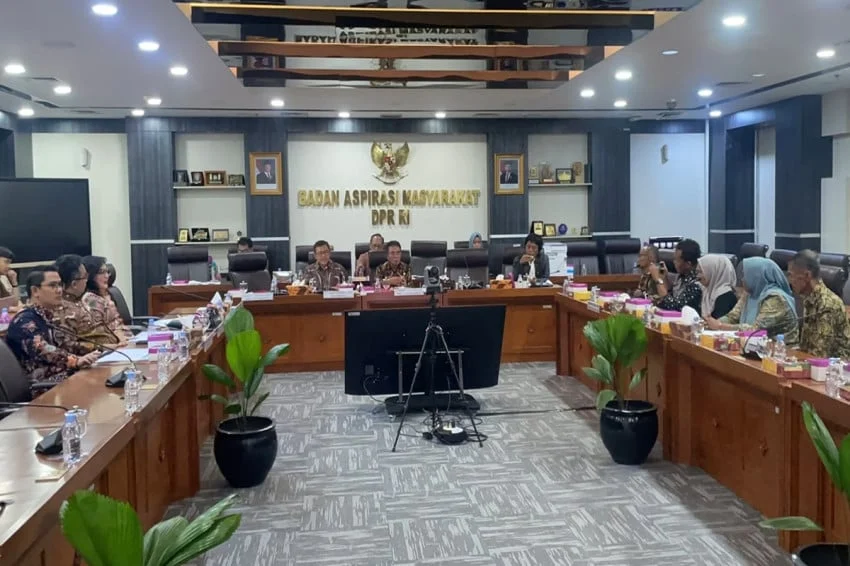
The Jejaring Rakyat Miskin Indonesia (JRMI), a coalition representing six grassroots organizations, has formally challenged the current trajectory of the government’s land distribution policy. During a legislative hearing at the House of Representatives (DPR) in Jakarta on Thursday, September 10, the coalition presented a series of critical recommendations regarding the drafting of the Agrarian Reform Bill (RUU Reforma Agraria). The central thrust of their argument is a call to end the practice of individual land certificate distribution, advocating instead for collective land ownership to ensure long-term socio-economic sustainability for the urban poor.
Challenging the Individualistic Model of Land Tenure
Representing the coalition, Guntoro Gugun Muhammad delivered a sobering assessment of the government’s current land reform strategy. While the state frequently touts the issuance of individual freehold titles (Sertifikat Hak Milik/SHM) as a primary mechanism for poverty alleviation, JRMI argues that this approach is structurally flawed.
"If the goal of agrarian reform is to address or mitigate inequality, but the state’s policy continues to favor individual distribution, I am pessimistic about the outcome," Gugun told members of the House Legislative Body (Baleg).
The coalition contends that individual ownership, particularly in densely populated urban environments, inevitably leads to the commodification of land. Despite existing regulations that prohibit the sale of government-granted land within the first ten years of acquisition, enforcement remains weak. Gugun highlighted the prevalence of "under-the-table" transactions, where recipients, driven by immediate economic desperation or pressure from the private sector, bypass legal restrictions to sell their plots. Once sold, the land is absorbed back into the market, failing to provide the intended long-term security or wealth accumulation for the original beneficiaries.
The Case for Collective Ownership in Urban Centers
A key component of the JRMI proposal is the implementation of "collective certificates" (sertifikat bersama). The coalition acknowledges that if asked, individual beneficiaries would almost universally prefer personal titles due to immediate perceived security. However, Guntoro argued that the government must act as a regulator that prioritizes systemic welfare over short-term individual desires.
The proposal for collective land management is specifically tailored to the realities of urban development. According to the coalition, there are two primary reasons why collective ownership is superior to individual titles in city settings:
- Vulnerability to Market Forces: Urban spaces are characterized by rapid shifts in land use and soaring real estate prices. Individual owners of small plots are highly susceptible to being bought out by developers, leading to displacement rather than empowerment.
- Economic Viability through Scaling: The individual parcels currently being distributed are often as small as 36 square meters. Standing alone, such small plots offer limited utility for productive economic activity. By pooling these resources into collective landholdings—potentially aggregating to one hectare or more—communities can engage in large-scale urban farming, cooperative housing, or joint business ventures, thereby fostering genuine economic resilience.
Background and Legislative Chronology
The discourse surrounding the Agrarian Reform Bill comes at a pivotal time for Indonesian land policy. The bill was recently approved during a plenary session of the DPR as an initiative proposal from the legislature. This legislative movement is part of a broader, multi-year attempt to address the "Agrarian Conflict" that has historically plagued the nation.
The timeline of Indonesian land reform has been marked by several milestones:
- 1960: The enactment of the Basic Agrarian Law (UUPA), which serves as the foundation for all land-related regulations in Indonesia.
- 2014-2019: The administration of President Joko Widodo accelerated the issuance of millions of land certificates, aimed at reducing disputes and increasing the economic value of assets for citizens.
- 2020-2023: Increasing criticism from civil society organizations regarding the efficacy of individual titling, leading to the current push for a comprehensive Agrarian Reform Bill.
- September 2024: The current deliberations at the Baleg DPR regarding the formation of the National Agrarian Reform Agency (BRAN).
The proposed establishment of the National Agrarian Reform Agency (BRAN) is a centerpiece of the current bill. Proponents argue that a centralized agency is necessary to coordinate cross-ministerial efforts, as land conflicts often involve the Ministry of Environment and Forestry, the Ministry of Agrarian Affairs and Spatial Planning, and various regional governments.
Economic Implications and Structural Analysis
The skepticism voiced by JRMI is supported by various economic indicators regarding land tenure in Indonesia. Data from the Consortium for Agrarian Reform (KPA) has consistently shown that the Gini ratio for land ownership in Indonesia remains alarmingly high. Despite the government’s efforts to distribute millions of certificates, the vast majority of land remains concentrated in the hands of large corporations and a small percentage of the population.
Critics of the current "individual titling" policy point out that while the policy increases the number of people who legally "own" land, it does not necessarily increase their control over the means of production. Without accompanying institutional support, such as access to credit, technical training, and protection from predatory developers, smallholders often become "land-rich but cash-poor," eventually liquidating their assets to cover living costs.
Furthermore, the urban landscape adds a layer of complexity. In cities like Jakarta, where land is scarce, the individual titling of 36-square-meter plots does little to address the systemic housing crisis or the lack of urban green spaces. Collective ownership models, common in many European social housing projects or community land trusts, offer a mechanism to prevent speculation and ensure that land remains affordable for low-income residents in perpetuity.
The Legislative Response and Future Outlook
The legislative body (Baleg) has taken note of the recommendations from JRMI. While the government has traditionally prioritized the rapid issuance of certificates as a measurable performance indicator for political reporting, the pressure to reform the methodology is mounting.
The debate over the RUU Reforma Agraria is expected to intensify in the coming months as the committee moves toward finalizing the draft. The primary point of contention will likely remain the balance between individual property rights—a pillar of the current economic system—and the collective welfare strategies proposed by activists.
For the coalition, the success of the new law will not be measured by the number of certificates issued, but by the quality of tenure and the stability of the communities living on that land. As the DPR continues its deliberations, the voice of the grassroots, emphasizing that "collective strength exceeds the sum of individual parts," serves as a critical check on the government’s traditional approach to agrarian reform.
Conclusion
The demand for a paradigm shift toward collective land management highlights a fundamental tension in Indonesian governance: the choice between promoting market-driven individual asset ownership and fostering community-based social security. Whether the legislators will incorporate the recommendations of the Jejaring Rakyat Miskin Indonesia into the final draft of the Agrarian Reform Bill remains to be seen. However, the proposal has successfully brought the limitations of the current certificate-distribution model to the forefront of national policy discourse, forcing lawmakers to consider whether the "land for the people" policy truly provides the empowerment it promises or if it merely invites the further erosion of the poor’s last remaining assets.
As the country moves toward the formation of the National Agrarian Reform Agency, the outcome of this legislative process will likely set the tone for land tenure policies for decades to come, directly impacting millions of citizens who remain at the periphery of Indonesia’s rapid urban and economic development.