
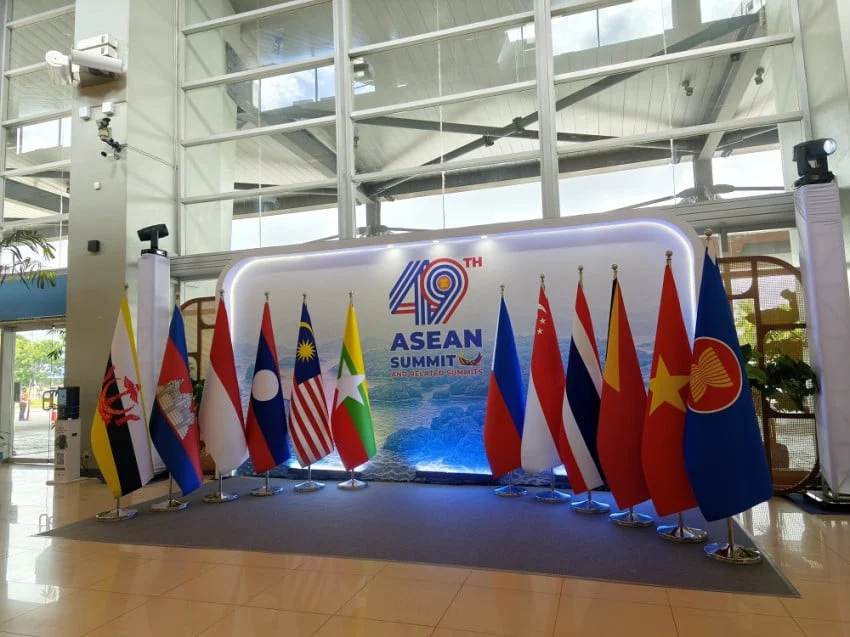
The Association of Southeast Asian Nations (ASEAN) finds itself at a critical historical juncture, navigating an increasingly volatile geopolitical landscape where the binary pull between global superpowers—the United States and China—threatens to destabilize the bloc’s long-standing policy of neutrality. During a recent ISEAS-Yusof Ishak Institute roundtable in Bangkok, Sihasak Phuangketkeow, Thailand’s Vice Minister for Foreign Affairs, delivered a candid assessment of the region’s strategic dilemma. He argued that while ASEAN must maintain its tradition of non-alignment, the luxury of passive neutrality is rapidly evaporating. For the ten-member bloc, the path forward requires a shift from passive observation to proactive, interest-driven decision-making to preserve regional stability and economic prosperity.
The Strategic Dilemma: Beyond Traditional Non-Alignment
The concept of "ASEAN Centrality" has long served as the cornerstone of the bloc’s foreign policy, designed to prevent the region from becoming a theater for proxy conflicts. However, the intensification of the U.S.-China rivalry, characterized by trade wars, technology decoupling, and maritime territorial disputes, has made this delicate balancing act increasingly difficult.
Sihasak’s remarks highlight a growing realization among regional policymakers: neutrality is not a static state, but a dynamic position that requires active maintenance. When he stated, "We cannot continue to be neutral," he was not advocating for joining a military alliance, but rather for a more assertive, agency-driven approach to regional affairs. The core argument is that ASEAN must prioritize its collective economic and security interests over the pressure to align with the specific agendas of major powers. If the bloc remains paralyzed by a desire to appease both Washington and Beijing, it risks losing its relevance and its ability to shape the regional order.
Chronology of Escalating Tensions in the Indo-Pacific
To understand the urgency of Sihasak’s message, one must look at the timeline of events that have defined the current geopolitical friction:
- 2012: The ASEAN Foreign Ministers’ Meeting fails to issue a joint communiqué for the first time in its history due to disagreements over the South China Sea, signaling the start of deeper internal divisions regarding external influence.
- 2017-2018: The U.S. shifts its strategic focus to the "Free and Open Indo-Pacific" (FOIP), leading to a more confrontational posture toward China’s Belt and Road Initiative (BRI).
- 2020-2022: The COVID-19 pandemic accelerates supply chain restructuring, with many multinational corporations seeking a "China Plus One" strategy, placing ASEAN at the center of global manufacturing competition.
- 2023: The U.S. strengthens military access agreements with the Philippines, while China increases its maritime presence in the West Philippine Sea, heightening the risk of accidental escalation.
- 2024: Regional anxiety peaks as the U.S. presidential election cycle approaches, leading to concerns about the consistency of American engagement in the region, while China continues to leverage economic statecraft to solidify its influence.
Economic Interdependence and Security Vulnerabilities
The data supporting Sihasak’s concerns is compelling. ASEAN is currently the world’s fifth-largest economy, with a combined GDP exceeding $3.6 trillion. However, this economic success is heavily dependent on both Chinese investment and American market access. According to recent trade statistics, China remains ASEAN’s largest trading partner, while the United States is the largest source of foreign direct investment (FDI) in the region.
This interdependence creates a "double-bind." If ASEAN states align too closely with China, they risk alienating Western security partners and facing potential scrutiny regarding human rights or democratic standards. Conversely, aligning too closely with the U.S. and its security architectures, such as AUKUS (Australia, United Kingdom, and the U.S.) or the Quad (U.S., Japan, India, Australia), can trigger retaliatory economic measures or diplomatic frostiness from Beijing.
The challenge is further compounded by the digital and technological divide. As the U.S. imposes export controls on high-end semiconductors to China, Southeast Asian nations are forced to navigate complex supply chain regulations that threaten to fragment the regional economy.
Expanding the Network: The Case for Strategic Autonomy
Sihasak’s proposal for a more proactive stance involves diversifying ASEAN’s partnerships. He explicitly mentioned India, Japan, South Korea, Australia, and the European Union as essential stakeholders. By deepening ties with these "middle powers," ASEAN can create a "multi-aligned" framework that reduces its reliance on any single superpower.
This strategy of "hedging" is intended to bolster ASEAN’s strategic autonomy. By becoming indispensable to a broader range of global actors, ASEAN can carve out a space where it is not forced to choose sides. For instance, increased engagement with the European Union on green energy transitions or with Japan on infrastructure development allows ASEAN to pursue its developmental goals without being tethered to the U.S.-China rivalry. This strategy, however, requires a level of internal cohesion that has often been elusive for the bloc.
Official Responses and Internal Dynamics
The ASEAN Secretariat and various member states have echoed the sentiment that the bloc must remain "the driver" of regional architecture. Singapore’s leadership has frequently warned that "choosing sides" is a false dilemma that could lead to the fragmentation of the regional order. Meanwhile, Indonesia, in its capacity as a past and future chair, has consistently pushed for the implementation of the "ASEAN Outlook on the Indo-Pacific" (AOIP). The AOIP serves as a roadmap for maintaining an inclusive, rules-based regional architecture that avoids the "us-versus-them" mentality.
However, internal consensus remains a challenge. Nations like Cambodia and Laos, which share deep economic ties with China, often hold different perspectives on security issues compared to nations like Vietnam or the Philippines, which are directly involved in maritime disputes. Critics argue that ASEAN’s "consensus-based" decision-making process is the very thing that prevents it from taking the assertive, independent actions that Sihasak advocates.
Implications for the Future of Regional Stability
The implications of ASEAN failing to act as a unified, decisive entity are severe. A fragmented ASEAN would be susceptible to "divide and conquer" tactics by major powers. This could lead to a scenario where individual member states become pawns in a broader geopolitical game, eroding the progress made in regional integration over the last five decades.
Furthermore, the rise of non-traditional security threats—such as climate change, cyber warfare, and transnational crime—requires a coordinated regional response. If ASEAN’s attention is perpetually consumed by the need to navigate superpower rivalry, these urgent, existential threats will remain inadequately addressed.
The path toward "strategic autonomy" is not merely about diplomacy; it is about building regional resilience. This includes strengthening regional supply chains, enhancing internal trade through the Regional Comprehensive Economic Partnership (RCEP), and fostering a collective security dialogue that emphasizes preventive diplomacy.
Conclusion: A New Era of ASEAN Agency
Sihasak Phuangketkeow’s intervention serves as a wake-up call for the ASEAN community. The era of comfortable, passive neutrality is over. As the global order shifts toward a more multipolar or perhaps bifurcated system, ASEAN must define its own interests with clarity and conviction.
This does not mean abandoning the principles of non-interference or consensus, but rather reinterpreting them to allow for a more agile and proactive foreign policy. By leveraging its collective economic weight and diversifying its partnerships, ASEAN can maintain its relevance in an increasingly contested world. The bloc’s ability to transition from a neutral bystander to a decisive, interest-driven actor will ultimately determine whether Southeast Asia remains a region of peace and prosperity or becomes a victim of the very geopolitical forces it has long sought to manage. The success of this transition depends not only on the diplomatic skill of its leaders but on the collective will of the ten nations to prioritize their shared future over the pressures of the present.
