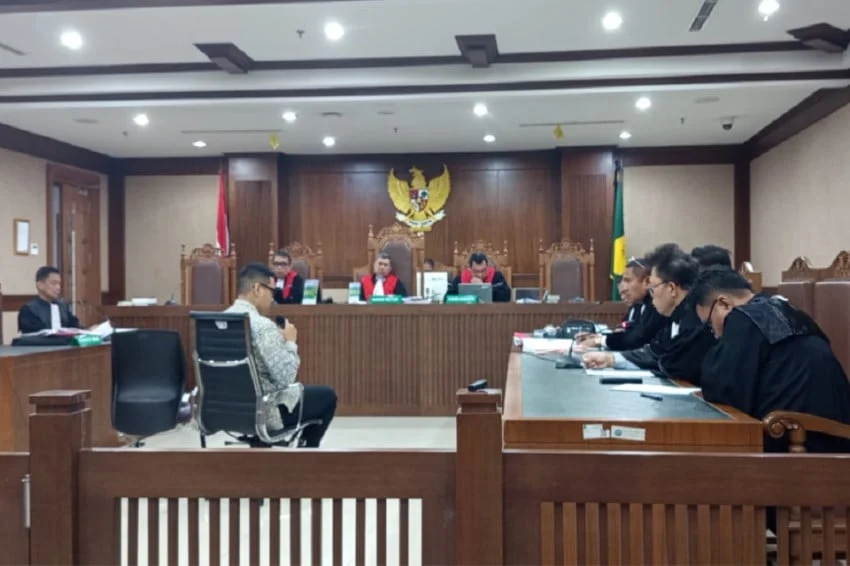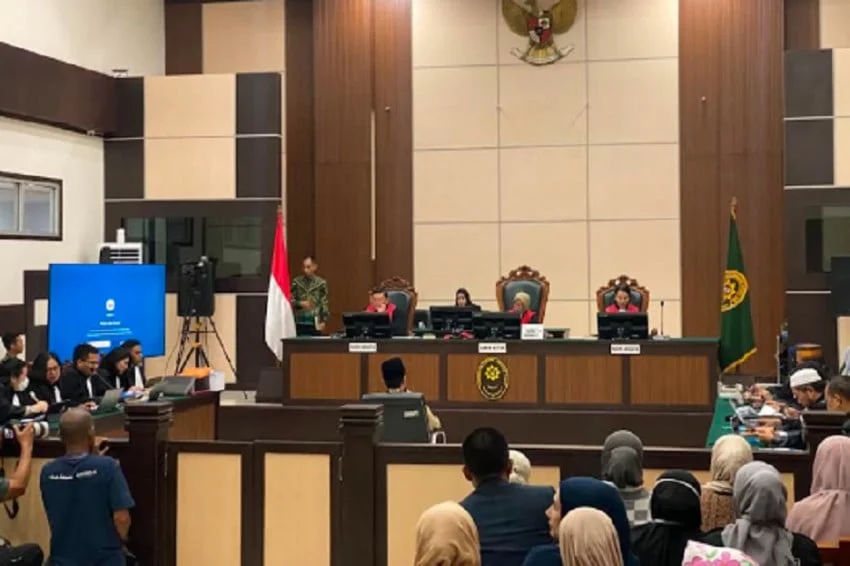
The legal and political controversy surrounding the academic credentials of Indonesia’s seventh president, Joko Widodo, reached a dramatic juncture during a court proceeding at the East Jakarta District Court. Tifauzia Tyassuma, widely known as Doctor Tifa and standing as a defendant in the ongoing legal proceedings concerning allegations of a fabricated university diploma, publicly detailed what she termed significant discrepancies in the educational history of the former head of state. The court session, held on Thursday, November 5, 2026, drew intense media scrutiny as Joko Widodo appeared in person to testify as a witness in the high-profile case.
The appearance of the former president was marked by emotional testimony, fierce legal arguments, and subsequent claims from the defense regarding the authenticity and completeness of the documentation presented to substantiate his graduation from Universitas Gadjah Mada (UGM). While the judiciary continues to weigh the arguments presented by both the public prosecution and the defense, the proceedings have reignited a long-running public debate concerning political transparency, institutional record-keeping, and the legal limits of public discourse regarding the personal histories of high-ranking public figures.
Main Facts of the Courtroom Proceedings
During the Thursday hearing, the focal point of the legal contention shifted from general allegations to specific evidentiary documents submitted by the Public Prosecutor’s Office (JPU). According to statements delivered by Doctor Tifa to journalists immediately following the adjournment, the defense team identified what they characterized as fundamental gaps in the academic paperwork provided to prove that Joko Widodo successfully completed his undergraduate education in the Faculty of Forestry at UGM.
Doctor Tifa emphasized three primary points of contention that emerged during the evidentiary examination. The central argument raised by the defense hinges upon the distinction between a complete undergraduate academic transcript and semester-by-semester grade reports.
"Paling tidak ada tiga hal paling pokok yang berhasil kami sampaikan tadi, berhasil kita semua dengarkan tadi," stated Doctor Tifa outside the courtroom, highlighting that the documentation inspected during the trial fell short of the comprehensive records typically required to verify university graduation.
The primary assertion made by the defense is that the former president did not present a formal, cumulative academic transcript—commonly known as a transkrip nilai—during the evidentiary review. Instead, the documents introduced as evidence by the prosecution allegedly consisted only of Kartu Hasil Studi (KHS), which function as individual study result cards issued at the conclusion of specific academic semesters.
"Bahwa yang pertama, Saudara Joko Widodo terbukti tidak memiliki transkrip sarjana, yang ditunjukkan kepada kami oleh JPU tadi sebagai barang bukti, itu adalah KHS, Kartu Hasil Studi, bukan transkrip nilai seperti yang kami minta," Doctor Tifa asserted to the gathered press corps. Furthermore, she claimed that the defense possesses comparative data from other alumni who graduated with a degree in Forestry from UGM during the same chronological period, and argued that the absence of a comparable final transcript creates an evidentiary vacuum that warrants further judicial scrutiny.
Background Context and Chronology of the Dispute
To understand the gravity of the November 5, 2026 court session, it is necessary to examine the broader chronology of the controversy. The allegations surrounding Joko Widodo’s educational background did not materialize overnight; rather, they represent an escalation of digital and offline speculations that began circulating heavily during his second presidential term and persisted well after he left office in October 2024.
Initially, various independent commentators and social media figures raised questions regarding the physical appearance of the diploma, the typography used in graduation announcements, and the consistency of alumni directories at Universitas Gadjah Mada. These claims prompted repeated clarifications from university officials, alumni associations, and the former president himself, all of whom maintained that Joko Widodo matriculated in 1980 and graduated with a Bachelor of Science in Forestry in 1985.
Despite institutional confirmations from UGM—including official statements from the rectorate affirming the validity of his student status, thesis completion, and graduation records—certain critics continued to challenge the narrative. Over time, the discourse transitioned from online speculation into formal legal terrain. Civil lawsuits and criminal defamation or dissemination complaints were filed under the jurisdiction of the Electronic Information and Transactions (UU ITE) law, leading to the current criminal proceedings in which Doctor Tifa and other co-defendants find themselves facing charges related to the propagation of unverified claims and alleged defamation.
The decision to summon Joko Widodo as a direct witness in the Jakarta District Court marked a tactical escalation by the prosecution, aimed at settling the factual basis of the academic history through direct testimony and primary evidence presentation.
Emotional Testimony and Defense Reactions
The courtroom atmosphere on Thursday was characterized by high tensions. In addition to the technical debates surrounding academic transcripts and study result cards, the emotional toll of the protracted controversy became visibly apparent. During his testimony, Joko Widodo expressed profound exasperation and anger regarding the persistent nature of the allegations, particularly noting that the controversy had expanded to involve his deceased parents and family lineage.
"Joko Widodo Mengaku Sangat Marah Orang Tuanya Diseret dalam Polemik Ijazah: Siapa yang Enggak Sakit?" became a prominent headline across national news networks following his testimony. The former president conveyed that while public figures must endure political scrutiny, dragging his parents into disputes concerning his legitimacy as a student crossed an ethical boundary.
This emotional outburst added a layer of human drama to the proceedings, contrasting sharply with the dry, technical arguments presented by Doctor Tifa regarding administrative paper trails, course codes, and grading systems. While the prosecution viewed the former president’s testimony as a definitive closure to the rumors, the defense interpreted the evidentiary limitations—such as the reliance on KHS documents rather than a consolidated final transcript—as validation of their ongoing skepticism.
Official Responses from Universitas Gadjah Mada and Legal Authorities
Throughout the evolution of the diploma controversy, Universitas Gadjah Mada has consistently maintained a transparent and defensive posture regarding the integrity of its alumni records. University leadership has repeatedly issued formal clarifications, noting that all administrative procedures, thesis defenses, and graduation ceremonies involving Joko Widodo complied strictly with the academic standards of the institution during the mid-1980s.
Archival officials from UGM have previously explained that record-keeping systems from the 1980s differed significantly from modern computerized databases. While contemporary universities rely on integrated digital portals where transcripts are generated instantaneously, records from that era often required the manual compilation of physical ledger books, semester grade cards, and faculty meeting minutes. Legal experts following the trial have pointed out that discrepancies between modern documentation expectations and historical archiving practices frequently lead to misunderstandings among lay observers who are unfamiliar with higher education administrative history in Indonesia.
Representatives from the Public Prosecutor’s Office maintained during the Thursday hearing that the documentation submitted—including the contested study result cards and institutional verifications—satisfies the evidentiary requirements under Indonesian criminal law to prove the authenticity of the academic credential. The prosecution argues that continued dissemination of claims to the contrary constitutes a deliberate attempt to undermine the personal and professional reputation of a former head of state.
Broader Impact and Implications for Public Discourse
The legal battle unfolding at the East Jakarta District Court carries significant implications that extend far beyond the immediate courtroom adversaries. As Indonesia continues to navigate its democratic consolidation, the intersection of free speech, digital misinformation, and the legal accountability of public commentators remains a subject of intense debate among legal scholars, civil society organizations, and political analysts.
On one hand, defenders of free expression argue that citizens and independent researchers should retain the right to question the credentials and backgrounds of public officials without fear of severe criminal prosecution. They contend that robust skepticism—even when misguided or analytically flawed—is a natural component of democratic oversight.
On the other hand, proponents of stricter legal enforcement against misinformation argue that persistent, baseless attacks on the personal credentials of national leaders undermine institutional stability, erode public trust in governance, and degrade the quality of public discourse. The deployment of the UU ITE framework in this case serves as a key test case regarding how Indonesian courts will balance the protection of individual reputation against the constitutional guarantees of expression.
Furthermore, the trial highlights the challenges universities face in modern media environments. As higher education institutions become focal points in political polarization, their administrative archives are increasingly subjected to forensic
scrutiny by non-experts. The UGM diploma case underscores the necessity for universities to maintain unassailable, easily comprehensible archival verification processes to protect the integrity of their degrees against politically motivated skepticism.
Conclusion and Future Outlook of the Trial
As the trial before the East Jakarta District Court progresses, the focus will likely shift from initial evidentiary presentations to closing arguments and expert witness testimonies regarding administrative practices in Indonesian higher education during the 1980s. While the former president’s direct testimony provided a definitive personal account of his academic journey, the legal interpretations of documents like the Kartu Hasil Studi versus traditional transcripts will remain central to the defense’s strategy.
The outcome of this case is expected to establish an important legal precedent concerning the burden of proof in disputes involving public figures and historical credentials. Whether the judicial process will finally put an end to the multi-year controversy or merely fuel further debate in the public sphere remains to be seen as the judges deliberate on the complex intersections of education history, criminal law, and political accountability.