
The Indonesian Army (TNI AD) has officially addressed public inquiries and media reports regarding the recent deployment and movement of military personnel into the greater Jakarta metropolitan area, clarifying that the measure is a standard procedural step designed to maintain absolute operational readiness in the face of evolving security dynamics. The confirmation comes amid heightened national attention concerning strategic defense readiness and the overarching protection of the nation’s capital.
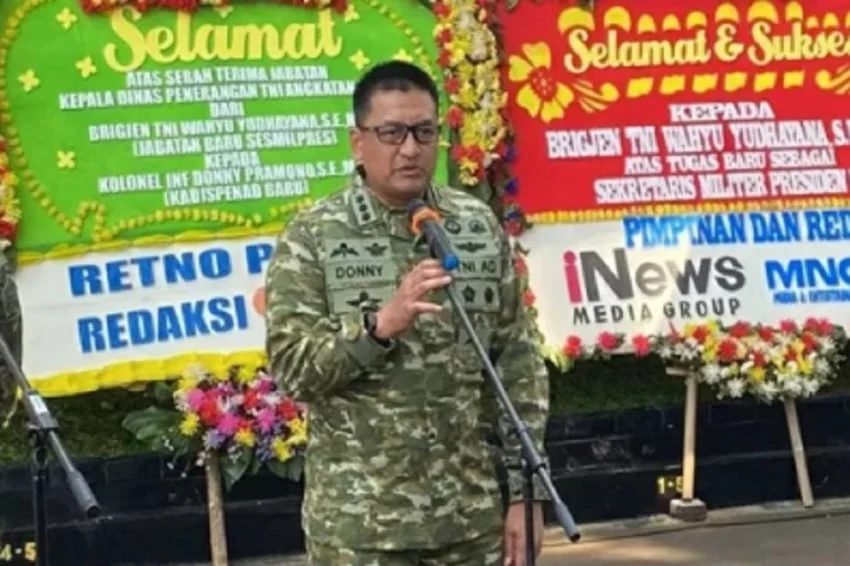
Speaking to members of the press, the Head of the Indonesian Army Information Service (Kadispenad), Brigadier General TNI Donny Pramono, emphasized that the heightened troop presence and localized readiness protocols are fundamental components of military preparedness. According to the military leadership, maintaining vigilant units and mobile forces is critical to ensuring a rapid response capability against any potential contingencies, domestic disruptions, or security developments that could impact the stability of the state.
Legal Framework and Statutory Mandate
The decision to ensure high-level preparedness and strategic force positioning in the capital is anchored firmly in national legislation. Brigadier General Donny Pramono pointed out that these operational directives are executed in strict accordance with Law Number 3 of 2025, which outlines amendments to Law Number 34 of 2004 concerning the Indonesian National Armed Forces (TNI).
This legislative framework outlines the foundational duties of the military, which include safeguarding state sovereignty, preserving the territorial integrity of the unitary state of the Republic of Indonesia, and protecting the safety of the entire nation from both internal and external threats. Within the context of this statutory mandate, the readiness of military forces serves not only as a reactive defensive measure but also as a vital deterrent against various forms of asymmetric, hybrid, and conventional threats capable of destabilizing national interests.
Given that Jakarta serves as the political nerve center, the seat of government, and the primary hub for vital national installations and foreign diplomatic missions, maintaining an elevated baseline of security and force readiness in the region remains an ongoing strategic priority for the national defense apparatus.
Broader Security Context and Capital Vulnerabilities
The deployment occurs within a broader, complex security environment marked by domestic political transitions, regional geopolitical shifts, and emerging non-traditional security challenges. In recent months, national security dialogues in Indonesia have increasingly focused on the vulnerability of critical state infrastructure, cybersecurity, intelligence protection, and the preservation of constitutional order.
Earlier national security discourse has underscored the gravity of safeguarding high-level state operations, with defense analysts pointing out that the security of the capital is inextricably linked to national sovereignty as a whole. Unauthorized intelligence activities, potential subversive actions, or localized civil disturbances in the metropolitan area carry the potential to generate cascading effects across the country’s economic and political sectors. Consequently, military planners and regional defense commands continuously evaluate force postures to ensure seamless coordination between civil law enforcement agencies, such as the Indonesian National Police (Polri), and military territorial commands.

Operational Readiness and Deterrence Theory
From a strategic defense perspective, the proactive deployment or repositioning of personnel serves a dual purpose: operational readiness and strategic deterrence. Military analysts note that maintaining visible and high-readiness units in strategic urban centers acts as a deterrent against potential threats that seek to exploit perceived vulnerabilities in civil-military defense coordination.
Brigadier General Donny reiterated that the presence of these forces is preventative and preparatory rather than reactionary to a single isolated incident. "The readiness of the TNI’s strength also functions as a deterrent against various forms of threats that could disrupt the interests of the nation and the state, especially within the territory of the national capital," Donny stated. This approach aligns with modern defense doctrines emphasizing preemptive posture visibility, rapid deployment capabilities, and inter-agency interoperability.
Coordination Between Military and Civil Authorities
The involvement of the Indonesian Army in maintaining security within the capital is governed by strict constitutional boundaries and statutory regulations governing civil-military relations. Under Indonesian law, while the primary responsibility for domestic public order and law enforcement rests with the Indonesian National Police (Polri), the TNI stands ready to provide military assistance—known as Operasi Militer Selain Perang (OMSP) or Military Operations Other Than War—upon official request or under specific national command directives authorized by the government and relevant statutory provisions.
This collaborative framework ensures that any heightened military posture in Jakarta is executed with clear lines of communication, institutional transparency, and adherence to democratic governance principles. Regional military commands, such as the Military Area Command Jaya (Pangdam Jaya), work in tandem with regional police forces to monitor potential security vulnerabilities, manage crowd control contingencies if necessary, and secure vital state objects.
Implications for Public Safety and National Stability
The clarification provided by the TNI AD aims to quell speculation, misinformation, or unwarranted public anxiety regarding the movement of tactical vehicles and uniformed personnel throughout parts of Jakarta. In an era marked by the rapid diffusion of information and potential digital disinformation campaigns, official institutional communication plays a vital role in maintaining public trust and transparency.
Experts suggest that transparent communication regarding routine military movements reinforces public confidence in the state’s capability to manage security contingencies professionally. As Jakarta continues to navigate its dual role as a bustling metropolis and the administrative heart of Indonesia, the maintenance of a disciplined, well-prepared, and legally anchored defense apparatus remains an indispensable pillar of national resilience.
The Indonesian Army has affirmed that it will continue to monitor security developments closely, adapt its operational readiness to meet contemporary challenges, and uphold its constitutional oath to protect the nation, the state, and the citizens of Indonesia.
