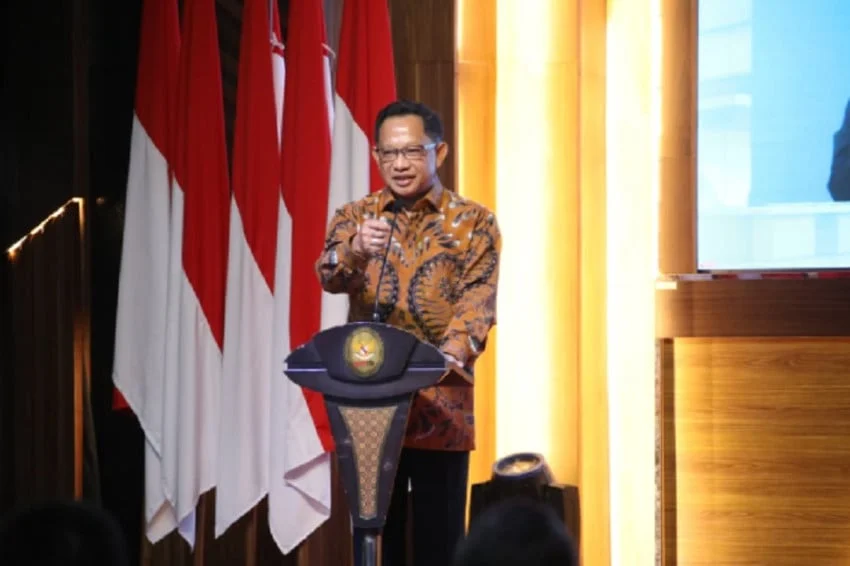
The Indonesian Ministry of Digital Communications (Kementerian Komdigi) has announced a strategic shift in the nation’s digital development roadmap, pivoting from basic infrastructure expansion to service quality enhancement and the widespread deployment of 5G technology. This pivotal policy update was revealed by Deputy Minister of Digital Communications Angga Raka Prabowo during the 81st commemoration of Post and Telecommunications Service Day (Hari Bhakti Postel) held at the PT Pos Indonesia Headquarters in Bandung.
According to the Deputy Minister, national digital connectivity has successfully surpassed the 90 percent threshold, reaching vast segments of the population across the archipelago’s major islands and remote regions. With the foundational connectivity network largely established, the government’s primary agenda is no longer merely about connecting unconnected regions, but rather ensuring that the existing digital infrastructure delivers high-speed, reliable, and affordable internet access to all citizens. This milestone marks the conclusion of an era heavily dominated by basic network rollout and ushers in a new phase centered on advanced digital optimization, economic enablement, and technological parity.
Strategic Allocation of Frequency Bands for 4G and 5G
To facilitate this technological leap, the Ministry of Digital Communications has enacted decisive regulatory measures, most notably the recent release and allocation of the 700 MHz and 2600 MHz frequency bands. These crucial spectrum assets have been made available for telecommunications operators to optimize network capacities and expand high-speed data transmission capabilities nationwide.
Elaborating on the strategic utilization of these spectrums, Angga explained that the lower-frequency 700 MHz band is fundamentally designed to optimize 4G coverage breadth, ensuring that the remaining remote and underserved pockets—commonly referred to as blank spots—are fully integrated into the national telecommunications grid. Because lower frequencies possess superior propagation characteristics and building-penetration capabilities, the 700 MHz band serves as the ultimate instrument for achieving total population coverage.
Conversely, the deployment of the 2600 MHz frequency band is engineered to act as a catalyst for 5G acceleration. While acknowledging that current 5G penetration and geographic coverage in Indonesia remain relatively limited, the Ministry is optimistic that the operationalization of the 2600 MHz spectrum will trigger rapid infrastructural growth. The higher capacity of this band is expected to accommodate massive data traffic, significantly lower latency, and support high-density urban connections, which are essential prerequisites for modern industrial automation, smart cities, and advanced consumer digital applications.
The Ministry has projected an aggressive timeline, anticipating that within the next three years, Indonesia will witness a transformative expansion of 5G technology. Crucially, the government has emphasized that this technological leap must be accompanied by competitive and affordable pricing structures, ensuring that next-generation connectivity remains accessible to the broader public rather than remaining an exclusive luxury.
Contextualizing the Milestone: The 81st Hari Bhakti Postel
The announcement was delivered against the backdrop of the 81st Hari Bhakti Postel celebrations in Bandung, an event of immense historical significance for Indonesia’s communications sector. Historically, Hari Bhakti Postel commemorates the historic takeover of the PTT (Post, Telegraph, and Telephone) office in Bandung from Japanese occupation forces by Indonesian youth and freedom fighters on September 27, 1945. This annual observance serves not only as a remembrance of the nation’s early struggles for sovereignty in communication but also as a strategic momentum for evaluating contemporary technological achievements.
By choosing this historic venue and date to outline the future of Indonesian telecommunications, the Ministry underscored the continuity of the struggle—shifting from securing the physical means of communication in the mid-20th century to securing digital sovereignty and technological competitiveness in the 21st century. The event brought together key stakeholders from state-owned enterprises, private telecommunications providers, regulatory bodies, and industry experts to evaluate the state of the national digital ecosystem.
The Tri-Pillar Vision: Connected, Growing, and Protected
The strategic pivot toward service quality and 5G acceleration is closely aligned with the overarching vision promoted by the Ministry of Digital Communications, encapsulated in the national digital transformation mantra: Connected, Growing, and Protected (Terkoneksi, Tumbuh, and Terjaga).
The "Connected" pillar reflects the physical and digital integration of the nation, a goal largely validated by the recent achievement of over 90 percent connectivity reach. The "Growing" pillar emphasizes the economic multiplier effect of digital infrastructure, wherein high-speed internet acts as the foundational engine for digital startups, micro, small, and medium enterprises (MSMEs), and national productivity. Meanwhile, the "Protected" pillar addresses the critical need for cybersecurity, data sovereignty, and the creation of a safe digital environment for all internet users amidst rising global digital threats.
During his address in Bandung, Angga emphasized that achieving this threefold vision requires robust, continuous collaboration among various societal layers. He noted that the monumental progress achieved thus far is the direct result of a sustained synergy between the central government, telecommunications industry players, and the active participation of the public.
Macro Economic and Technological Implications
The shift from quantitative expansion to qualitative enhancement carries profound implications for Indonesia’s macroeconomic landscape and its position within the global digital economy. As Southeast Asia’s largest digital market, Indonesia’s transition toward mature 5G infrastructure is expected to unlock substantial economic value across multiple sectors, including manufacturing, healthcare, logistics, and education.
Industry analysts point out that while 4G is sufficient for basic web browsing, social media consumption, and standard video streaming, the demands of Industry 4.0—such as the Internet of Things (IoT), artificial intelligence (AI) integration, and autonomous supply chains—require the ultra-reliable, low-latency capabilities unique to 5G networks. By strategically freeing up the 2600 MHz band, the Indonesian government is effectively lowering the infrastructural barrier for telecommunications operators to invest heavily in standalone and non-standalone 5G architectures.
However, industry observers also note several challenges that lie ahead. The rollout of 5G infrastructure requires intensive capital expenditure (CapEx) from telecommunications operators, particularly in terms of densifying base transceiver stations (BTS) and upgrading backhaul transmission networks. Ensuring commercial viability while maintaining affordable pricing for consumers—as mandated by the Ministry—will require careful regulatory balancing, potentially through infrastructure-sharing frameworks and targeted fiscal incentives.
Furthermore, bridging the digital divide goes beyond merely covering 90 percent of the population geographically; it necessitates addressing the digital literacy gap. As higher-speed networks become more pervasive, simultaneous efforts in digital education will be crucial to ensure that the populace can effectively leverage advanced technologies for economic empowerment rather than passive consumption.
Looking Ahead: The Three-Year Horizon
With the Ministry’s target of achieving widespread and affordable 5G acceleration within the next three years, the coming period is expected to witness intense commercial competition and infrastructure deployment among major cellular operators in Indonesia. The successful execution of this roadmap will depend heavily on regulatory consistency, spectrum management efficiency, and the continued harmonization of interests between state regulators and private industry stakeholders.
As Indonesia consolidates its status as a rising digital powerhouse in the region, the commitments articulated in Bandung signal a mature phase in national digital policy—one where connectivity is no longer just about bridging distances, but about empowering futures through uncompromised digital quality.