
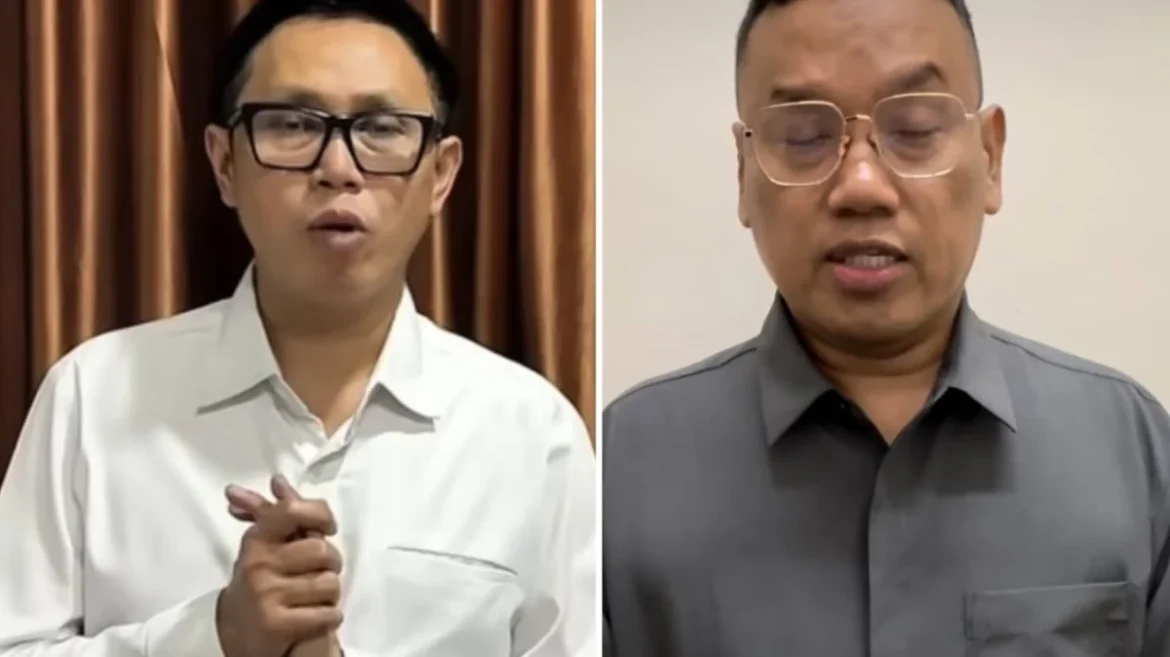
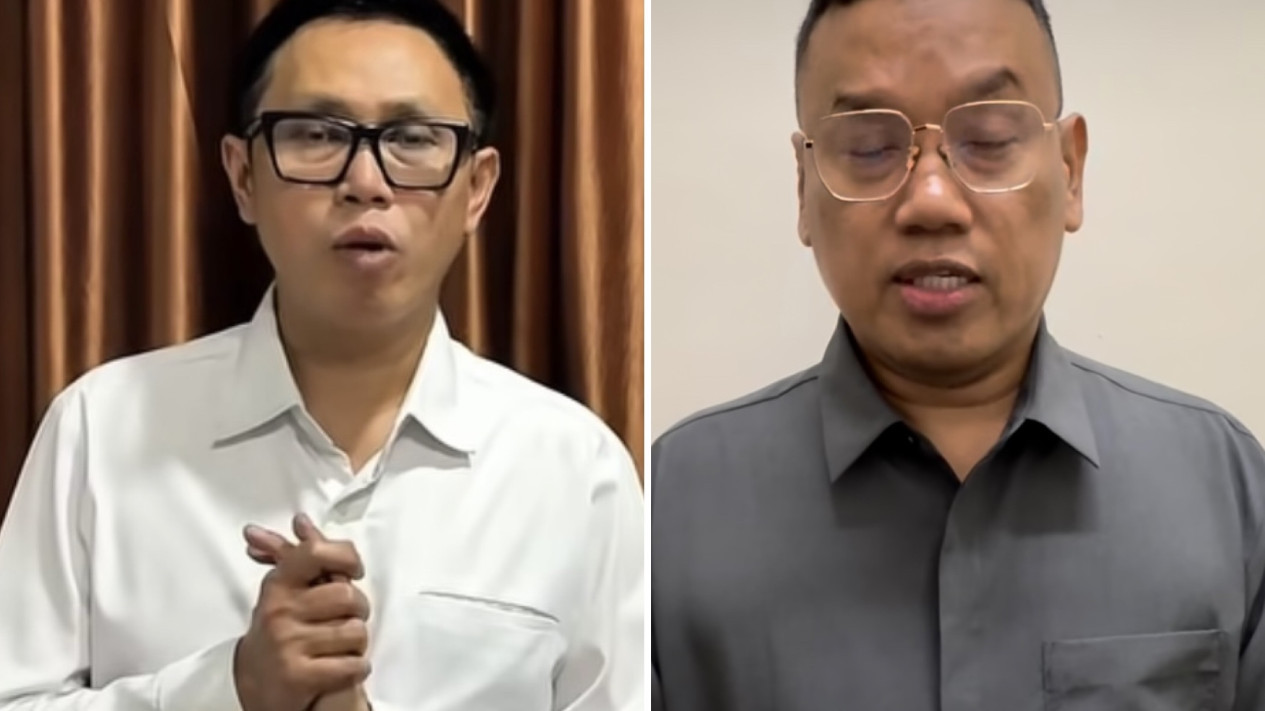
Jakarta, October 22, 2025 – The political futures of prominent public figures Eko Hendro Purnomo, widely known as Eko Patrio, and Surya Utama, or Uya Kuya, continue to be a subject of public and political discourse, nearly two months after their official non-activation from the House of Representatives (DPR RI). Both individuals, who had transitioned from successful careers in entertainment to national politics under the banner of the National Mandate Party (PAN), were confirmed by party officials to still hold their non-active status, leaving their long-term roles in legislative affairs uncertain. This development underscores the complex dynamics within political parties and the evolving landscape of celebrity involvement in Indonesian governance.
Confirmation from PAN Leadership
The latest update regarding Eko Patrio and Uya Kuya came from Eddy Soeparno, the Deputy Chairman of PAN and also a Deputy Speaker of the People’s Consultative Assembly (MPR RI). Speaking to reporters in Jakarta on Wednesday, October 22, 2025, Soeparno reiterated that the party’s central executive board (DPP PAN) had maintained their decision regarding the two former lawmakers. "As of now, the DPP PAN still maintains the status of non-activating our members," Soeparno stated, confirming the continuation of the decision first announced in late August. This statement suggests that while the initial action has been taken, a definitive resolution or future path for Eko Patrio and Uya Kuya has yet to be formally determined or publicly disclosed by the party.
Soeparno further elaborated that any subsequent developments concerning their status would hinge on the directives of PAN Chairman Zulkifli Hasan. "The developments, of course, we are awaiting further directives from the chairman, and it will then be communicated to the leadership of the PAN faction," he explained. This indicates that the final decision-making authority rests with the party’s highest leadership, signaling a methodical, albeit internal, process for managing such high-profile personnel matters. The communication channel through the faction leadership suggests a coordinated approach to ensure party discipline and coherence within the DPR.
Chronology of the Non-Activation Decision
The decision to non-activate Eko Patrio and Uya Kuya from their roles as DPR RI members was initially announced on Sunday, August 31, 2025. A press release issued by the DPP PAN, signed by Chairman Zulkifli Hasan and Deputy Chairman Viva Yoga Mauladi, officially conveyed the party’s stance. The statement specified that the non-activation would be effective starting Monday, September 1, 2025.
The press release cited "observing current dynamics and developments" (mencermati dinamika dan perkembangan saat ini) as the primary reason for the decision. This rather broad phrasing left room for interpretation among political observers regarding the specific triggers behind the move. The party’s announcement also included a call for public calm and trust in the government of President Prabowo Subianto, alongside a reassurance that PAN and the government would always side with the people. This latter part of the statement might suggest that the non-activation could be related to broader political alignments or a strategic repositioning of the party in the current political climate.
Understanding "Non-Active" Status in Indonesian Politics
The concept of a "non-active" status for a member of the DPR RI, while not a common occurrence, represents an internal party mechanism to address various situations without immediately resorting to full dismissal or recall (Penggantian Antar Waktu – PAW). Unlike a formal recall, which typically involves a more complex legal and procedural process to replace a legislator, non-activation is usually an internal party disciplinary or strategic measure.
A non-active status implies that while the individual technically remains a member of the legislative body, their active duties, participation in parliamentary committees, and potentially their voting rights or allowances might be suspended or curtailed by the party. This status can be temporary, allowing the party time to evaluate a situation, conduct internal investigations, or await specific political developments. It can be a softer form of sanction, a strategic pause, or a prelude to a more permanent decision depending on the party’s internal regulations and the specific circumstances. For the individuals involved, it means a significant reduction in their political influence and public profile as elected representatives. It also raises questions about their continued salary and benefits during this period, which are typically governed by parliamentary rules and party agreements.
Background of Eko Patrio and Uya Kuya: From Entertainment to Politics
Eko Hendro Purnomo, widely known as Eko Patrio, rose to fame as a comedian and television personality, becoming a household name in Indonesia. His transition into politics began in 2009 when he was elected to the DPR RI, representing the East Java VIII electoral district. Known for his charismatic public presence and ability to connect with diverse audiences, Eko Patrio successfully leveraged his celebrity status into a political career, serving multiple terms as a legislator. Throughout his tenure, he was often seen as a bridge between the entertainment industry and the political sphere, advocating for creative industries and youth engagement. His consistent re-election underscored the power of celebrity in Indonesian electoral politics.
Surya Utama, or Uya Kuya, similarly carved out a significant career in the entertainment industry as a magician, television presenter, and illusionist. Known for his distinctive style and popular talk shows, Uya Kuya made his political debut in the 2019 general election, securing a seat in the DPR RI representing the Jakarta II electoral district. His entry into parliament was seen as a continuation of the trend of popular figures entering politics, bringing a new dynamic to the legislative body. Both Eko Patrio and Uya Kuya were members of PAN, a party that has historically attracted public figures and emphasized a populist appeal. Their presence in the DPR was often highlighted in media, contributing to PAN’s visibility.
The Phenomenon of Celebrity Politicians in Indonesia
The political journeys of Eko Patrio and Uya Kuya are emblematic of a broader trend in Indonesia where celebrities frequently enter the political arena. This phenomenon is not unique to Indonesia but is particularly pronounced given the country’s large population, diverse media landscape, and the often personality-driven nature of its politics. The advantages for celebrities are clear: instant name recognition, established public platforms, and pre-existing fan bases that can translate into votes. For political parties, recruiting celebrities can enhance their public image, attract new demographics, and provide a cost-effective way to gain media attention.

However, the integration of celebrities into politics also presents challenges. Critics often question their legislative experience, policy expertise, and commitment to public service beyond their personal branding. The effectiveness of celebrity politicians in contributing to substantive policy-making and oversight functions of the DPR is a recurring debate. While some, like Nurul Arifin (Golkar) or Rachel Maryam (Gerindra), have carved out respected legislative careers, others have faced scrutiny over attendance, performance, or perceived conflicts of interest. The non-activation of Eko Patrio and Uya Kuya could be interpreted within this context, raising questions about the party’s evaluation of their performance or their alignment with evolving party strategies.
Potential Factors Behind the Decision and Broader Implications
While the official reason for the non-activation remains broadly defined as "current dynamics and developments," political analysts have begun to speculate on the underlying factors. Several possibilities could be at play:
- Internal Party Consolidation: With the recent presidential election and the formation of a new government under President Prabowo Subianto, PAN, as a part of the ruling coalition, might be undergoing an internal consolidation phase. This could involve realigning its legislative strategies, reinforcing party discipline, or making room for new figures who are perceived to be more aligned with the party’s current and future objectives.
- Performance Review: Although not explicitly stated, it is possible that the party conducted an internal review of its members’ legislative performance, public engagement, or adherence to party lines. In a competitive political environment, parties are under constant pressure to demonstrate effectiveness and responsiveness.
- Public Image and Perception: The actions or public statements of high-profile members can significantly impact a party’s image. The "dynamics and developments" could refer to shifts in public sentiment, specific controversies, or a desire by PAN to project a particular image in the new political era.
- Strategic Positioning for Future Elections: With the 2029 general elections already on the horizon in political planning, parties often begin to recalibrate their candidate lists and legislative teams well in advance. The non-activation could be a preliminary step in a broader strategic move to prepare for future electoral contests, perhaps paving the way for new candidates or different roles for existing members.
- Alignment with Government Agenda: As a member of the ruling coalition, PAN is expected to robustly support the government’s agenda. Any perceived deviation or lack of active participation from its DPR members could be seen as an impediment to this alignment.
The non-active status carries significant implications for Eko Patrio and Uya Kuya personally. It effectively sidelines them from active parliamentary duties, potentially impacting their political careers and public standing. While they remain party members, their influence within the DPR is significantly curtailed. This could force them to re-evaluate their political aspirations or even consider a return to the entertainment industry, where they still hold considerable sway.
For PAN, the decision demonstrates the party’s prerogative to enforce internal discipline and manage its legislative team. It sends a signal to other party members about the importance of adherence to party directives and performance expectations. However, it also carries the risk of alienating their popular figures’ fan bases, which could have electoral consequences in the long run. The party will need to carefully manage the narrative surrounding this decision to avoid any perception of internal discord or unfair treatment.
What Lies Ahead?
As the situation unfolds, all eyes will be on PAN Chairman Zulkifli Hasan for further directives. The ambiguity of the "non-active" status means that several outcomes are possible: a reinstatement to active duty after a period of evaluation, a formal recall (PAW) leading to their replacement by the next candidate on PAN’s electoral list, or a different internal party role outside the DPR. The party’s decision will not only shape the individual political paths of Eko Patrio and Uya Kuya but also offer insights into the internal workings and strategic priorities of PAN in the current political climate. The case also serves as a poignant reminder of the often-unpredictable nature of political careers, especially for those who transition from the public spotlight of entertainment to the complex world of governance. The coming months will likely bring more clarity to this evolving political saga.


