
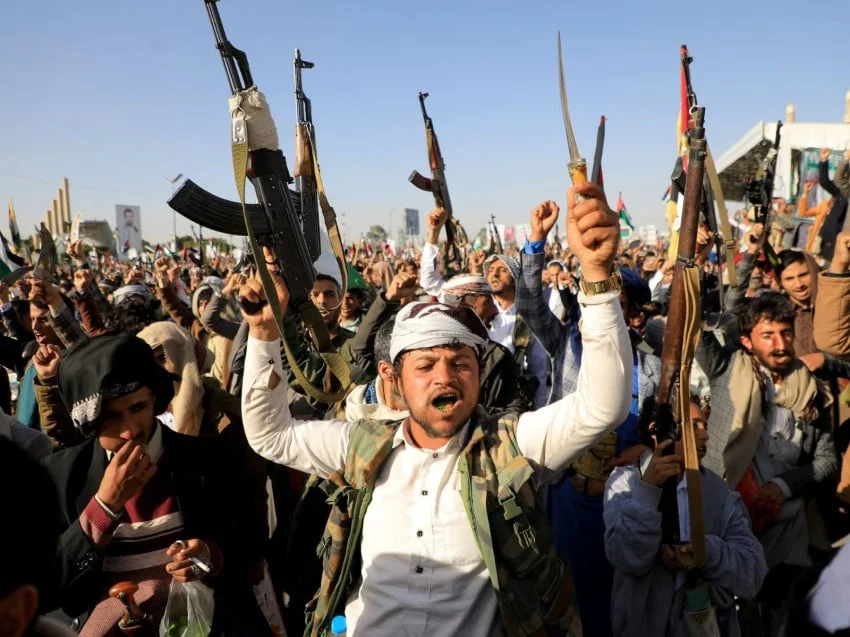
The escalation of hostilities in the Red Sea and the Arabian Peninsula has brought the Houthi movement in Yemen into sharp focus, revealing a sophisticated military apparatus that bears the unmistakable imprint of Iranian strategic doctrine. As the Houthi Ansar Allah group continues to project power far beyond its traditional territorial boundaries, defense analysts and geopolitical experts have identified a pattern of warfare that mirrors the asymmetric tactics honed by the Islamic Revolutionary Guard Corps (IRGC). By operating as a strategic "wild card" for Tehran, the Houthis have successfully transformed from a localized insurgent force into a potent regional actor capable of disrupting global trade and challenging the security architecture of the Middle East.
The Evolution of the Houthi Military Doctrine
The military evolution of the Houthi movement is inextricably linked to the clandestine transfer of technology and tactical training from Iran. While the Houthis maintain a degree of operational autonomy that distinguishes them from other regional proxies, their arsenal—specifically in the realm of unmanned aerial vehicles (UAVs) and ballistic missiles—suggests a deep-seated integration with Iranian defense manufacturing. Alexandru Hudisteanu, a prominent defense analyst, characterizes the Houthis as the primary "prototype" for Iran’s drone-centric warfare model.
This model relies on the proliferation of low-cost, high-impact systems that can overwhelm sophisticated air defense networks. By utilizing "swarm" tactics and cruise missiles with land-attack capabilities, the Houthis have effectively bypassed the conventional military advantages held by the Saudi-led coalition. The strategic intent is clear: to maintain a permanent state of insecurity that compels regional adversaries to divert resources toward defensive postures rather than offensive campaigns.
Chronology of Escalation: From Local Insurgency to Regional Threat
The trajectory of Houthi military capabilities has been marked by several critical milestones over the past decade.
- 2014–2015: The Houthis seize control of Sanaa, prompting a regional military intervention led by Saudi Arabia. During this phase, Houthi attacks were largely confined to cross-border skirmishes using conventional infantry tactics.
- 2017–2018: The first signs of advanced Iranian-supplied technology emerge. The deployment of Burkan-2H ballistic missiles targeting Riyadh signals a qualitative shift in Houthi capabilities.
- 2019: The attack on the Abqaiq and Khurais oil facilities in Saudi Arabia, claimed by the Houthis but widely attributed to Iranian-origin drones and missiles, demonstrates the group’s ability to strike the "heart" of global energy infrastructure.
- 2023–2024: The Houthis pivot to maritime interdiction, leveraging their control over the Bab al-Mandeb Strait to target commercial vessels. This represents a transition from territorial warfare to a sophisticated campaign of economic coercion.
Four Pillars of Houthi Asymmetric Warfare
The tactical framework employed by the Houthis is defined by four core components, each meticulously refined to leverage Iran’s "forward defense" strategy.
1. The Proliferation of Drone and Missile Technology
The Houthi arsenal is no longer limited to improvised explosive devices or small arms. The integration of long-range UAVs, such as the Samad-3 and the Quds-class cruise missiles, has provided the group with a strategic depth previously reserved for state actors. These weapons are often supplied as modular kits or assembled locally with Iranian technical guidance. The primary advantage is cost; by utilizing cheap drone technology to force the expenditure of expensive interceptor missiles (such as the Patriot PAC-3), the Houthis create an unsustainable attrition rate for their opponents.
2. The Weaponization of Economic Chokepoints
Drawing lessons from the Iranian playbook in the Strait of Hormuz, the Houthis have recognized that control over maritime transit is a potent diplomatic leverage point. By targeting the Bab al-Mandeb Strait—a vital artery for global oil and consumer goods transit—they have successfully internationalized their conflict. This tactic forces global powers to reconsider the security costs of shipping, thereby magnifying the political impact of the Houthi movement on the global stage.
3. Striking the Heart of Defense Infrastructure
Beyond the maritime theater, the Houthis continue to prioritize strikes against high-value strategic targets within Saudi Arabia and the United Arab Emirates. The targeting of oil pipelines, such as the East-West Pipeline (Petroline), serves to illustrate the vulnerability of the Gulf states’ economic lifeline. These attacks are not merely military operations; they are psychological operations designed to undermine investor confidence and expose the limitations of Western-supplied air defense systems in the face of persistent, low-altitude saturation attacks.
4. Asymmetric Intelligence and Surveillance
The effectiveness of Houthi strikes is often bolstered by sophisticated intelligence, surveillance, and reconnaissance (ISR) capabilities. Reports indicate that Iranian naval vessels operating in the Red Sea provide real-time targeting data to Houthi units, allowing them to identify and track commercial vessels with high precision. This level of coordination underscores the symbiotic relationship between Tehran and its regional allies.
Official Responses and Geopolitical Implications
The international community remains divided on how to mitigate the threat posed by the Houthi-Iran alignment. Saudi Arabia and the United Arab Emirates have consistently called for stricter enforcement of arms embargoes, pointing to the United Nations reports documenting the illegal shipment of components from Iran to Yemen. Conversely, the Iranian government maintains that its relationship with the Houthis is purely political and advisory, categorically denying the supply of advanced weaponry.
The United States and its European allies have responded by increasing their naval presence in the Red Sea, leading to the formation of maritime security task forces. However, military analysts warn that naval deterrence alone is insufficient to address the root causes of the instability. "The problem is that the Houthis have successfully framed their actions as a regional struggle against foreign intervention," notes a security consultant based in London. "As long as they maintain a steady supply line for parts and technical expertise, they can continue to disrupt regional stability regardless of how many naval patrols are present."
Analysis of Future Projections
The strategic implications of the current conflict are profound. The Houthi-Iran axis has demonstrated that non-state actors can possess a "strategic deterrent" once thought exclusive to sovereign nations. This has triggered a regional arms race, with neighboring states increasing their investments in directed-energy weapons, electronic warfare, and next-generation air defense grids.
Furthermore, the "wild card" status of the Houthis gives Iran significant deniability. Tehran can effectively pressure the international community, influence oil markets, and strain the diplomatic relations of its rivals without engaging in direct state-on-state conflict. For the international order, this represents a shift toward a "gray zone" reality where the lines between peace and war are increasingly blurred by the actions of proxy forces.
Conclusion
The Houthi movement has transcended its origins to become a critical component of a broader regional strategy. By adopting and refining Iranian military tactics—specifically in the domains of drone warfare, missile technology, and economic disruption—they have established a persistent threat to global security. The ongoing crisis in the Red Sea is not merely a localized conflict but a manifestation of a new era of asymmetric power projection. As global reliance on the stability of these maritime chokepoints remains absolute, the influence of the Houthi-Iran alliance will continue to shape the geopolitical landscape of the Middle East for the foreseeable future. The challenge for policymakers will be to develop a comprehensive strategy that addresses not only the immediate tactical threats but also the underlying political and logistical networks that empower these non-state actors to challenge the status quo.
