
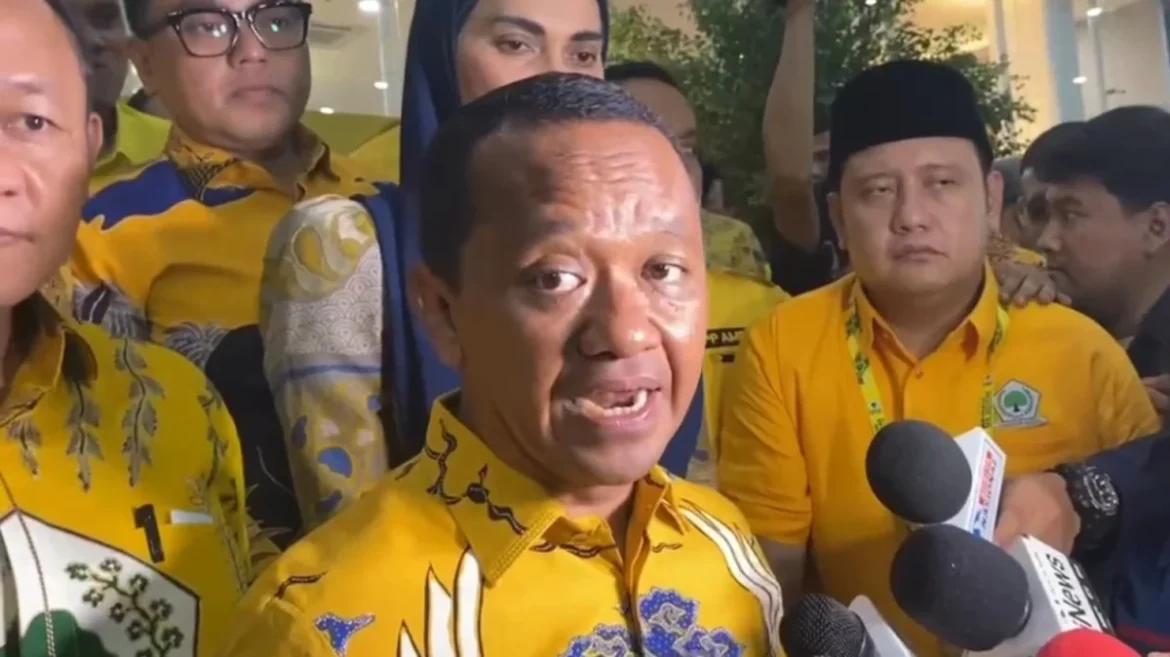
Golkar Party Chairman Bahlil Lahadalia has issued a stern directive to all party members, urging them to reinforce internal consolidation and prioritize absolute unity. Speaking at the commemoration of the party’s 61st anniversary, held at the Golkar Central Leadership Board (DPP) headquarters in Slipi, West Jakarta, Bahlil cautioned cadres to refrain from engaging in any unsanctioned political maneuvers or "additional movements" that could potentially undermine the party’s stability.
The warning highlights the persistent internal vulnerabilities that political parties face, particularly large and historically complex coalitions like Golkar. Bahlil emphasized that while political evolution naturally stems from internal debate, all actions must strictly serve the collective progress of the organization rather than individual factions.
The Anniversary Address and Warning Against Internal Friction
Addressing a gathering of senior figures, regional leaders, and grassroots cadres during the 61st-anniversary celebration on Monday, October 20, 2025, Bahlil pulled no punches regarding the necessity of discipline. He made it clear that organizational cohesion is the primary prerequisite for maintaining political relevance and electoral success.
"If you cannot yet contribute a solid foundation, then at least do not create additional movements. I know, ‘uncle’ knows. It is not that ‘uncle’ does not know; ‘uncle’ knows," Bahlil stated using a familiar conversational tone to drive home his point to the audience.
To clear up any ambiguity or potential misinterpretation by the media, the Golkar leader later clarified what he meant by "additional movements." Contrary to what observers might interpret as clandestine plotting or rebellious factions, Bahlil defined the concept through a constructive lens, urging cadres to channel their energy strictly into productivity and organizational advancement.

"So journalists will certainly ask me, what is meant by additional movements? The additional movements I mean are constructive and productive movements for the progress of the Golkar Party going forward, toward a better direction," he elaborated.
Despite his warning, Bahlil—who also serves as the Minister of Energy and Mineral Resources (ESDM) in the national cabinet—maintained that his party currently enjoys a high level of harmony. He claimed that under his tenure, the party leadership and its wider network have remained remarkably united, even acknowledging that occasional policy debates and structural friction are unavoidable given Golkar’s diverse origins.
Historical Context and the Golkar Identity
To fully understand Bahlil Lahadalia’s emphasis on internal consolidation, it is necessary to examine the historical DNA of the Golkar Party. Established during the New Order era as a "Joint Secretariat of Functional Groups" (Sekber Golkar), the party was intentionally built as an umbrella organization representing various societal sectors—including labor, farmers, youth, professionals, and the military—rather than a traditional ideological party.
Because of this foundational architecture, Golkar has historically been prone to intense internal competition, factionalism, and power struggles. Over the decades, these structural characteristics have often manifested as internal rivalries during national leadership conferences (Munas) and ahead of major electoral cycles.
When Bahlil notes that Golkar was born from various functional groups and that internal dynamics are natural, he is referencing this complex historical reality. However, modern political survival in Indonesia’s hyper-competitive multi-party system demands strict discipline. Fragmented parties routinely perform poorly at the ballot box, a lesson that current leadership is eager to avoid as they look ahead to future legislative and executive contests.
"Now, for our management, Alhamdulillah, the cohesion is extraordinary, even though we know that Golkar was born from various functional groups, so dynamics will certainly occur, and those dynamics are an asset, an asset for the party," Bahlil asserted. He added that an evolving political party must always embrace healthy debate, provided that those differing opinions are managed effectively under a unified command structure. "Therefore, I say to all members of the Golkar Party extended family, help this leadership to build a solid consolidation," he concluded.

Implications for the Broader Indonesian Political Landscape
Bahlil’s call for strict solidarity comes at a critical juncture for Indonesian political parties. As the dust settles from previous electoral cycles and political actors begin positioning themselves for the 2029 general elections, party elites are acutely aware of the dangers posed by premature ambitions or uncoordinated factional maneuvers.
Political analysts suggest that warnings of this nature are standard preventative measures designed to project strength and project unity to external coalition partners. In Indonesia’s presidential system, where executive power is shared among diverse coalition parties, internal stability is viewed by prospective allies as a key indicator of a party’s reliability. A fractured party struggles to bargain effectively for cabinet seats, policy influence, and strategic electoral pairings.
Furthermore, Bahlil’s dual role as a senior cabinet minister and the leader of the country’s second-largest legislative party places him under intense public scrutiny. Every internal shift within Golkar is heavily analyzed by political observers seeking clues about the direction of national policymaking and future coalition alignments. By publicly demanding that cadres cease unauthorized activities and focus on institutional development, Bahlil is attempting to streamline party operations and neutralize potential internal threats before they can materialize into public scandals or institutional splits.
As Golkar navigates its seventh decade of political existence, the leadership’s ability to balance the historical tendency toward factionalism with modern requirements for centralized discipline will largely determine whether the party can maintain its status as a premier powerhouse in Indonesian governance.
