July 23, 2026 – 05:02 WIB
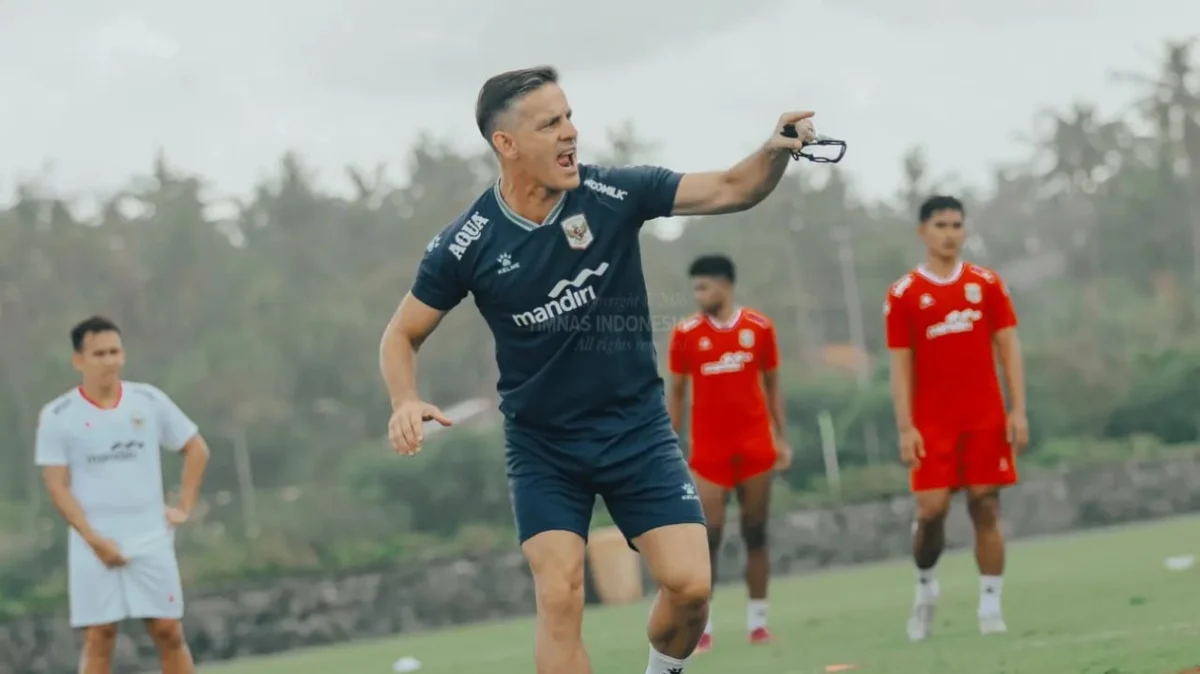
The Indonesian national football team, affectionately known as the Garuda, is navigating a critical juncture as preparations intensify for the highly anticipated AFF Cup 2026. Amidst rigorous training sessions and strategic evaluations, Head Coach John Herdman is faced with the difficult task of narrowing down a provisional squad of 50 players to the final 23 who will represent the nation in Southeast Asia’s premier football tournament. This crucial selection process has already seen its first casualties, with two players, Mauro Zijlstra and Luke Vickery, being forced to withdraw due to injury and club commitments, respectively.
The intensive training camp, held at the Bali United Training Center, has been a crucible for aspiring national team members. With only a limited number of spots available on the final roster, the competition among the invited players has reached a fever pitch. Every training session, every tactical drill, and every friendly match carries immense weight as the coaching staff meticulously assesses individual performances and team synergy. The impending cuts mean that for some, the dream of participating in the AFF Cup 2026 will remain just that – a dream deferred.
Mauro Zijlstra’s AFF Cup Aspirations Halted by Hamstring Injury
One of the most significant setbacks for the Timnas Indonesia camp is the unfortunate injury sustained by promising naturalized striker, Mauro Zijlstra. The 21-year-old, who has shown considerable promise during the training camp, felt a sharp pain in his hamstring during a recent training session. This injury comes at a particularly inopportune moment, coinciding with the final stages of player evaluation by the coaching staff.
Head Coach John Herdman expressed his deep disappointment over Zijlstra’s predicament. "It’s a real shame," Herdman stated, reflecting on the striker’s potential. "Mauro was showing a lot of encouraging progress during the camp. In one of the training sessions, he felt a problem with his hamstring."
Subsequent medical examinations confirmed that Zijlstra’s injury requires a significant recovery period, casting a dark cloud over his chances of featuring in the AFF Cup 2026. The medical team’s prognosis indicates that the recovery timeline will likely see him sidelined for a substantial portion, if not the entirety, of the tournament. "After the examination, the injury means he will likely have to miss at least a part of the tournament," the Canadian tactician added.
While the official list of players to be released from the squad has not yet been formally announced, Herdman’s statement serves as a strong indication that Zijlstra’s participation is now highly improbable. The coaching staff’s decision-making process is heavily influenced by the need to field a squad in peak physical condition. Given the demanding schedule of the AFF Cup, which often involves multiple matches in quick succession, the risk of carrying an injured player is a gamble the team is unwilling to take. This situation underscores the fine margins and the often harsh realities of professional football, where a single moment of misfortune can derail months of preparation and aspiration.
Luke Vickery Becomes First Casualty Amidst Club Release Dispute
Prior to Zijlstra’s injury, the Timnas Indonesia squad had already seen another player, Luke Vickery, ruled out of contention. The midfielder, who had recently completed his naturalization process, will not be joining the Garuda squad for the AFF Cup 2026 due to his club, Macarthur Bulls FC, refusing to grant him release.
The AFF Cup, while a prestigious regional tournament, falls outside the official FIFA International Match Calendar. This designation grants clubs the right to withhold their players from participating in such competitions, particularly if their release would disrupt pre-season preparations or jeopardize the club’s own league campaigns. Macarthur Bulls FC, an Australian A-League club, has reportedly chosen to retain Vickery to facilitate his integration into their squad for the upcoming A-League season.
Herdman confirmed that the Indonesian Football Association (PSSI) had made earnest efforts to negotiate with Macarthur Bulls FC. However, these negotiations ultimately proved unsuccessful. "We actually tried to negotiate with Macarthur Bulls," Herdman explained. "But the club from Australia ultimately decided to keep Luke to focus on their preparations for the new A-League season."
This situation highlights a recurring challenge for national teams in Southeast Asia, where many players ply their trade in leagues that do not fully align with FIFA’s international calendar. The PSSI’s commitment to securing player releases for national duty often involves complex diplomatic efforts and understanding the contractual obligations and priorities of foreign clubs. The loss of Vickery, a player who would have added depth and versatility to the midfield, is a blow to Herdman’s tactical plans and the overall strength of the squad.
Background and Context: The AFF Cup 2026 and Indonesia’s Ambitions
The AFF Cup, formerly known as the Tiger Cup, is the premier international football competition contested by the men’s national teams of the members of the ASEAN Football Federation (AFF). First held in 1996, the tournament has grown in stature and popularity, becoming a major focal point for footballing rivalries and national pride across the region. The 2026 edition is particularly significant for Indonesia, a nation with a passionate footballing fanbase and a long-held ambition to lift the coveted trophy.
Indonesia has been a consistent participant in the AFF Cup, reaching the final on multiple occasions but has yet to secure a championship title. Their best performances came in 2000, 2002, 2004, 2010, and 2016, where they finished as runners-up. This persistent pursuit of regional glory has fueled a strong desire within the PSSI and the national team setup to assemble the strongest possible squad for every edition.
The appointment of John Herdman as head coach marked a new era for Indonesian football, with the experienced Canadian coach tasked with elevating the team’s performance on the international stage. Herdman, who previously led the Canadian women’s national team to Olympic bronze and guided the men’s team to the World Cup, brought a wealth of international coaching experience and a reputation for instilling discipline, tactical acumen, and a winning mentality. His focus on developing a cohesive and competitive squad capable of challenging the established powers in Southeast Asia is paramount.
The current selection process, involving a large pool of 50 players, reflects Herdman’s comprehensive approach to talent identification. It allows him to assess a wide range of players, including established stars, emerging talents, and recently naturalized individuals, under competitive training conditions. This extensive evaluation is crucial for building a squad that not only possesses individual quality but also demonstrates the chemistry and adaptability required to succeed in a high-pressure tournament.
The Broader Implications: Squad Depth and Tactical Flexibility
The forced withdrawals of Zijlstra and Vickery, while disappointing, also serve as a stark reminder of the importance of squad depth. In a tournament like the AFF Cup, with its condensed schedule and the inherent unpredictability of football, injuries and unforeseen circumstances are almost inevitable. The ability of a team to absorb such setbacks and maintain its performance level often hinges on the quality of players on the bench and their readiness to step into key roles.
For John Herdman, these early departures necessitate a re-evaluation of his tactical options and potential fallback strategies. The absence of Zijlstra, a natural striker, might prompt him to explore alternative attacking formations or rely more heavily on versatile forwards who can adapt to different roles. Similarly, Vickery’s unavailability in midfield could lead to increased opportunities for other midfielders to prove their mettle and secure a place in the final squad.
The PSSI and the coaching staff will undoubtedly be intensifying their efforts to scout and potentially fast-track other eligible players if the need arises. The process of player selection is dynamic, and the team must remain agile and prepared to adapt to changing circumstances. The AFF Cup 2026 campaign for Indonesia is not just about the starting eleven; it is about the collective strength and resilience of the entire 23-man squad.
As the deadline for submitting the final squad approaches, the remaining players in the training camp will feel the intensified pressure to perform. Every training session becomes a potential audition, and every moment on the pitch is an opportunity to cement their place. The journey to the AFF Cup 2026 is proving to be a challenging one for the Timnas Indonesia, marked by both the excitement of potential and the harsh realities of the sport. The nation will be watching closely to see how Coach Herdman and his team navigate these initial hurdles and assemble a squad capable of finally bringing the AFF Cup trophy home.