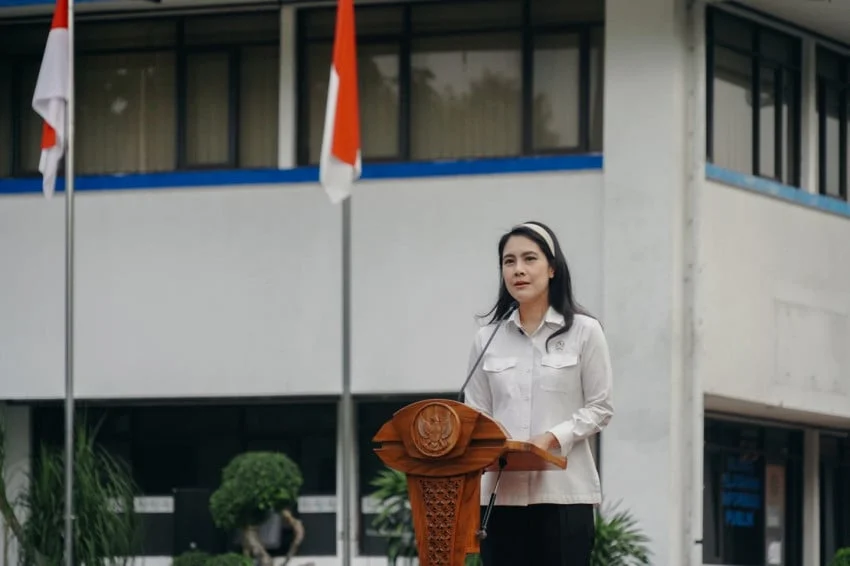
The Indonesian Ministry of Population and Family Development, in conjunction with the National Population and Family Planning Board (BKKBN), officially concluded the second cohort of the 2026 Indonesian Family Academy (Akademi Keluarga Indonesia) on October 29, 2026. The two-day intensive program, held at the Ministry’s headquarters in Jakarta, served as a strategic platform to equip the next generation with the knowledge, values, and leadership skills necessary to foster healthy, resilient, and future-ready families.
Presided over by the Deputy Minister of Population and Family Development, Ratu Ayu Isyana Bagoes Oka, the closing ceremony marked the culmination of a rigorous curriculum that brought together 134 high school students and 67 school principals representing 34 provinces across the Indonesian archipelago. The event underscored the government’s ongoing commitment to demographic development and the vital role of educational institutions in shaping the social fabric of the nation.
The Role of PIK-R in Adolescent Development
During her keynote address, Deputy Minister Isyana Bagoes Oka emphasized the indispensable role of the Youth Information and Counseling Centers (Pusat Informasi dan Konseling Remaja, or PIK-R) as critical sanctuaries for the nation’s youth. In the current digital era, where adolescents face unprecedented psychological and social pressures, these centers act as safe spaces for peer-to-peer consultation and guidance.
"The PIK-R is not merely an extracurricular activity; it is a vital pillar of adolescent support systems," Isyana remarked during the event. "It serves as a space where teenagers can discuss issues ranging from reproductive health and mental well-being to life planning and career aspirations in a non-judgmental environment. By empowering students with the capacity to listen and provide accurate information, we are effectively building a front-line defense against common adolescent risks such as early marriage, substance abuse, and mental health crises."
The Deputy Minister’s emphasis on PIK-R aligns with the broader national agenda to reduce the prevalence of stunting and to improve the quality of human resources by ensuring that the younger generation enters adulthood with clear, informed life goals.
Background and Program Objectives
The Indonesian Family Academy is an initiative designed to bridge the gap between policy-level population planning and grassroots implementation within schools. By inviting both students and school administrators, the BKKBN aims to create a top-down and bottom-up synergy. Principals are encouraged to integrate family development values into their school cultures, while students are trained to become "youth ambassadors" who can influence their peers positively.
The curriculum of the 2026 cohort focused on three core pillars:
- Character Building and Resilience: Teaching participants how to navigate setbacks and cultivate a growth mindset.
- Family Planning and Demographic Awareness: Educating youth on the long-term socioeconomic benefits of planned, healthy families.
- Leadership and Peer Advocacy: Developing communication skills to help students lead PIK-R initiatives within their respective schools.
The selection of 134 students from 34 provinces highlights the inclusivity of the program. Participants were chosen based on their potential as student leaders and their demonstrated interest in community service. Over the course of the two-day event, these students engaged in workshops, simulation exercises, and panel discussions with experts in psychology, sociology, and public health.
Addressing the Demographic Challenge
The urgency of this initiative is rooted in Indonesia’s ongoing "demographic bonus"—a period in which the working-age population exceeds the number of dependents. To harness this advantage, the government has prioritized the quality of human capital. Data from the Ministry of Population and Family Development indicates that the social habits formed during the adolescent years are significant predictors of future family stability.
"I am firmly convinced that every participant here is a resilient individual with extraordinary potential," Isyana stated. "However, we must remain mindful that many of our peers across the country have not had the same opportunity to access such platforms. It is our collective responsibility to ensure that the knowledge gained here is cascaded down to your classmates and local communities."

This sentiment reflects a strategic shift in the BKKBN’s approach: moving away from purely administrative population control toward a more holistic model of "Family Development." By targeting the mindset of the youth, the ministry hopes to influence social norms regarding marriage age, education attainment, and reproductive health over the next decade.
Official Response and Institutional Synergy
The involvement of school principals is a deliberate tactical move by the BKKBN. Principals serve as the primary gatekeepers of the educational environment. By bringing them to the national level, the ministry ensures that the "Akademi Keluarga" principles are not confined to a single event but are institutionalized within the school curriculum.
Education experts observing the event have noted that the synergy between the Ministry of Education and the BKKBN is essential. The inclusion of PIK-R in school programs allows for a multidisciplinary approach, where academic excellence is balanced with life-skills training.
"The integration of counseling and information centers within schools is the most effective way to address the developmental needs of teenagers," said an independent policy analyst following the announcement. "When the school acts as a support system, the vulnerability of students to negative social influences decreases significantly."
Broader Implications and Future Outlook
The conclusion of the 2026 Indonesian Family Academy marks a pivotal moment for the government’s 2045 vision—the "Golden Indonesia" era. The focus on adolescent mental health and family planning is expected to have long-term effects on the nation’s health indices.
Statistically, the success of such programs is measured by the reduction in underage marriages and the increase in high school completion rates. By providing youth with a structured way to navigate their developmental years, the government hopes to reduce the societal costs associated with poverty and health complications stemming from unplanned pregnancies or domestic instability.
Looking ahead, the Ministry of Population and Family Development plans to expand the reach of the Indonesian Family Academy. While the current program has successfully engaged 134 students, the goal for 2027 and beyond is to digitize aspects of the curriculum, making it accessible to a wider demographic of students in remote and rural areas who may not be able to attend the physical training in Jakarta.
A Call for Peer-to-Peer Responsibility
The closing address by Ratu Ayu Isyana Bagoes Oka served as both a celebration and a call to action. By framing the students as "agents of change," the ministry is shifting the burden of social improvement from the government alone to the youth themselves.
The emphasis on peer-to-peer counseling acknowledges a fundamental truth of adolescent psychology: teenagers are more likely to seek help and guidance from their peers than from formal authorities or parents. By training these students to be effective, empathetic, and well-informed, the ministry is building an informal network of support that can operate within the social circles where it is most needed.
In summary, the 2026 Indonesian Family Academy has set a benchmark for how the government can engage with the younger generation. By treating youth not as passive recipients of policy but as active participants in the development of their own future, the BKKBN is taking a progressive step toward a more stable and prosperous society. The program concludes, but the work of these 134 students and 67 principals is only just beginning as they return to their provinces to implement the values and strategies they have acquired in the heart of the capital.
The success of these initiatives will be monitored closely in the coming years, as the nation tracks indicators related to youth participation in health programs and the overall health and stability of the emerging family units of the next decade.