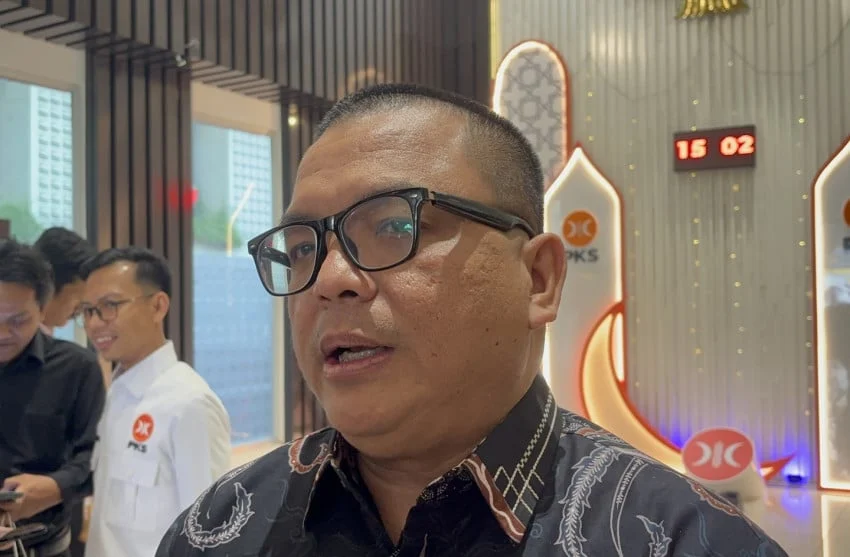
Former Deputy Minister of Law and Human Rights, Denny Indrayana, has confirmed that he has initiated informal lines of communication with members of the Indonesian Democratic Party of Struggle (PDI-P) elite to discuss the constitutional viability of impeaching Vice President Gibran Rakabuming Raka. This move follows ongoing legal and political controversies surrounding the Vice President’s academic credentials and the legitimacy of his eligibility during the 2024 presidential election cycle. Speaking from the headquarters of the Prosperous Justice Party (PKS) in South Jakarta on Thursday, October 29, 2026, Indrayana suggested that the primary opposition party is currently deliberating the matter internally, marking a significant escalation in the political discourse surrounding the current administration’s stability.
The Catalyst: The Academic Credentials Controversy
The push for impeachment centers on allegations regarding the authenticity and validity of Vice President Gibran Rakabuming Raka’s educational background. These allegations have been a persistent feature of the political landscape since the 2024 campaign. The controversy gained renewed traction following developments at the State Administrative Court (PTUN), where documents—including elementary and middle school certificates, as well as transcripts from Insearch and MDIS—were presented as evidence in ongoing legal challenges.
For legal experts like Indrayana, the core of the issue is not merely the validity of a diploma, but the potential violation of the constitutional requirements for holding the office of the Vice President. The argument posits that if the academic credentials submitted during the registration process were fraudulent or improperly obtained, the fundamental legal standing of the candidacy could be invalidated. This, in theory, would provide the legal grounds for an impeachment proceeding under the Indonesian Constitution, which allows for the removal of the President or Vice President if they are found to be in violation of the law or no longer meet the requirements of their office.
Informal Channels and Internal Deliberations
During his visit to the PKS headquarters, Indrayana acknowledged that while he has spoken with figures within PDI-P, these discussions remain strictly informal. He emphasized that no formal meetings have taken place between him and the party’s central executive board. When pressed for details regarding which members of the PDI-P elite he has engaged, Indrayana remained guarded, citing the sensitive nature of the internal party process.
"I have communicated with colleagues in PDI-P, and they appear to be processing the matter internally," Indrayana stated. He expressed a cautious optimism regarding the party’s potential to take a formal stance, though he refrained from speculating on the outcome of their deliberations. By keeping the communication informal, Indrayana appears to be gauging the political appetite of the largest opposition faction without forcing an immediate public commitment that could be politically costly.
The Role of PKS and the Opposition Front
The fact that Indrayana disclosed this information while at the PKS office is highly symbolic. PKS has consistently positioned itself as a critical voice against the current administration, often spearheading efforts to hold the executive branch accountable through legislative oversight. By bridging the gap between his legal advocacy and the political machinery of parties like PKS and PDI-P, Indrayana is attempting to build a coalition that could, theoretically, bring the issue of impeachment to the floor of the House of Representatives (DPR).
However, the path to impeachment in Indonesia is notoriously difficult. Under Article 7A of the 1945 Constitution, the process requires a rigorous sequence of events: a motion by the House, a review by the Constitutional Court (MK) to confirm the grounds for impeachment, and a final decision by the People’s Consultative Assembly (MPR). Without a significant parliamentary majority, any attempt to initiate such a process is likely to face insurmountable hurdles.
Chronology of the Legal Challenges
To understand the gravity of the current situation, it is necessary to review the timeline of the academic credential dispute:
- Late 2023: Initial public skepticism regarding Gibran Rakabuming Raka’s educational history emerges during the vice-presidential candidate registration period.
- Early 2024: Multiple civil society groups file lawsuits challenging the eligibility of the Prabowo-Gibran ticket, citing the diploma issue and constitutional interpretation regarding age limits.
- Mid-2024: The Constitutional Court rejects major challenges to the election results, but the debate over the academic documents persists in lower courts, including the PTUN.
- October 2026: New documents are presented at the PTUN, reigniting the public debate and prompting renewed interest from political actors like Denny Indrayana.
Legal Implications and Constitutional Hurdles
The legal analysis provided by Indrayana relies on the principle that public office requires total transparency and adherence to administrative prerequisites. However, the Indonesian legal system generally treats educational certificates as administrative documents, and challenges to their validity are typically handled through civil courts rather than constitutional impeachment proceedings.
Constitutional law expert Professor Saldi Isra (in historical contexts regarding impeachment) has often noted that "impeachment is as much a political act as it is a legal one." This means that even if a legal argument is sound, the lack of political consensus renders it ineffective. By seeking the cooperation of PDI-P, Indrayana is acknowledging this reality: he is seeking to transform a legal dispute into a political crusade.
Reactions and Broader Political Impact
The administration has, for the most part, dismissed these claims as politically motivated attempts to destabilize the government. Supporters of the Vice President argue that the certificates have been verified by the relevant educational authorities and that the ongoing litigation is merely a tactic employed by defeated political factions to delegitimize the 2024 election results.
For PDI-P, the dilemma is complex. As a party that holds a significant number of seats in the DPR, their support is essential for any impeachment motion to gain traction. However, leading a move to impeach a sitting Vice President carries the risk of being perceived as an attempt to overthrow a democratically elected official, which could alienate moderate voters. The party’s "internal processing" mentioned by Indrayana likely involves a rigorous cost-benefit analysis of whether the political capital gained by pursuing the impeachment is worth the potential instability it would cause.
Economic and Social Consequences of Political Volatility
Beyond the halls of parliament, the mention of impeachment carries significant weight for Indonesia’s economic stability. Investors and international markets generally favor predictability. A prolonged period of political maneuvering surrounding the legitimacy of the executive branch can lead to market jitters, currency fluctuations, and a slowdown in foreign direct investment.
Furthermore, the Indonesian public remains divided. While some segments of society are deeply concerned about the integrity of the nation’s leadership, others view the continuous focus on the 2024 election results as a distraction from pressing economic issues, such as inflation, job creation, and infrastructure development. The political opposition’s success in this endeavor will ultimately depend on whether they can frame the impeachment as a matter of national integrity rather than a partisan power grab.
Conclusion: A Waiting Game
As of late October 2026, the situation remains fluid. Denny Indrayana continues to act as a bridge between the legal challenges currently unfolding in the courts and the political opposition in the legislature. While the threshold for impeachment remains extremely high, the willingness of the PDI-P elite to engage in discussions—even informal ones—signals that the administration’s opponents are not yet ready to concede the issue of electoral and academic legitimacy.
For the coming weeks, the focus will shift to whether the internal deliberations within PDI-P manifest into a formal party policy. If the party decides to adopt a more aggressive stance, the political temperature in Jakarta is expected to rise significantly. Conversely, if the party chooses to prioritize stability over the pursuit of these allegations, the move for impeachment may stall, relegated to the margins of legal battles in the PTUN. For now, the nation watches to see if these informal conversations will translate into a formal challenge that could redefine the remainder of the presidential term.