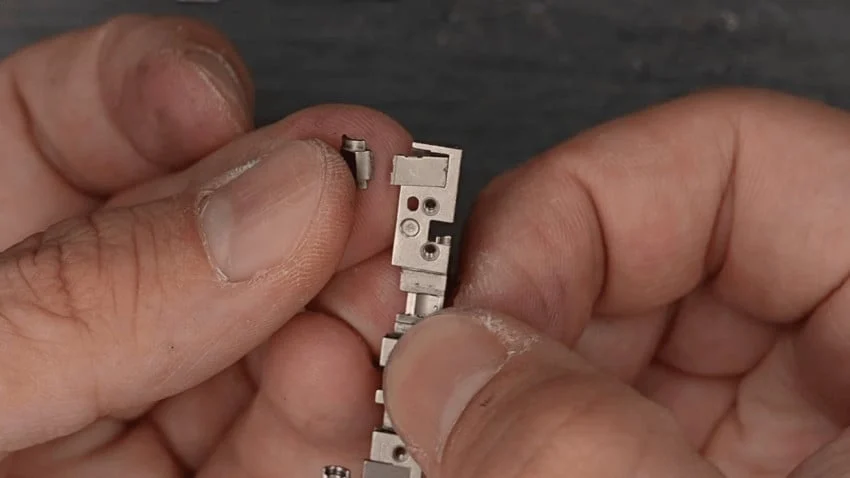
The emergence of the iPhone Duo, Apple’s highly anticipated foray into the foldable smartphone market, has been marred by early reports of significant hardware failures. Users and independent durability testers have increasingly documented instances of screen fractures localized precisely along the device’s central crease. As these reports proliferate across social media platforms and tech forums, the spotlight has turned toward the mechanical architecture of the device, specifically the hinge mechanism and internal metal support plates. Amidst mounting public concern and technical scrutiny, Fine M-Tec, the primary manufacturer of these critical mechanical components, has officially denied responsibility for the defects, setting the stage for a complex investigation into supply chain liability and engineering standards.
The Anatomy of the Failure: A Technical Perspective
The iPhone Duo was marketed as a pinnacle of engineering, designed to bridge the gap between traditional smartphone portability and tablet-sized display real estate. At the heart of this design is a complex hinge mechanism responsible for the fluid motion of the folding screen. This system does not merely act as a pivot point; it is a sophisticated structural assembly that incorporates high-strength metal support plates meant to distribute mechanical stress across the flexible OLED panel.
When a foldable device is closed or opened, the internal components undergo significant compression and tension. The mechanical support plate is tasked with neutralizing these forces, ensuring that the fragile OLED substrate is not subjected to localized pressure that could lead to crystallization or structural fatigue. However, the recurring nature of the fractures reported by users suggests that the force distribution may not be as uniform as initial design specifications intended. Observations from teardown experts and durability testing channels indicate that the fractures appear specifically where the mechanical support plate interacts with the flexible display layer, suggesting a potential misalignment or material failure point within the hinge’s internal track.
Chronology of the Incident
The trajectory of the iPhone Duo controversy began shortly after the device’s retail launch. The following timeline outlines the progression of the issue:
- Initial Launch Phase: The iPhone Duo enters the market with high consumer demand. Early reviews praise the device’s aesthetics and the perceived fluidity of its hinge.
- Early User Reports (Weeks 1-3): Isolated posts appear on Reddit and Apple support forums describing "dead pixels" or "faint lines" appearing along the center of the display.
- Escalation and Viral Documentation (Month 1): Independent YouTube channels specializing in hardware durability testing begin uploading videos showcasing the device failing under standard stress tests. These videos highlight the precise location of the screen damage, correlating it with the internal hinge track.
- Media Scrutiny (October 20-25): Major technology publications begin aggregating user reports, prompting a broader conversation about the quality control standards of the iPhone Duo’s manufacturing partners.
- Formal Statement from Fine M-Tec (October 26): In a response published via The Elec, Fine M-Tec issues a categorical denial regarding any defects in their manufactured components, asserting that all parts passed stringent quality assurance protocols.
Fine M-Tec’s Stance and Legal Posturing
On October 26, Fine M-Tec issued a formal statement addressing the growing allegations regarding their involvement in the iPhone Duo’s hardware failures. As a key supplier for Apple’s foldable ecosystem, the company manufactures the critical internal hinge assembly and the specialized metal plates that support the OLED panel.
The company’s statement was unequivocal: "The quality issues reported recently on some products do not originate from defects in the components supplied by our company." Fine M-Tec emphasized that their production lines adhere to international ISO standards and that each batch of components undergoes rigorous stress testing before delivery to the assembly facility. Furthermore, the company adopted a defensive legal posture, warning that it is prepared to pursue litigation against parties disseminating what they characterize as "unverified and unsubstantiated claims" that could damage the company’s reputation and stock valuation.
This aggressive stance highlights the high-stakes nature of the foldable smartphone supply chain. In such a partnership, the lines of accountability are often blurred between the primary brand (Apple) and the specialized component manufacturers. If the fault does not lie with the components themselves, the industry must then look toward the assembly process, software-driven stress management, or the fundamental design specifications provided by the original equipment manufacturer.
Contextualizing Foldable Technology Challenges
The challenges faced by the iPhone Duo are not entirely unprecedented in the nascent foldable smartphone industry. Manufacturers such as Samsung and Google have previously encountered similar hurdles, including display delamination, hinge ingress of debris, and screen fatigue. The technology requires a delicate balance of materials—balancing the flexibility of plastic-based polymers with the rigidity of metallic support structures.
Data from the broader smartphone market suggests that foldable displays are inherently more susceptible to environmental factors, such as extreme temperature fluctuations, which can cause materials to expand and contract at different rates, leading to stress on the hinge mechanism. While the industry has made significant strides in improving the "crease" visibility, the underlying mechanical integrity remains the most significant barrier to mass adoption. For Apple, a company that prioritizes long-term product reliability, these reports represent a significant challenge to its brand reputation.
The Role of Apple’s Support Infrastructure
In response to the growing number of users reporting screen fractures, Apple has reportedly begun providing specialized support and repair services for those impacted. While the company has not issued a global recall or a public acknowledgment of a design flaw, customers who have reported the issue through official Apple support channels have noted that the company is replacing affected units under warranty or via AppleCare+ programs.
This approach—addressing the issue on a case-by-case basis—is consistent with Apple’s historical handling of hardware concerns. By internalizing the repair costs, the company avoids the massive logistical and reputational fallout of a formal product recall while simultaneously gathering data on the specific failure modes. Engineers can then perform forensic analysis on the returned units to determine if the fractures are the result of manufacturing variability, user error, or an underlying design oversight that may require a silent revision of the hinge mechanism in future production runs.
Analysis of Implications for the Industry
The current situation with the iPhone Duo serves as a critical case study for the maturation of foldable technology. Several implications arise from this controversy:
- Supply Chain Transparency: The dispute between Fine M-Tec and the public narrative highlights the difficulty of isolating faults in a globalized supply chain. As devices become more complex, the ability to trace a failure to a specific supplier becomes exponentially more difficult, necessitating better integration of quality tracking systems.
- Standards of Durability: The failure of these devices under standard usage scenarios suggests that the current industry standards for foldable durability may need to be revised. Current testing cycles—often involving robotic folding machines—may not accurately simulate real-world usage, where devices are subjected to uneven pressure, particulate matter, and varying thermal conditions.
- Consumer Trust and Market Adoption: For the average consumer, the "foldable" form factor remains a premium luxury. Repeated reports of screen fractures threaten to push foldable technology back into the category of "experimental" rather than "essential." If Apple cannot guarantee the longevity of its foldable screens, the entire category may face a stagnation in growth.
- The Legal and Financial Fallout: The threat of legal action from Fine M-Tec suggests that component suppliers are increasingly sensitive to the narrative surrounding their products. As competition in the smartphone sector intensifies, the protection of intellectual property and brand reputation will remain a primary driver of corporate strategy.
Future Outlook and Engineering Refinements
As Apple continues to investigate the reports, the industry is closely watching for potential revisions to the iPhone Duo’s internal architecture. It is common practice for smartphone manufacturers to introduce "stealth" upgrades in later production batches to address early hardware issues without drawing undue attention to the original defect.
Engineering teams will likely focus on three potential areas of improvement: adjusting the tension settings of the hinge to prevent over-compression, modifying the chemical composition of the adhesive layers between the display and the support plate, and enhancing the structural rigidity of the hinge track to prevent microscopic bending that leads to long-term fatigue.
For the consumer, the immediate takeaway is one of cautious optimism tempered by the reality of the current technology. While the reported failure rate, when measured against the total number of units sold, remains statistically small, the nature of the failure—a non-functional display—is catastrophic for the user experience. The coming months will be decisive. If the frequency of these reports stabilizes or decreases, it may indicate that the issue was confined to early production batches. However, if the reports continue to mount, it may force a more significant intervention from Apple, potentially including a design overhaul for the next iteration of its foldable product line.
In conclusion, the situation surrounding the iPhone Duo is a reminder of the immense technical complexity inherent in modern consumer electronics. The intersection of advanced materials science, precise mechanical engineering, and global supply chain management is a volatile space. While the finger-pointing between suppliers and OEMs is expected, the ultimate priority for all stakeholders must remain the creation of a product that fulfills the promise of the foldable revolution without compromising the fundamental reliability that users expect from premium mobile devices. The path forward requires a shift from defensive posturing to collaborative engineering, ensuring that the next generation of foldables can withstand the rigors of everyday life without leaving the user with a broken screen and a damaged wallet.