The battle against narcotics in Indonesia entered a new phase of grassroots mobilization as the National Narcotics Agency (Badan Narkotika Nasional, or BNN) joined forces with Commission III of the House of Representatives (DPR RI) to deliver an urgent anti-drug message to incoming students. Against the backdrop of an evolving and increasingly sophisticated domestic drug trade, lawmakers and law enforcement officials converged on the campus of Universitas Arya Wangsa (UAW) in Subang, West Java. The event, structured as a high-level symposium on the reinforcement of drug prevention and eradication, served as a strategic platform to inoculate the nation’s academic youth against the devastating physical, psychological, and social impacts of substance abuse.
The gathering underscored a growing consensus among national leaders that traditional, punitive law enforcement measures alone are insufficient to stem the tide of narcotics proliferation. Instead, authorities are increasingly turning toward academic institutions as frontline fortresses in the war on drugs. By targeting university freshmen during their formative transition into higher education, the campaign aims to foster a culture of resilience, critical awareness, and proactive community reporting.
Chronology and Setting of the Subang Initiative
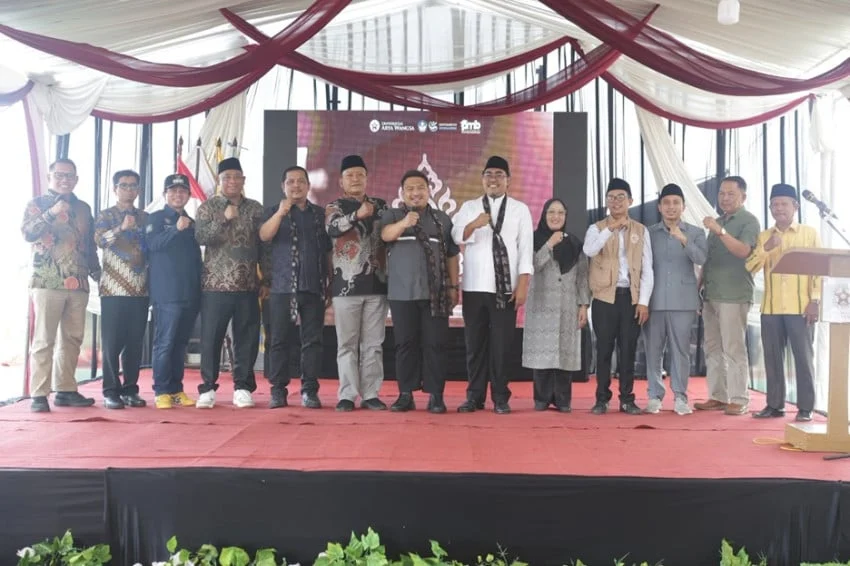
The anti-drug symposium took place on Saturday, October 31, 2026, drawing a large audience of eager freshmen, academic faculty, and local dignitaries to the main auditorium of Universitas Arya Wangsa in Subang. The timing of the event was strategically chosen to coincide with the beginning of the academic calendar, a critical juncture when young adults frequently encounter new social environments, lifestyle pressures, and peer networks that may expose them to high-risk behaviors.
The proceedings commenced in the morning with welcoming remarks from university administrators, followed by keynote addresses from prominent national and regional figures. Among the distinguished guests were Jazilul Fawaid, a senior member of House Commission III representing the National Awakening Party (PKB) faction, and Fathur Rohman, the Head of the BNN Regency Office for Karawang, who extended his jurisdictional oversight to support the neighboring Subang academic community.
Throughout the morning session, organizers distributed informational materials detailing the synthetic evolution of modern narcotics, the legal consequences of drug possession and distribution, and the physiological mechanisms of addiction. The event culminated in an interactive dialogue between the student body and the visiting delegation, allowing freshmen to pose direct questions regarding law enforcement strategies, rehabilitation protocols, and the legal nuances surrounding narcotics offenses in Indonesia.
The Strategic Importance of Campus-Based Prevention
During his keynote address, House Commission III member Jazilul Fawaid—who also holds the distinction of being a founder of Universitas Arya Wangsa—emphasized that preventative education remains the single most effective weapon in the state’s anti-narcotics arsenal. Speaking before a packed auditorium of students, lawmakers, and journalists, Gus Jazil, as he is popularly known, commended the unwavering dedication of BNN and the Indonesian National Police (Polri) in executing sustained eradication operations across the archipelago.
However, Gus Jazil placed special emphasis on the irreplaceable value of proactive intervention before addiction takes root. He noted that while law enforcement agencies tirelessly dismantle clandestine laboratories and interdict major international trafficking syndicates, the human cost of waiting until an individual becomes entangled in the criminal justice or medical system is excessively high.
"I am genuinely pleased that BNN has taken the initiative to come directly to the field today to conduct socialized drug prevention among our younger generation, particularly the new students of Universitas Arya Wangsa," Gus Jazil stated during the symposium. "This preventive approach is infinitely more important and vastly superior because it is fundamentally easier to execute than attempting to reverse a situation once an individual has already fallen victim to addiction."
Elaborating on the complexities of medical recovery, the lawmaker highlighted the grueling nature of substance abuse treatment. "The process of rehabilitation is extraordinarily difficult," he warned the audience. "The physical and psychological toll required to break the cycle of chemical dependency demands immense suffering, financial resources, and emotional resilience from both the victim and their family. Therefore, stopping drug use before it ever begins is the only truly foolproof strategy."
National Context and the Threat of Narcotics in Modern Indonesia
The collaborative outreach in Subang reflects a broader, highly urgent national security imperative. Indonesia continues to grapple with a complex narcotics landscape characterized by shifting drug trafficking routes, an influx of synthetic precursors, and the aggressive marketing of new psychoactive substances (NPS) designed to bypass traditional legal definitions.
According to statistical data compiled by BNN and various criminological research institutions, the demographic profile of drug users in Indonesia has progressively skewed younger over the past decade. Transnational drug cartels frequently target adolescents and university students, viewing them not only as a lucrative consumer base but also as vulnerable couriers who are less likely to arouse immediate suspicion from law enforcement authorities.
The proliferation of online distribution networks, encrypted messaging applications, and anonymous cryptocurrency transactions has further complicated the efforts of anti-narcotics investigators. Traditional street-level transactions have increasingly given way to digital marketplaces, making it imperative for educational institutions to equip students with the critical thinking skills necessary to recognize and resist predatory online solicitations.
In response to these evolving threats, the Indonesian government has consistently prioritized a multi-pronged strategy encompassing supply reduction, demand reduction, and harm mitigation. While agencies like the Indonesian National Police and BNN spearhead supply reduction through high-profile raids, asset confiscations, and border security enhancements, civil society initiatives and campus educational campaigns form the bedrock of demand reduction.
Legislative Backing and Institutional Commitment
As a senior legislator sitting on Commission III—the parliamentary body that oversees legal affairs, human rights, and security—Jazilul Fawaid used the platform to reaffirm the House of Representatives’ unyielding commitment to supporting law enforcement agencies. He stressed that combating narcotics successfully requires a synchronized whole-of-society approach that bridges the gap between legislative policy, executive enforcement, academic instruction, and community vigilance.
"The eradication of narcotics cannot be achieved by any single institution acting in isolation," Gus Jazil asserted. "It demands an ironclad, unshakeable commitment and active collaboration among the central government, law enforcement bodies, academic institutions, and every individual member of society."
Addressing the logistical and operational needs of the frontline agencies, the lawmaker issued a direct mandate to both BNN and Polri to intensify their strategic campaigns aimed at severing the domestic and international supply chains that fuel the drug trade in Indonesia. He assured enforcement officials that parliament stands ready to provide the necessary legislative frameworks and budgetary backing to sustain long-term anti-drug operations.
"On behalf of Commission III of the DPR RI, I want to state clearly that we will provide our full, unreserved support to BNN and the National Police in their relentless efforts to eradicate the distribution and abuse of narcotics throughout the territory of the Republic of Indonesia," Gus Jazil declared to resounding applause from the student body.
Implications for Academic Communities and Future Outlook
The proactive engagement initiated at Universitas Arya Wangsa carries significant implications for higher education institutions across West Java and the wider national landscape. By embedding anti-narcotics education directly into the orientation framework for incoming freshmen, universities can help de-stigmatize the conversation surrounding addiction while fostering an institutional culture of mutual accountability.
Experts in public health and criminology suggest that successful campus prevention programs must extend beyond one-off awareness seminars. They require the establishment of permanent campus task forces, confidential peer-support networks, and accessible mental health counseling services that address the underlying root causes of substance abuse—such as academic stress, anxiety, social alienation, and economic uncertainty.
Fathur Rohman, heading the BNN delegation from Karawang, echoed these sentiments during the panel discussions, praising the proactive posture of Universitas Arya Wangsa’s leadership. He emphasized that local BNN offices remain fully open to partnering with schools, universities, and community organizations to conduct regular diagnostic testing, educational workshops, and leadership training aimed at empowering students to become anti-drug ambassadors within their own peer groups.
As the symposium concluded, participating students signed symbolic pledges committing to maintain a drug-free lifestyle and to actively report any suspicious activities related to narcotics distribution within their residential and academic circles. For lawmakers and law enforcement officers alike, the Subang event stands as a model of preventative diplomacy—proving that when the state invests in the education and protection of its youth, the nation takes a definitive step toward securing a stable, productive, and drug-free future.