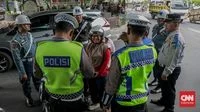
The Indonesian National Police Traffic Corps, widely known as Korlantas Polri, has officially commenced its nationwide traffic enforcement initiative, Operasi Patuh 2026. Running simultaneously across the archipelago from October 26 through November 8, this two-week comprehensive campaign places heavy emphasis on curbing reckless driving behaviors, mitigating fatal road accidents, and enforcing strict adherence to the Indonesian Road Traffic and Transportation Law (UU No. 22 of 2009). The operation targets eleven specific categories of infractions, utilizing both advanced Electronic Traffic Law Enforcement (ETLE) systems and conventional manual ticketing methods by officers deployed in the field.
Background Context and Evolution of Traffic Enforcement in Indonesia
Road safety remains a critical public health and infrastructure challenge in Indonesia. Over the past decade, rapid urbanization, exponential growth in vehicle ownership—particularly motorcycles—and shifting commuter habits have placed immense pressure on urban and intercity transportation networks. Traffic violations, ranging from minor illegal parking to dangerous maneuvers such as driving against the flow of traffic, have historically contributed to high annual fatality and injury rates on Indonesian roads.
In response, Indonesian law enforcement has steadily transitioned from traditional, discretion-heavy manual policing toward technology-driven accountability frameworks. The implementation of ETLE—featuring static, mobile, and drone-mounted cameras—represents a cornerstone of the National Police’s modernization strategy. By removing direct physical interactions between motorists and traffic officers during the initial recording of infractions, ETLE aims to minimize opportunities for bribery, enhance transparency, and ensure consistent application of the law.
Operasi Patuh 2026 serves as a periodic operational spike designed to recalibrate public discipline. While automated systems operate continuously throughout the year, targeted campaigns like Operasi Patuh consolidate resources, heighten public awareness through localized media campaigns, and deploy personnel to high-risk congestion and accident zones.
Operational Strategy: Prioritizing Technology While Retaining Manual Discretion
Addressing media representatives at the commencement of the operation, Korlantas Polri Head Brigadier General Aries Syahbudin emphasized that enforcement actions during Operasi Patuh 2026 will predominantly rely on the ETLE framework. The integration of automated surveillance ensures that a broader spectrum of violations is captured accurately and efficiently without requiring massive manual checkpoints that often exacerbate traffic bottlenecks.
However, Brigadier General Syahbudin clarified that the police force is not entirely abandoning manual enforcement. Certain infractions, particularly those requiring immediate intervention to halt hazardous driving or situations where technology cannot reliably capture the entirety of an offense, will see direct officer intervention. Crucially, the leadership has mandated that field personnel maintain an educational, persuasive, and humanistic approach. Officers are instructed to balance punitive measures with public dialogue, ensuring that motorists understand the safety rationale behind the regulations.
Echoing this sentiment, Metro Jaya Police Chief Commissioner Dadang Hartanto reinforced that law enforcement within the capital region and its surrounding satellite cities will dual-track offenses through both electronic capture and conventional ticketing. Commissioner Dadang underscored that punitive action is strictly positioned as a final resort. The police force, he noted, does not take pleasure in issuing fines; rather, enforcement is triggered when a motorist’s behavior crosses the threshold into endangering public safety or severely disrupting traffic flow.
"Penegakan hukum ini sebagai langkah terakhir ya, sebenarnya kita tidak menginginkan gitu, tapi kalau sudah membahayakan, mengganggu keselamatan, penindakan itu dilakukan. Digunakan dua konvensional ya yang juga dengan menggunakan ETLE," stated Commissioner Dadang, highlighting that while enforcement is undesirable in a cooperative society, active intervention becomes mandatory the moment public safety is compromised.
The 11 Target Infractions and Statutory Penalties Under UU No. 22 of 2009
Operasi Patuh 2026 explicitly targets eleven distinct categories of traffic violations. These infractions have been systematically selected based on data showing their direct correlation with traffic accidents, pedestrian endangerment, and systemic congestion. Each targeted violation aligns with specific articles and maximum financial penalties stipulated under Law Number 22 of 2009 concerning Traffic and Road Transportation.
-
Using a Mobile Phone While Driving
Distracted driving remains one of the leading causes of sudden collisions on modern roadways. Operating a handheld telephone while navigating a vehicle severely compromises reaction times and spatial awareness. Under Article 283, violators face a maximum fine of Rp750,000. -
Violating Traffic Markings and Road Signs
Disregarding painted road dividers, directional arrows, and instructional signs disrupts the predictable flow of traffic and increases the risk of side-swipe or head-on collisions. This infraction carries a maximum fine of Rp500,000 pursuant to Article 287, paragraph (1). -
Running Red Lights
Failing to stop at traffic signals is among the most hazardous urban driving behaviors, frequently resulting in severe T-bone collisions at intersections. Violators are subject to a maximum fine of Rp500,000 under Article 287, paragraph (2). -
Driving Against the Flow of Traffic (Counter-Flowing)
Often committed by motorcyclists seeking to shorten commuting distances, riding against designated traffic directions creates extreme danger for oncoming legal traffic. This high-risk violation is penalized under Article 287, paragraph (1) with a maximum fine of Rp500,000. -
Exceeding Speed Limits
Speeding reduces a driver’s ability to brake effectively and magnifies the kinetic energy expended during a crash, sharply elevating fatality rates. Operating a vehicle beyond legal velocity thresholds violates Article 287, paragraph (5), carrying a maximum fine of Rp500,000. -
Entering Busway Lanes
Dedicated bus lanes, such as Jakarta’s TransJakarta corridors, are engineered to facilitate rapid public mass transit and relieve urban congestion. Unauthorized private vehicles, cars, and motorcycles entering these lanes obstruct emergency and public transport services, drawing a maximum fine of Rp500,000 under Article 287, paragraph (1). -
Using Non-Compliant Vehicle License Plates (TNKB)
The Vehicle Registration Number Mark (Tanda Nomor Kendaraan Bermotor) must conform strictly to official government specifications. Motorists who modify font types, space characters improperly, or intentionally obscure their license plates to evade ETLE cameras face a maximum fine of Rp500,000 under Article 280. -
Failure to Wear Seatbelts
For automobile occupants, restraints prevent ejection and significantly reduce trauma during impacts. Both drivers and front-seat passengers failing to buckle up violate Article 289, incurring a maximum fine of Rp250,000. -
Failure to Wear Indonesian National Standard (SNI) Helmets
Motorcycle safety relies heavily on certified head protection. Riders and passengers failing to strap on helmets bearing the official SNI certification mark violate Article 291, paragraph (1), facing a maximum fine of Rp250,000. -
Carrying More Than One Passenger on a Motorcycle
Standard two-wheeled motorcycles without sidecars are engineered to safely transport a maximum of two individuals (one driver and one passenger). Overloading motorcycles compromises stability, braking distance, and steering control. This infraction is penalized under Article 292 with a maximum fine of Rp250,000. -
Parking on Pedestrian Walkways (Sidewalks)
Pedestrians are frequently forced onto active roadways when sidewalks are usurped by parked motorcycles or vehicles. This behavior violates pedestrian rights and public infrastructure usage laws, drawing a maximum fine of Rp250,000 under Article 275, paragraph (1).
Broader Implications and Economic Analysis of the Campaign
The launch of Operasi Patuh 2026 carries multi-dimensional implications for Indonesian society, urban mobility, and legal compliance. Economically, traffic congestion and road accidents cost the country significant losses annually in terms of lost productivity, medical expenditures, and infrastructural damage. By systematically targeting infractions that disrupt traffic fluidity—such as busway incursions, illegal sidewalk parking, and speeding—the campaign aims to restore operational efficiency to major commercial corridors.
From a sociological perspective, the dual implementation of ETLE and manual enforcement tests the ongoing cultural shift toward digital accountability. While electronic citations reduce opportunities for petty corruption, they also expose administrative challenges, such as outdated vehicle registration data where registered owners no longer possess the vehicle in question. Korlantas Polri has continuously worked to update vehicle databases, urging citizens to promptly complete data transfers (balik nama) upon selling motor vehicles to ensure ETLE notifications reach the correct current operators.
Furthermore, the emphasis on a humanistic and educational approach underscores a maturing law enforcement philosophy. Rather than measuring success purely by the volume of tickets issued or revenue generated from fines, modern traffic management increasingly evaluates efficacy through accident reduction statistics and improvements in the National Traffic Compliance Index.
As Operasi Patuh 2026 progresses through its designated timeline ending on November 8, transport analysts and public safety advocates will closely monitor preliminary data regarding accident rates and infraction frequencies. The ultimate test of the operation will lie not in the immediate deterrence observed during the two-week enforcement spike, but in whether motorists internalize these safety standards for long-term behavioral transformation on Indonesia’s roadways.