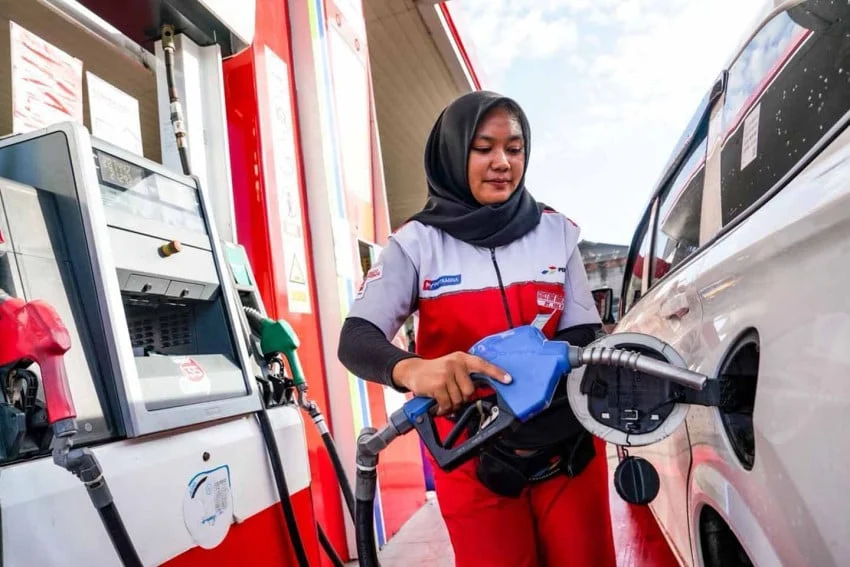
PT Pertamina Patra Niaga, the commercial downstream subsidiary of Indonesia’s state-owned energy giant PT Pertamina (Persero), has officially announced that it will maintain its current pricing structure for all non-subsidized fuel products as of November 1, 2026. This decision comes at a time of mounting economic pressure globally, characterized by significant volatility in international crude oil markets and climbing geopolitical tensions that have pushed global benchmark prices past the critical threshold of USD 100 per barrel. Despite these external pressures, the state-owned enterprise has opted to absorb the immediate shocks to protect domestic purchasing power and maintain macroeconomic stability.
The regular monthly evaluation of fuel prices, which typically occurs at the onset of every calendar month, has been closely watched by economists, industry analysts, and consumers alike. Historically, alterations in fuel pricing strategies by Pertamina reflect movements in the Mean of Platts Singapore (MOPS), exchange rate fluctuations between the Indonesian Rupiah and the United States Dollar, and government directives regarding energy security. However, for the November 2026 period, the management chose continuity over adjustment, leaving consumer prices unchanged across various regions of the archipelago.
Chronology and Background of the Price Stabilization Policy
The decision to freeze non-subsidized fuel prices at the beginning of November 2026 mirrors a similar cautious stance taken by the corporation in preceding months. Throughout the third quarter of 2026, global crude oil prices experienced an upward trajectory driven by unexpected supply chain disruptions, cuts in production quotas by major international oil-producing alliances, and heightened demand heading into the winter heating season in the Northern Hemisphere.
When global oil prices breached the psychological barrier of USD 100 per barrel in mid-October 2026, market observers widely anticipated upward adjustments in non-subsidized fuel brackets across Indonesia. Yet, mirroring its policy decisions from October 1, 2026, Pertamina Patra Niaga decided to hold the line. This approach demonstrates a deliberate strategy by state stakeholders to balance corporate sustainability with public welfare, shielding the domestic market from the full brunt of imported inflationary pressures.
In the Indonesian energy landscape, fuel pricing is categorized into subsidized and non-subsidized segments. Subsidized fuels, namely Pertalite (Research Octane Number 90) and Biosolar (Solar subsidized with fatty acid methyl ester), are strictly regulated by the central government, with prices remaining constant at Rp10,000 per liter and Rp6,800 per liter, respectively, uniformly across all operational regions in the country. Conversely, non-subsidized variants—such as Pertamax, Pertamax Turbo, Pertamax Green 95, Dexlite, and Pertamina Dex—are subject to periodic corporate reviews based on market economics. By keeping both segments stable for November, Pertamina has provided a predictable economic cushion for the middle class and commercial transport sectors that rely heavily on non-subsidized options.
Comprehensive Regional Price Breakdown for November 2026
While national uniformity applies to subsidized products, non-subsidized fuel prices vary across different Indonesian provinces due to regional distribution logistics, local motor vehicle fuel taxes (Pajak Bahan Bakar Kendaraan Bermotor or PBBKB), and transportation costs.
In the Greater Jakarta region (Jabodetabek), Banten, West Java, Central Java, and East Java, the pricing structure for non-subsidized fuels remains unchanged for the start of November 2026:
- Pertamax (RON 92): Rp15,950 per liter
- Pertamax Turbo (RON 98): Rp19,600 per liter
- Pertamax Green 95 (RON 95 mixed with bioethanol): Rp19,150 per liter
- Dexlite (Gasoil with 51 cetane number): Rp23,700 per liter
- Pertamina Dex (High-grade diesel with 53 cetane number): Rp25,200 per liter
Moving toward the islands of Bali, West Nusa Tenggara (NTB), and East Nusa Tenggara (NTT), the pricing for available non-subsidized products mirrors that of Java. However, the distribution of Pertamax Green 95 has not yet expanded to these specific regions, meaning consumers in Bali, NTB, and NTT have access to the standard lineup excluding the bioethanol-blended variant.
In the northern and western regions of the country, specifically the provinces of Aceh, North Sumatra, Jambi, Bengkulu, South Sumatra, Bangka Belitung, and Lampung, logistics costs shift the retail figures slightly higher. In these areas, Pertamax is retailed at Rp16,300 per liter, while Pertamax Turbo stands at Rp20,000 per liter. For diesel equivalents, Dexlite is priced at Rp24,200 per liter, and Pertamina Dex reaches Rp25,750 per liter.
Further up the coast in West Sumatra, Riau, and the Riau Islands, where marine logistics present additional challenges, prices adjust upward once more. Pertamax is sold at Rp16,650 per liter, Pertamax Turbo at Rp20,450 per liter, Dexlite at Rp24,750 per liter, and Pertamina Dex touches the highest domestic bracket at Rp26,300 per liter.
Across the sprawling islands of Kalimantan (West, Central, South, and East Kalimantan), parts of Sulawesi (Gorontalo, Central Sulawesi, South Sulawesi, Southeast Sulawesi, and West Sulawesi), and the easternmost province of Papua, consumers face specific geographic adjustments. In these designated zones, Pertamax is maintained at Rp16,300 per liter, Dexlite at Rp24,200 per liter, while certain specialty products like Pertamax Turbo are managed according to localized supply availability.
Official Perspectives and Corporate Strategy
Although Pertamina Patra Niaga has not released an exhaustive public statement detailing the internal financial mechanics behind the price freeze, corporate communications emphasize the company’s dual mandate. As a commercial entity under the state portfolio, Pertamina must maintain fiscal health and operational viability. Simultaneously, as an instrument of national development, it carries a public service obligation to ensure energy accessibility and price stability.
Industry insiders suggest that the decision to maintain prices is supported by efficient inventory management, strategic hedging policies executed earlier in the fiscal year, and fiscal coordination with the Indonesian government. The Ministry of Energy and Mineral Resources (ESDM) and the Ministry of State-Owned Enterprises (SOEs) regularly evaluate energy subsidies and market retail prices to prevent inflationary spikes that could derail national economic growth targets.
The persistence of global crude prices above USD 100 per barrel undoubtedly exerts margin pressure on downstream operations. Refined product imports required to meet domestic shortfalls become more expensive when global benchmarks rise and the Rupiah fluctuates against the greenback. Absorbing these costs indicates that Pertamina is utilizing its corporate reserves and optimized supply chains to cushion the blow for consumers, at least for the short term.
Economic Implications and Market Outlook
The decision to hold non-subsidized fuel prices steady through November 2026 carries several profound implications for the broader Indonesian economy:
-
Inflationary Containment: Energy prices serve as a foundational cost input across all sectors of the economy, particularly in logistics, manufacturing, and public transportation. By preventing a hike in non-subsidized fuel prices, transportation and goods distribution costs remain stable, directly helping to keep the Consumer Price Index (CPI) within the central bank’s targeted inflation corridor.
-
Consumer Purchasing Power Protection: The middle class, which predominantly utilizes non-subsidized fuels such as Pertamax and Dexlite, has faced cumulative cost-of-living pressures throughout 2026. Maintaining fuel price stability provides much-needed fiscal relief, supporting domestic consumption—the primary engine of Indonesia’s Gross Domestic Product (GDP) growth.
-
Corporate Fiscal Monitoring: While beneficial for consumers, prolonged absorption of high global crude prices without retail adjustments may impact Pertamina Patra Niaga’s net revenue margins in the fourth quarter. Financial analysts will closely monitor the company’s upcoming quarterly financial disclosures to gauge the long-term sustainability of this pricing strategy should global oil markets remain elevated.
-
Acceleration of Renewable and Alternative Energy Adoption: The stable pricing of variants like Pertamax Green 95 highlights Pertamina’s ongoing commitment to energy transition initiatives. By keeping bioethanol-blended fuels competitively priced alongside traditional fossil fuels, the company encourages eco-friendly consumer choices without imposing financial penalties during a volatile economic climate.
As the month of November progresses, market participants will continue to monitor geopolitical developments in major oil-producing regions, currency exchange stability, and domestic consumption patterns. For now, Indonesian motorists can fill their tanks at October rates, finding a measure of financial predictability amidst global market uncertainty.