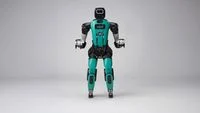
The landscape of humanoid robotics is undergoing a fundamental paradigm shift as global developers pivot their primary focus from physical machinery to advanced artificial intelligence software. For years, the robotics industry measured success by mechanical dexterity, actuator durability, and sleek hardware design. However, as hardware commoditization drives down production costs worldwide, industry stakeholders have reached a unified conclusion: future profitability and technological supremacy will no longer reside in the metal chassis, but rather in the cognitive architecture driving the machine.
This transition has accelerated a high-stakes technological rivalry, most notably between the United States and China, centering on a burgeoning field known as "embodied AI." This revolutionary discipline focuses on developing sophisticated software brains that allow robots to comprehend their physical surroundings, independently acquire novel tasks, and dynamically adapt to unstructured environments without requiring exhaustive line-by-line programming for every individual chore.
The Shift from Hardware to Cognitive Supremacy
The economic realities of the robotics sector have forced manufacturers to rethink their business models entirely. Dermot McGrath, founder of the Shanghai-based technology consulting firm ZenGen Labs, highlights the changing mindset of industry leaders. "Para produsen robot telah menyimpulkan bahwa keuntungan tidak akan datang dari perangkat keras, tetapi dari otaknya," McGrath noted in recent industry disclosures, emphasizing that software differentiation is now the ultimate commercial battleground.
This realization has triggered an unprecedented surge of venture capital and institutional funding into embodied AI startups. According to data compiled by ITjuzi, an authoritative Chinese research firm, companies specializing in embodied AI within China alone amassed a staggering 93.5 billion yuan—equivalent to approximately $13 billion—across 322 distinct funding rounds during the first half of 2026. This figure represents an astronomical fivefold increase compared to the exact same period in the previous year, underscoring the ferocious pace at which capital is chasing cognitive software solutions.
The Transpacific Tech Rivalry: US Innovation Versus Chinese Manufacturing
As the frontier of automation expands, industry analysts view embodied AI as the defining theater in the broader technological competition between Washington and Beijing. At present, leading American artificial intelligence laboratories—including prominent startups such as Physical Intelligence, Skild AI, and Generalist—maintain a distinct advantage in foundational model research, algorithmic sophistication, and processing speeds.
For instance, Generalist recently demonstrated its flagship GEN-1.5 model, which reportedly possesses the capability to successfully complete approximately 60 percent of simple operational tasks after observing a human-performed video demonstration lasting merely three to twelve seconds. Similarly, Chinese developer X Square published groundbreaking research indicating that its robots can master intricate object-handling skills simply by processing a single video demonstration of a human worker, completely bypassing the need for tedious model retraining.
Despite the US edge in raw computing power and algorithmic pedigree, Chinese developers are leveraging distinct domestic advantages to close the gap. By capitalizing on China’s unmatched industrial manufacturing base, extensive factory ecosystems, and direct access to high-volume real-world training data, domestic startups are positioning themselves as formidable contenders in the global arena.
Georg Stieler, an independent robotics consultant, observes that while Western labs have established rigorous benchmarks for rapid skill acquisition, China’s strongest startups cannot be overlooked. "Laboratorium AI terkemuka di AS telah menetapkan standar yang cukup tinggi," Stieler remarked, while affirming the competitive threat posed by agile Asian enterprises. Furthermore, specialized Chinese startups such as X Square, Galaxea, and Spirit AI have rapidly ascended to multibillion-dollar valuations, hovering around the $3 billion threshold.
Engineering the Machine Mind: Overcoming Data Scarcity
Teaching a machine to navigate the physical world poses fundamentally different challenges than training text-based large language models. While conversational AI chatbots can harvest vast quantities of digital text from the internet, physical robots require rich, multidimensional examples of spatial interaction—ranging from the delicate tactile physics of grasping fragile glassware to the complex manipulation of flexible, tangled cables.
To bridge this crucial data gap, robotics firms are deploying diverse and resource-intensive strategies to collect real-world operational intelligence. The methodologies vary widely across different enterprises:
- Human Demonstration and Physical Recording: Companies like Spirit AI have taken a labor-intensive approach, employing an army of approximately 1,000 human operators to record continuous streams of daily activities and industrial tasks, feeding these video datasets directly into their neural networks.
- Wearable Sensor Integration: ACE Robotics equips human workers with specialized full-body motion capture suits and sensory gloves. These wearable devices meticulously record exact muscle movements, spatial trajectories, and gripping forces exerted while employees perform operational duties in real-world retail shops and hospitality environments.
- Comprehensive Multi-Brand Training: Ant Group’s robotics division, Robbyant, has pioneered a cross-platform training methodology. The company recently disclosed that its AI models have been trained on an impressive 160,000 hours of training material, which includes 50,000 hours of human-directed robotic movements. Crucially, Robbyant deployed its software across 20 distinct robotic configurations sourced from 17 different hardware manufacturers, ensuring that a single unified AI architecture can govern diverse mechanical bodies.
Early real-world deployments are already underway. Robbyant’s automated systems have been integrated into two commercial pharmacies in Shanghai, where they actively manage and fulfill customer medication orders. However, stringent safety protocols remain in place, with human staff performing mandatory final checks on all dispensed prescriptions prior to dispatch.
Strategic Implications for Industrial Automation and Global Productivity
The nation or corporate coalition that successfully bridges the chasm between artificial intelligence and physical machinery stands to capture an unprecedented economic advantage. The mass automation of smart factories, automated warehouses, and complex logistics supply chains holds the potential to fundamentally transform global manufacturing productivity.
Gao Yang, co-founder of Spirit AI, succinctly encapsulates the core engineering hurdle facing the entire discipline: "Memang, otak merupakan bagian terlemah dalam keseluruhan sistem robotika." Echoing this sentiment, Yang Qian, Co-Founder and Chief Operating Officer of X Square, outlines the ultimate vision for the sector: "Kami ingin robot beralih dari sekadar digerakkan oleh kode menjadi digerakkan oleh akal sehat."
As the race intensifies, the long-term viability of these robotic systems will not be judged by isolated demonstrations in controlled laboratory settings, but by their adaptability across vastly different enterprise environments. Achieving this milestone requires continuous model refinement, expansive computational resources, and cutting-edge silicon processors.
To circumvent the hardware bottlenecks imposed by geopolitical restrictions on high-end computing chips, Chinese developers are increasingly investing in synthetic data generation, advanced computer simulations, and highly efficient architectural models designed to minimize computing demands. With no single market leader yet emerging victorious, the global trajectory of embodied AI remains wide open, poised to reshape the very fabric of human labor and industrial civilization in the decades to come.