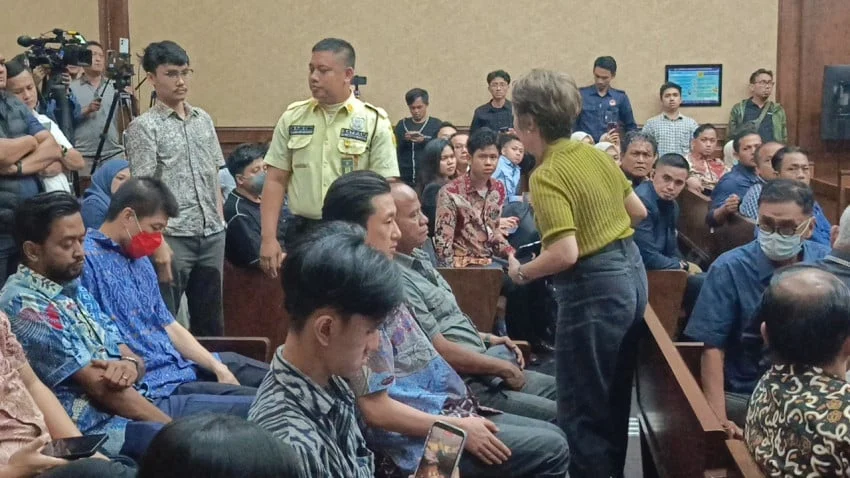
The ongoing legal proceedings involving former Junior Attorney General for Special Crimes Febrie Adriansyah at the Jakarta Corruption Court took a dramatic turn when two courtroom visitors were formally ejected following allegations that they were acting as informants for upcoming witnesses. The incident underscores the intense scrutiny and high-stakes nature of the high-profile extortion and money laundering trial, which has captivated public and legal observers alike since charges were brought against the senior legal official.
The confrontation unfolded inside the packed courtroom of the Jakarta Corruption Court on Monday evening, November 2, 2026. As the proceedings prepared to transition into the subsequent phase of witness examinations, defense counsel raised urgent procedural concerns that temporarily halted the judicial momentum and drew the sharp attention of the presiding panel of judges.
Procedural Objection and Courtroom Confrontation
The development came to light prior to the continuation of the testimony of witness Ferry Yanto Hongkiriwang, widely known as Ferry Boboho, which resumed at approximately 7:28 PM local time. Febri Diansyah, serving as the lead defense attorney for the embattled former prosecutor, formally addressed the court to report a breach of courtroom integrity and witness sequestration protocols.
According to the defense team, unauthorized individuals inside the public gallery were actively monitoring, recording, and transmitting real-time details of the ongoing testimony to individuals slated to take the stand later in the trial. To substantiate the claim, Diansyah presented digital evidence directly to the court, displaying screenshots of WhatsApp chat logs allegedly exchanged between the expelled visitors and witness Lustje Dewi Kusuma.
The disclosure prompted immediate intervention from the security personnel and the presiding judges, who ordered the immediate removal of the two unidentified individuals to preserve the sanctity and independence of the witness testimony. Legal experts note that attempting to brief or inform unexamined witnesses violates fundamental tenets of criminal procedure, designed to prevent collusion and ensure that testimonies remain untainted by external narratives.
Background and Context of the Febrie Adriansyah Case
The trial itself centers on explosive allegations of extortion and money laundering (TPPU) levied against Febrie Adriansyah, a towering figure within the Indonesian prosecution apparatus. Before his current legal troubles, Adriansyah held one of the most powerful and visible positions in the country’s law enforcement infrastructure, overseeing massive corruption probes and asset recovery initiatives.
The charges against him have generated widespread debate within legal circles, with civil society organizations and defense lawyers repeatedly questioning the validity and timing of the indictment. Earlier phases of the trial saw the defense argue that the charges bore the hallmarks of being forced or politically motivated, designed to undermine the integrity of the institutional framework Adriansyah previously represented.

The prosecution, however, maintains that the evidence collected during the preliminary investigations justifies the formal charges, setting the stage for a protracted legal battle characterized by high-stakes cross-examinations and intense public interest.
Chronology of the November 2, 2026 Hearing
The events of November 2 unfolded across a lengthy schedule typical of complex corruption trials in the capital:
- Daytime Session: The court convened in the morning to address preliminary motions and review documentary evidence submitted by both the public prosecutor’s office and the defense counsel.
- Late Afternoon: Testimony commenced involving key figures linked to the financial transactions cited in the money laundering indictment. The atmosphere in the courtroom remained tense, with heavy security presence and strict access controls.
- 7:00 PM – 7:28 PM: Just before the resumption of testimony from Ferry Yanto Hongkiriwang, defense attorney Febri Diansyah requested an ad-hoc intervention from the bench.
- Incident Exposure: Diansyah presented the WhatsApp communication logs detailing the relay of courtroom statements to external parties, specifically naming upcoming witness Lustje Dewi Kusuma.
- Judicial Ruling and Ejection: Acting on the defense’s motion and verifying the procedural risk to witness integrity, the presiding judge ordered security officers to escort the two individuals out of the gallery.
- Continuation of Trial: With the gallery cleared of the suspected informants, the court proceeded with the evening testimony under heightened observation.
Analysis of Implications and Procedural Integrity
The incident involving the expulsion of the alleged informants highlights systemic challenges regarding courtroom security and the enforcement of witness sequestration rules in high-profile Indonesian trials. In major corruption cases where vast financial interests and political reputations hang in the balance, maintaining a firewall between testifying witnesses and those awaiting their turn is critical for a fair trial.
Legal analysts point out that attempts to leak courtroom proceedings can severely compromise the credibility of evidence. When witnesses adjust their accounts based on real-time feeds from inside the courtroom, the search for objective truth is undermined. The swift action taken by the defense in identifying the breach and the subsequent response by the judiciary reflect the delicate mechanisms required to safeguard due process.
Furthermore, the episode adds another layer of complexity to the defense’s overarching narrative that external pressures and coordinated maneuvers have influenced the case against Adriansyah from its inception. As the trial progresses toward deeper factual inquiries, both the prosecution and the defense will likely face increased scrutiny regarding their adherence to ethical standards and courtroom protocols.
Outlook for the Trial
As the Jakarta Corruption Court prepares for subsequent hearing dates, the spotlight will remain fixed on how the judiciary handles potential attempts to compromise witness testimonies. The court’s willingness to act decisively on defense motions regarding the WhatsApp leaks sets a strict precedent for the remainder of the proceedings.
Observers, anti-corruption watchdogs, and legal scholars will continue to monitor the trial not only for its ultimate verdict regarding the extortion and money laundering charges against Febrie Adriansyah, but also for its adherence to transparent and fair judicial standards in handling one of the most closely watched cases in recent Indonesian legal history.