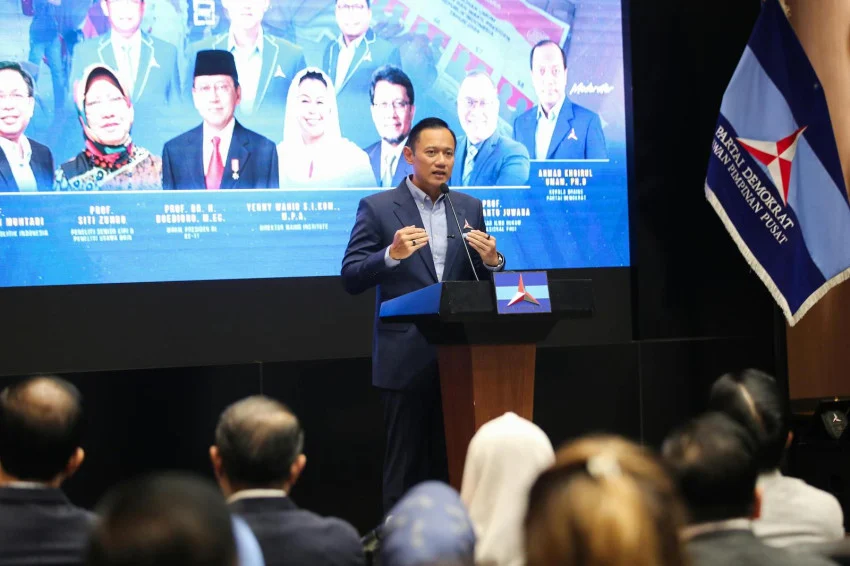
The political landscape in Jakarta has been plunged into deep turbulence following explosive revelations regarding an alleged widespread intelligence operation involving unauthorized surveillance. Agus Harimurti Yudhoyono (AHY), the Chairman of the Central Leadership Board of the Democratic Party (DPP Partai Demokrat), has stepped forward to demand a comprehensive, transparent, and unyielding investigation into the alleged illegal wiretapping targeting President Prabowo Subianto and a wide array of high-profile national figures.
Speaking in the capital, AHY expressed grave concern over the implications of the operation, emphasizing that the rule of law must prevail and that the architects behind the unauthorized surveillance must be unmasked. The scandal, which has rapidly escalated from a matter of internal security to a constitutional crisis, involves allegations directed at former high-ranking law enforcement officials, prompting urgent calls from across the political spectrum for accountability, institutional reform, and the safeguarding of democratic norms in Indonesia.
Scope of the Alleged Surveillance Operation
The controversy erupted following preliminary findings and disclosures made by the Indonesian National Police (Polri), which indicated that a systemic wiretapping operation had been conducted outside established legal procedures and statutory frameworks. According to investigative briefings, the targets of this clandestine surveillance were not limited to marginal actors or routine subjects of interest, but extended to the highest office in the land, alongside critical pillars of civil society, governance, and commerce.
AHY highlighted the alarming breadth of the operation during his public address, noting that the reported targets encompassed President Prabowo Subianto himself, senior state officials, prominent political figures, independent media organizations, mass community organizations (ormas), non-governmental organizations (NGOs), and influential business leaders.
"I strongly condemn the alleged wiretapping carried out outside proper procedures and valid legal foundations," AHY stated. "According to police statements, the targets of this alleged wiretapping include the President, state officials, political figures, the media, community organizations, NGOs, and business leaders."
The inclusion of such a diverse cross-section of society has amplified fears that the operation was designed to gather kompromat, monitor political opposition, exert economic leverage, or influence policy decisions through coercion. AHY stressed that the sheer scale of the operation necessitates a rigorous inquiry to uncover the full extent of the breach and to restore public trust in the state’s intelligence and law enforcement apparatus.
Core Questions and Demands for Transparency
In his condemnation, AHY outlined several critical questions that must be answered by investigators to satisfy public demand for accountability. He insisted that the ongoing investigations by law enforcement agencies and parliamentary oversight bodies must pierce the veil of secrecy surrounding the operation.
"The public has the right to get a clear answer: who were the targets, who gave the orders, what was the motive, and for whose interests were the wiretapped results used?" AHY asserted.
These questions form the bedrock of the current political debate. Investigators are under intense pressure to determine:
- The exact technological methods and infrastructure utilized to bypass secure communication channels.
- The chain of command, specifically identifying who authorized the operations and who directly supervised the intelligence collection.
- The ultimate repository of the intercepted data, including whether the harvested information was leaked, weaponized, or stored in unauthorized locations.
- The financial and political beneficiaries who stood to gain from the systematic monitoring of state leaders and private citizens alike.
Context and Escalation: The Accusations of Treason
The gravity of the wiretapping scandal intensified exponentially following disclosures from the Ministry of State Secretariat (Mensesneg). Government representatives revealed that the alleged surveillance operations—reportedly involving former National Police Chief General Listyo Sigit Prabowo and his associates—had moved beyond mere intelligence gathering and were now being investigated for potentially subversive activities, pointing directly toward indications of treason (makar).
The implication that a domestic security apparatus may have been turned inward to monitor, compromise, or undermine the democratically elected head of state has shocked political observers. In any democratic republic, the unauthorized interception of a sitting president’s communications constitutes a severe breach of national security and a direct challenge to constitutional authority. Consequently, state prosecutors and security agencies are treating the case with the utmost urgency, examining potential violations of criminal law concerning state secrets, abuse of power, and treasonous conspiracy.
Chronology of Events
While formal investigations continue to unfold behind closed doors, a general timeline of the crisis has begun to emerge from official statements, media reports, and legislative disclosures:
- Initial Disclosures: Intelligence anomalies and technical indicators of unauthorized monitoring of high-level communications channels are detected by internal security audits within government installations.
- Law Enforcement Briefings: Indonesian National Police (Polri) personnel brief relevant oversight bodies and state officials regarding the scope of the surveillance, confirming that multiple civilian and state sectors were targeted.
- Escalation to the Executive Branch: The Ministry of State Secretariat formally acknowledges the gravity of the situation, publicly connecting the actions of Listyo Sigit and associated actors to potential acts of treason (makar).
- Political Reactions: Party leaders, including Democratic Party Chairman AHY, issue firm statements demanding full transparency, institutional accountability, and a comprehensive mapping of the conspiracy’s motives and beneficiaries.
- Ongoing Parliamentary and Judicial Inquiries: Legislative commissions (DPR RI) prepare to summon key stakeholders and demand formal hearings to ensure that the investigation is conducted without political interference or institutional cover-ups.
Implications for Indonesian Democracy and Rule of Law
The unfolding wiretapping scandal carries profound implications for the future of Indonesian governance, civil liberties, and the institutional integrity of the nation’s law enforcement and intelligence agencies.
1. Institutional Reform of Intelligence and Police Agencies
The revelation that powerful state apparatuses could allegedly be mobilized against the nation’s leadership and civil society highlights systemic vulnerabilities in oversight mechanisms. Experts argue that the scandal underscores an urgent need for structural reforms, stricter judicial oversight on wiretapping authorizations, and independent auditing of intelligence-gathering technologies. Without robust institutional safeguards, the potential for future abuses of power remains high.
2. Impact on Investor Confidence and Economic Stability
The inclusion of prominent business leaders and commercial entities among the targets of the alleged surveillance introduces economic risks. Foreign and domestic investors rely heavily on legal certainty, data privacy, and the protection of proprietary information. A state environment where corporate leaders are subject to illegal wiretapping can deter investment, foster a climate of corporate paranoia, and damage Indonesia’s reputation as a stable, rule-based market.
3. Protection of Civil Liberties and Press Freedom
With NGOs, media organizations, and community groups listed as primary targets, the scandal strikes at the heart of democratic discourse. Freedom of the press and the ability of civil society to operate without state intimidation are vital components of Indonesia’s democracy. The thorough exposure of this illegal operation is seen by activists as essential to ensuring that investigative journalism and peaceful advocacy are not stifled by state-sponsored surveillance.
Conclusion
As the investigation into the alleged illegal wiretapping continues to develop, the demands articulated by figures like Agus Harimurti Yudhoyono reflect a broader national consensus: the rule of law must be upheld impartially, regardless of the rank or former status of those implicated. For President Prabowo Subianto’s administration, successfully navigating this crisis will require absolute transparency, resolute defense of constitutional integrity, and sweeping reforms to ensure that the instruments of the state are never again weaponized against the nation they are sworn to protect.