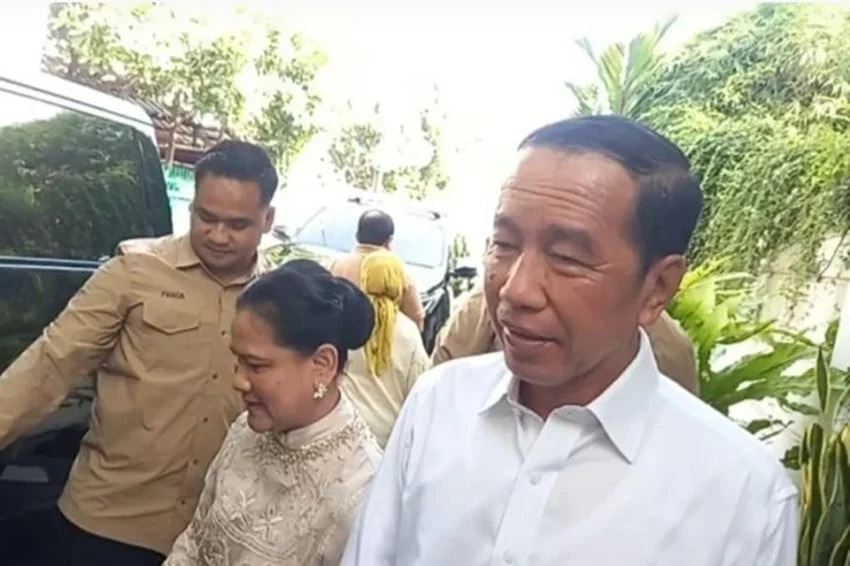
The 7th President of the Republic of Indonesia, Joko Widodo, is scheduled to appear in person at the East Jakarta District Court on Thursday, November 5, 2026, to attend a high-profile legal proceeding concerning allegations surrounding the authenticity of his university diploma. The confirmation of his attendance was officially provided by his aide, AKBP Syarif Muhammad Fitriansyah, who verified that the former head of state has already arrived in Jakarta in preparation for the judicial session.
This development marks a significant escalation in a prolonged legal battle that has drawn intense public scrutiny across the archipelago. The case involves complex accusations directed at the highest levels of former governance, pitting political figures, public commentators, and legal teams against one another in a courtroom setting that has routinely attracted massive media attention and stringent security measures.
Chronology of the Legal Proceedings and Court Summons
The decision for former President Joko Widodo to testify in court originated during a previous session at the East Jakarta District Court involving defendant Roy Suryo. During the proceedings, the panel of judges listened as the Public Prosecutor formally requested permission to summon key witnesses to shed light on the contested claims.
Addressing the court, the Public Prosecutor formally stated their intent to bring forward critical testimony. "With permission, Your Honor, we will issue a summons for witnesses under the names Ir. H. Joko Widodo and Syarif Muhammad Fitriansyah," the prosecutor declared during the hearing. Furthermore, the prosecution requested that Jokowi’s appearance be strategically synchronized with the proceedings involving another prominent figure in the ongoing saga, commonly referred to in public discourse as Doctor Tifa.
The prosecution emphasized logistical and security considerations in determining the timeline, requesting the adjournment and scheduling of the joint appearance for Thursday, November 5, 2026, to ensure comprehensive safety protocols and streamlined courtroom management. The presiding judges acknowledged the request, setting the stage for what is anticipated to be one of the most heavily guarded and closely watched judicial events of the legal calendar year.
Background Context of the Diploma Authenticity Controversy
The controversy surrounding Joko Widodo’s educational background is not a recent phenomenon but rather the culmination of years of persistent online rumors, digital investigations, and formal legal challenges initiated by various critics and political detractors. Throughout his presidency and into his post-presidential era, allegations surfaced claiming that the diploma he earned from Gadjah Mada University’s Faculty of Forestry was either fraudulent or altered.
Despite multiple official refutations, the release of archival photographs, statements from university rectorates, and testimony from his former classmates and institutional contemporaries, the issue transitioned from the sphere of social media discourse into formal legal frameworks. The dissemination of these unverified claims eventually triggered criminal investigations and subsequent prosecutions under the Indonesian Electronic Information and Transactions (ITE) Law and related statutes concerning defamation and the spread of misinformation.
Figures such as Roy Suryo and Doctor Tifa have emerged as vocal participants or defendants within these interconnected legal actions, utilizing various public platforms to question official documentation. In
response, the state and affected parties have sought legal recourse to decisively settle the matter through judicial validation, culminating in the current trial proceedings at the East Jakarta District Court.
Statements, Reactions, and Legal Posturing
As the date of the former president’s expected testimony approaches, legal teams and associated commentators have ramped up their preparations. Reports from legal observers indicate that defense teams and opposing parties have compiled extensive lists of inquiries, with high-profile commentators such as Doctor Tifa publicly boasting about preparing thousands of distinct questions directed at prospective witnesses and experts.
The involvement of high-ranking security personnel, including the confirmation by AKBP Syarif Muhammad Fitriansyah stating simply, "Present," underscores the gravity with which the former president’s security detail is approaching the trip to the courthouse. Security forces in East Jakarta have coordinated extensive operational plans to manage potential crowds, press corps, and partisan supporters gathered outside the judicial complex.
Legal analysts note that the voluntary or compliant appearance of a former head of state in a domestic court case regarding personal documentation is a rare occurrence in modern Indonesian jurisprudence. It establishes a precedent where high-ranking political figures subject themselves directly to cross-examination within the standard judicial hierarchy, thereby reinforcing the principle of equality before the law, regardless of prior executive office.
Broader Societal Impact and Legal Implications
The trial regarding the authenticity of Joko Widodo’s diploma carries profound implications for the broader political and social landscape of Indonesia. Beyond the immediate legal fates of the defendants standing trial, the proceedings serve as a critical test case for how the judicial system handles politically charged misinformation, digital defamation, and the verification of historical facts involving national leaders.
In an era defined by rapid information dissemination across social media platforms, the spread of unverified narratives regarding national figures has frequently polarized public opinion. By bringing the matter into a formal court of law with testimonies from the principal subject himself, the judiciary aims to establish an unassailable factual record based on verified evidence rather than digital speculation.
Furthermore, the outcome of this trial could shape future jurisprudence surrounding freedom of speech, accountability in public discourse, and the legal boundaries of criticism directed at state officials—both active and retired. As the East Jakarta District Court opens its doors for the landmark session on November 5, 2026, legal scholars, journalists, and the Indonesian public alike will be watching closely to see how the testimony unfolds and what impact it will have on closing a contentious chapter in the nation’s contemporary political history.