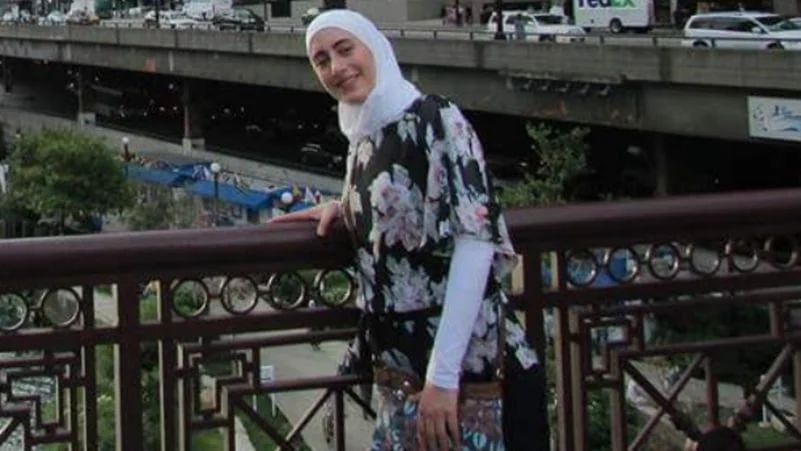
The United States Department of State has announced a substantial financial reward of up to $5 million through its flagship Rewards for Justice program for actionable information concerning the abduction, unlawful detention, and ultimate death of Layla Shweikani, an American humanitarian worker who disappeared in Syria nearly a decade ago. Shweikani, a dual
U.S.-Syrian citizen, traveled to war-torn Syria in 2015 with the noble intention of delivering vital humanitarian aid to beleaguered civilians trapped in Eastern Ghouta, a Damascus suburb that had become a primary stronghold for opposition forces resisting the authoritarian regime of former Syrian President Bashar al-Assad.
The announcement of the multimillion-dollar bounty highlights Washington’s ongoing commitment to pursuing accountability for human rights abuses, war crimes, and atrocities committed against American nationals and innocent civilians during the catastrophic multi-sided Syrian civil war. The Rewards for Justice program, managed by the Diplomatic Security Service within the State Department, has a long-established history of paying out compensation for tips that disrupt terrorist activities, locate hostages, or bring perpetrators of crimes against Americans to justice. By elevating Shweikani’s case back into the international spotlight, U.S. authorities hope to pierce the veil of secrecy and institutional impunity that shrouded the brutal inner workings of the Assad regime’s notorious detention apparatus.
Chronology of a Tragedy: From Humanitarian Mission to Enforced Disappearance
The timeline of Layla Shweikani’s ordeal traces the harrowing descent of a civilian relief worker caught in the crosshairs of a ruthless state crackdown. In 2015, amid escalating violence and severe humanitarian shortages caused by military sieges, Shweikani made the courageous decision to leave the United States and enter Syria. Eastern Ghouta at the time was suffering under a crippling government blockade, facing severe shortages of food, clean water, and medical supplies. Shweikani dedicated herself to alleviating this suffering, working alongside local relief networks to distribute aid to vulnerable families and children.
However, the humanitarian situation quickly deteriorated as government forces intensified their offensive campaigns to retake the opposition-held pocket. In February 2016, Shweikani’s mission was abruptly cut short when she was detained by forces loyal to the Syrian government. According to documentation compiled by human rights organizations and corroborated by U.S. intelligence and investigative findings, Shweikani was subjected to an extended period of enforced disappearance and brutal captivity.
For approximately 10 months following her initial apprehension, Shweikani was held in clandestine detention facilities controlled by Syrian security forces. During this prolonged period of isolation, she endured severe psychological and physical torture designed to extract confessions or intimidate local aid networks. Despite the extreme conditions of her confinement, reports indicate she maintained extraordinary resilience before her case was formally transferred to a military tribunal—a judicial body widely recognized by international observers as lacking basic due process protections and operating merely as an extension of the regime’s security apparatus.
The culmination of Shweikani’s detention remains one of the darkest chapters of the conflict’s internal repression. Investigative reports and defector testimonies later revealed that Shweikani was summarily executed on December 28, 2016, inside the notorious Saydnaya Military Prison. Often described by survivors and human rights monitors as a "human slaughterhouse," Saydnaya has been documented as the site of systematic mass hangings, widespread torture, and unspeakable deprivations where thousands of political prisoners and dissidents perished away from public scrutiny.
The Context of Eastern Ghouta and the Syrian Detention Machine
To fully grasp the gravity of Layla Shweikani’s case, one must examine the broader geopolitical and humanitarian landscape of Syria in 2015 and 2016. Eastern Ghouta was a focal point of the Syrian uprising, representing both fierce civilian resistance and the regime’s brutal resolve to crush dissent at any cost. The government’s strategy in besieged areas routinely involved denying humanitarian access, conducting indiscriminate aerial bombardments, and using chemical weapons—most notoriously in the August 2013 sarin gas attacks—to break the will of the local population and opposition fighters.

Humanitarian workers operating in these zones faced existential threats from multiple factions, but those detained by the Syrian state faced a systematic machinery of state-sponsored terror. The Syrian network of detention facilities, spanning branches of military intelligence, Air Force Intelligence, and infamous penitentiaries like Saydnaya and Adra, operated with absolute impunity. Countless citizens, activists, and foreign nationals vanished into this labyrinth, many of them perishing from torture, disease, or deliberate starvation without ever receiving a formal trial or consular notification.
International human rights organizations, including Amnesty International and Human Rights Watch, alongside United Nations bodies such as the Independent International Commission of Inquiry on the Syrian Arab Republic, have meticulously documented these systematic abuses. They have repeatedly classified the widespread and systematic torture, enforced disappearances, and extrajudicial executions carried out by the Syrian government as crimes against humanity and war crimes. Despite these findings, bringing the architects and perpetrators of these atrocities to justice has remained a monumental challenge due to the regime’s former protection by international allies and the physical destruction of evidence.
The Role of the Rewards for Justice Program
The U.S. State Department’s decision to leverage the Rewards for Justice program in the Shweikani case reflects a strategic pivot toward utilizing financial incentives to uncover cold cases stemming from foreign conflicts. Established under the 1984 Act to Combat International Terrorism, the program has historically targeted international terrorists and high-value targets. In recent years, however, its mandate has expanded to encompass information regarding individuals who engage in hostage-taking, wrongful detention, or war crimes against U.S. citizens abroad.
Under the terms of the current offer, individuals with credible information regarding the circumstances of Shweikani’s abduction, the identities of the officials directly responsible for her torture and execution, or the location of her remains are encouraged to come forward. The State Department has emphasized that information can be submitted securely and confidentially through encrypted communication channels, with provisions for relocation and financial rewards for tipsters whose information leads to successful resolutions or accountability.
By placing a $5 million price tag on information, Washington is sending a clear message to former regime officials, low-to-mid-level perpetrators, and civilian collaborators who may have fled Syria or remain within its borders: the statute of limitations on war crimes and the murder of American citizens does not expire. As the political landscape in Syria continues to evolve following the dramatic collapse of the Assad regime, international investigators are racing against time to recover archival records, interview witnesses, and exhume mass graves to provide closure to grieving families.
Broader Implications for Accountability and Justice in Post-Assad Syria
The pursuit of justice for Layla Shweikani carries significant implications for the broader transitional justice process in Syria. As the country navigates the complex post-Assad era, the discovery and documentation of crimes committed within institutions like Saydnaya Prison are paramount to establishing the rule of law and national healing.
For years, families of the disappeared have faced institutional stonewalling, intimidation, and the painful agony of not knowing the fate of their loved ones. Cases involving dual nationals, such as Shweikani, often serve as vital test cases for international jurisdictions exercising universal jurisdiction. European countries, notably Germany and France, have previously utilized universal jurisdiction principles to prosecute lower-ranking Syrian intelligence officials for crimes against humanity under the doctrine that grave international crimes can be tried anywhere.
The U.S. reward offer not only honors the memory of Layla Shweikani as a dedicated humanitarian who paid the ultimate price while trying to aid those in need, but it also reinforces the international norm that states cannot shield perpetrators of state-sponsored murder. As tips flow into the Rewards for Justice secure portals, investigators and legal experts anticipate that the generated leads may uncover a broader web of command responsibility, linking individual field officers all the way up to the highest echelons of the former regime’s security hierarchy.
Ultimately, the case of Layla Shweikani stands as a stark reminder of the immense personal sacrifices made by humanitarian workers in conflict zones and the enduring global demand for accountability. While no financial reward or legal proceeding can undo the tragedy of her loss, the concerted international effort to uncover the full truth of her final days represents a critical step toward ensuring that such atrocities cannot be concealed in the shadows of history.