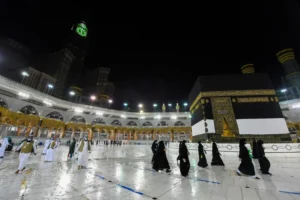
Traveling has long transcended its conventional definition as a mere recreational activity designed to offer a temporary escape from the monotony of daily life. In contemporary society, while tourism is frequently marketed as an industry centered around leisure, relaxation, and consumer experiences, a deeper examination reveals that travel possesses profound intellectual, spiritual, and historical dimensions. Within the framework of Islamic theology and tradition, journeying across the earth is not simply a physical displacement, but a purposeful endeavor. When undertaken with sincere intentions, travel serves as a vital instrument for intellectual expansion, psychological rejuvenation, and the strengthening of one’s spiritual connection to the Creator.
The Main Facts of Travel in the Islamic Context
At its core, the concept of travel in Islam encompasses far more than modern vacationing. Islamic teachings categorize journeys through specific terminology that highlights their multifaceted purposes. Two primary terms are predominantly used: siyahah and safar. Siyahah generally refers to wandering or traveling across various regions of the globe, often associated with spiritual reflection and observation. Meanwhile, safar denotes a journey undertaken for a specific, purposeful objective, which can range from seeking knowledge and fulfilling religious obligations to establishing trade and engaging in constructive diplomacy.
Unlike contemporary tourism, which frequently isolates travelers within curated resorts and commercialized environments, Islamic travel encourages active engagement with the world. It mandates that travelers interact with diverse cultures, observe the remnants of past civilizations, and contemplate the vastness of the natural universe. This perspective transforms a standard journey into an educational pilgrimage where the traveler assumes the role of an observant student of history, sociology, and theology.
The Quranic Mandate to Explore the Earth
A rigorous examination of Islamic primary texts reveals that the injunction to travel is deeply embedded within the verses of the Quran. On multiple occasions, the divine text explicitly commands humanity to traverse the globe. However, these directives are never issued merely for the sake of idle wandering or physical diversion. Instead, they carry a clear analytical purpose: to observe, reflect, and learn from the objective realities of human history and natural phenomena.
For instance, Surah Al-An’am, Verse 11, provides a foundational directive for this intellectual exploration. The verse explicitly states: "Katakanlah (Muhammad), ‘Berjalanlah di bumi, kemudian perhatikanlah bagaimana kesudahan orang-orang yang mendustakan itu.’" Translated into English, it commands humanity to travel throughout the earth and critically examine the ultimate fate of those who rejected historical truths and ethical principles. This command establishes a direct link between travel and historical analysis. It urges individuals to look beyond surface-level aesthetics and investigate the structural rises and falls of past societies, treating the physical landscape as an open-air museum of moral and sociological lessons.
Historical Chronology and the Tradition of Scholarly Travel
The intersection of travel and the pursuit of knowledge reached its zenith during the classical and medieval periods of Islamic civilization, transforming the act of journeying into a rigorous academic methodology. Long before the advent of modern universities and digital archives, the acquisition of authentic knowledge—particularly religious jurisprudence and prophetic traditions (Hadith)—required physical mobility on an unprecedented scale.
During the formative centuries of Islam, scholars recognized that the preservation of historical truth depended on firsthand verification. This realization sparked the phenomenon of Ar-Rihlah, or rigorous scholarly travel. Students and scholars of Islamic jurisprudence would routinely abandon their hometowns, enduring arduous journeys across deserts and continents, solely to verify the authenticity of a single narration or to study under a renowned master.
The historical chronology of this intellectual movement is well-documented by classical historians and biographers. Prominent figures such as Al-Khatib Al-Baghdadi meticulously chronicled these academic expeditions. Al-Baghdadi authored the influential work Ar-Rihlah fi Thalab al-Hadits (The Journey in Search of Hadith), which serves as a historical testament to the extraordinary lengths to which early scholars would go in the name of education. Historical accounts from this era frequently highlight scholars who traversed the entire breadth of the Islamic world—from Cordoba to Baghdad, and from Cairo to Samarkand—just to cross-reference chains of transmission and ensure the absolute integrity of historical records.
This commitment to mobility laid the foundational architecture for global scientific and academic exchange. Figures such as Ibn Battuta and Ibn Khaldun further expanded the boundaries of travel literature, blending geographical exploration with anthropological observation, sociology, and economic analysis. Their written accounts did not merely record distances and landscapes; they provided detailed, empirical analyses of governance, social structures, and cultural norms across diverse civilizations.
Prophetic Guidance and the Spiritual Dimension of Journeys
In addition to academic pursuits, the spiritual dimension of travel is heavily emphasized in prophetic traditions. A notable narration attributed to the Prophet Muhammad (PBUH) redefines the concept of worldly exertion: "Sesungguhnya wisata umatku adalah berjihad di jalan Allah," which translates to "Verily, the tourism [or travel] of my nation is jihad in the way of Allah." (Reported by Abu Dawud).
Scholars and theologians interpret this profound statement not as a call to physical combat, but as an elevation of purposeful travel to the status of a noble, spiritually rewarding endeavor. In this context, "jihad" signifies relentless striving, personal discipline, and the pursuit of righteousness. When a traveler endures the hardships of a journey with the intention of expanding their understanding of the world, maintaining ethical conduct, and witnessing the signs of divine creation, every step taken becomes an act of devotion.
Furthermore, Islamic jurisprudence incorporates specific legal and spiritual accommodations for travelers, known as Rukhsah. The allowance to shorten prayers (Qasr) and combine them (Jam’u), as well as the exemption from fasting during Ramadan under certain conditions, underscores the recognition that travel inherently involves physical exertion and vulnerability. These accommodations ensure that the traveler remains connected to their spiritual obligations while navigating the practical challenges of movement.
Supporting Data and Sociological Implications
In the contemporary era, the philosophy of purposeful travel offers a critical counterweight to the hyper-commercialized tourism industry. Modern data from global tourism organizations indicates that international travel has grown exponentially over the past several decades, driven by affordable aviation, digital connectivity, and globalization. However, this massive surge in human mobility has also introduced significant challenges, including ecological degradation, cultural commodification, and superficial engagement with destination cultures.
When evaluated against the principles outlined in Islamic tradition, modern mass tourism frequently falls short of its potential to foster genuine human development. The emphasis on leisure without reflection, consumption without conscience, and speed without depth often leaves travelers physically fatigued rather than intellectually enriched.
Conversely, integrating the principles of safar and siyahah into modern travel habits yields measurable benefits for individual psychological well-being and social awareness. Sociological and psychological studies consistently demonstrate that immersive travel—defined as travel that involves deep cultural engagement, historical education, and environmental appreciation—enhances cognitive flexibility, reduces ethnocentrism, and fosters empathy across cultural divides. By approaching a destination with the intent to learn rather than merely consume, travelers develop a more nuanced worldview.
Official Perspectives and Contemporary Relevance
Religious scholars, educators, and cultural commentators increasingly emphasize the urgent need to revive the classical Islamic paradigm of travel in the twenty-first century. Contemporary discourse highlights that as the world becomes more interconnected yet paradoxically polarized, the ability to travel with empathy, intellectual curiosity, and moral responsibility is more critical than ever.
From an educational standpoint, institutions are increasingly recognizing experiential learning—a concept deeply aligned with the historical tradition of Ar-Rihlah—as a superior method for developing critical thinking skills. By encouraging students to step outside their comfort zones, engage with diverse communities, and analyze historical sites firsthand, educational frameworks can produce globally minded citizens who are equipped to address complex societal challenges.
Moreover, environmental advocacy groups within the Muslim community have increasingly linked the Quranic command to observe the earth with contemporary ecological stewardship. Observing the signs of Allah in nature inherently mandates the protection of natural habitats against climate change and pollution. Travelers are thus reminded of their ethical duty as stewards (khalifah) of the earth, ensuring that their journeys do not leave a trail of environmental destruction in their wake.
Broader Impact and Future Outlook
Ultimately, the re-examination of travel through the lens of Islamic teachings bridges the gap between historical tradition and contemporary lifestyle choices. Traveling is elevated from a transient diversion to a transformative life practice. Whether the journey involves crossing international borders for higher education, exploring historical landmarks to understand the cyclical nature of human civilizations, or simply observing the natural world to cultivate gratitude, the underlying objective remains constant: self-improvement and heightened awareness.
As global mobility continues to evolve in an increasingly digital and interconnected world, the timeless wisdom embedded in Quranic injunctions and prophetic traditions offers a stable moral compass. It challenges modern travelers to look beyond the superficial allure of destinations and embrace a holistic approach to exploration—one that honors intellect, preserves history, respects the environment, and nurtures the human spirit. Through this lens, every journey becomes an opportunity for intellectual discovery, spiritual renewal, and a deeper appreciation of the complex tapestry of human existence across the earth.