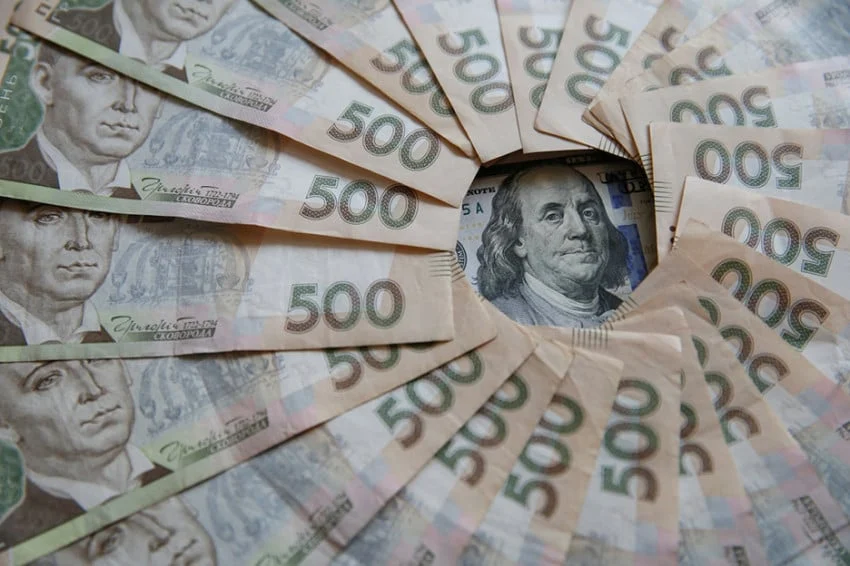
The Ukrainian economy is currently standing at a perilous crossroads, teetering precariously on the edge of profound fiscal insolvency. Official figures released by the Ministry of Finance of Ukraine have unveiled a staggering reality that underscores the immense financial toll of prolonged geopolitical turmoil, structural economic shifts, and military conflict. The cumulative sum of Ukraine’s state debt and state-guaranteed debt has escalated by an astounding 130-fold in local currency over the past two decades. As of the end of September 2026, this monumental liability reached a record-breaking 9.54 trillion hryvnias, an amount equivalent to approximately USD 212.61 billion, or roughly Rp3,862 trillion based on prevailing exchange rates.
This astronomical financial burden paints a grim picture of a nation whose sovereign balance sheet has been stretched to its absolute limits. To contextualize this unprecedented accumulation of liabilities, the debt figure recorded in September 2006 stood at a relatively modest 73.29 billion hryvnias, or about USD 14.51 billion. Even when measured in United States dollars—a metric that helps neutralize the effects of domestic currency devaluation—Kiev’s debt burden has multiplied by 14.6 times. Most alarmingly, the total debt has more than doubled since the close of 2021, when obligations stood at USD 97.95 billion, just months before the large-scale military escalation with Russia erupted in February 2022.
The rapid compounding of these financial obligations has triggered widespread alarms across international financial capitals, drawing intense scrutiny from multilateral lending institutions, global economists, and sovereign creditors alike. With the country’s revenue generation severely constrained by wartime realities, infrastructure destruction, and industrial paralysis, economists warn that Ukraine is hurtling toward a systemic financial crisis that could take generations to resolve.
Historical Context and the Two-Decade Debt Trajectory
To fully comprehend the depth of Ukraine’s current fiscal predicament, it is necessary to examine the historical trajectory of the nation’s sovereign borrowing over the last twenty years. Following the dissolution of the Soviet Union and the subsequent turbulent transition into a market economy, Ukraine frequently relied on external financial assistance to stabilize its nascent macroeconomic framework.
During the global financial crisis of 2008–2009, Kiev sought emergency stabilization packages from the International Monetary Fund (IMF), establishing a pattern of dependency on structural adjustment loans and international rescue operations. Throughout the 2010s, ongoing governance challenges, systemic corruption, and delayed structural reforms hindered sustainable economic diversification. Consequently, successive governments continued to bridge fiscal deficits through domestic bond issuances and foreign borrowing.
The geopolitical crisis of 2014, which culminated in the annexation of Crimea and the outbreak of armed conflict in the eastern Donbas region, introduced an entirely new category of fiscal pressure. Defense expenditures surged, foreign direct investment plummeted, and critical industrial corridors were compromised. Despite these severe headwinds, the sovereign debt remained relatively manageable through strict austerity measures mandated by international lenders.
However, the events of February 2022 fundamentally shattered Ukraine’s macroeconomic stability. The total destruction of vital industrial infrastructure, the blockade of critical Black Sea export routes, the displacement of millions of citizens, and the continuous devastation of the energy grid completely eradicated the nation’s traditional revenue streams. To maintain basic government functions, pay public sector salaries, sustain social safety nets, and fund the ongoing war effort, Kiev was forced to rely almost entirely on continuous inflows of foreign financial aid and unprecedented levels of domestic and international borrowing.
The Devaluation Factor and Domestic Currency Collapse
A critical driver behind the astronomical rise of Ukraine’s debt when measured in local currency is the severe depreciation of the hryvnia. Over the past two decades, the Ukrainian national currency has experienced a dramatic loss of purchasing power, shedding nearly 90% of its value against the United States dollar.
This collapse has been accelerated by persistent inflation, massive trade deficits, capital flight during periods of heightened insecurity, and the systematic depletion of the National Bank of Ukraine’s foreign exchange reserves during critical phases of the conflict. While foreign-currency-denominated debt remains stable in nominal dollar terms, every incremental decline in the value of the hryvnia exponentially inflates the domestic cost of servicing and repaying those foreign obligations.
For the average Ukrainian citizen, this currency degradation has translated into a severe cost-of-living crisis, eroding real wages and wiping out private savings. Yet, the broader structural implication is that the state budget is now locked in a perpetual cycle of currency vulnerability, where macroeconomic stabilization remains virtually unattainable without massive, continuous external injections of hard currency.
Foreign Creditors and the International Debt Architecture
An analysis of Ukraine’s current debt portfolio reveals a high degree of externalization. At present, foreign governments, sovereign syndicates, and international financial institutions hold an overwhelming 66.4% of Ukraine’s total debt portfolio. This heavy reliance on multilateral and bilateral creditors has fundamentally altered the nation’s sovereign autonomy, tying its macroeconomic policy decisions to the conditionalities imposed by external partners.
Kiev is currently bound by an extensive debt servicing schedule that stretches far into the future, with repayment obligations officially scheduled up to the year 2061. According to the latest financial disclosures, the country faces an accumulated obligation of nearly USD 33 billion dedicated exclusively to interest payments and debt-servicing fees over the coming decades, sitting on top of an outstanding principal debt of nearly USD 107 billion owed directly to global financial institutions.
This rigid repayment timeline places an extraordinary structural weight on future generations of Ukrainians. The sheer magnitude of these obligations means that even in a post-conflict reconstruction scenario, a substantial portion of any future gross domestic product growth will be diverted away from domestic public investments, healthcare, education, and infrastructure modernization, and funneled instead toward international creditors.
The GDP Disparity: Surpassing Pre-War Economic Output
To fully grasp the severity of Ukraine’s financial insolvency, financial analysts frequently compare the current debt stock to the nation’s economic output, or Gross Domestic Product (GDP). The comparison yields alarming conclusions.
The total volume of Ukraine’s national debt currently surpasses the entirety of the country’s GDP recorded before the full-scale conflict began in 2021, when total economic output hovered around the USD 200 billion mark. With wartime devastation shrinking the domestic economic base by roughly a third in the immediate aftermath of 2022, the debt-to-GDP ratio has soared to unprecedented levels well beyond 100%, far exceeding traditional thresholds of sovereign debt sustainability recognized by global financial authorities.
In normal economic circumstances, a sovereign state with a debt-to-GDP ratio of this magnitude would be swiftly locked out of international capital markets. Ukraine has avoided immediate, catastrophic default only due to the extraordinary political and financial shielding provided by Western allies, the Group of Seven (G7) nations, and multilateral institutions such as the European Union and the World Bank, which have consistently stepped in to provide emergency budget support and loan guarantees.
IMF Warnings and the Imperative for Restructuring
The mounting crisis has not gone unnoticed by the guardians of the international monetary system. Since July, the International Monetary Fund has issued repeated and emphatic warnings regarding the long-term viability of Kiev’s financial obligations.
In formal assessments and stakeholder briefings, the IMF has explicitly stated that Ukraine’s debt trajectory remains unsustainable under current macroeconomic projections. The institution has underscored that without a comprehensive, deep restructuring of sovereign liabilities—potentially involving significant nominal write-downs (haircuts) or maturity extensions negotiated with private and public creditors—the country will remain structurally insolvent.
Furthermore, the IMF’s evaluations emphasize that debt restructuring alone will be insufficient. Continued, predictable, and large-scale external financial assistance from Western allies will remain an absolute prerequisite for maintaining basic state functionality for the foreseeable future. The reliance on frozen Russian sovereign assets—such as utilizing the interest generated by immobilized assets in European depositories to fund Ukrainian loans—has emerged as a controversial yet vital stopgap measure, though it falls short of solving the core structural deficit.
Broader Implications for Global Markets and Geopolitics
The looming threat of fiscal bankruptcy in Ukraine carries profound implications that extend far beyond Eastern Europe. First, it highlights the unprecedented financial costs associated with modern, high-intensity interstate conflict, serving as a cautionary benchmark for international defense economists regarding the price of sustaining state operations under siege.
Second, the structural debt burden of Ukraine poses significant challenges for the future of international lending architecture. As multilateral institutions increasingly deploy emergency financing into conflict zones and fragile states, questions regarding moral hazard, debt forgiveness mechanisms, and the seniority of official creditors versus private bondholders are taking center stage in global financial governance discussions.
Finally, the long-term stabilization of Ukraine’s economy will inevitably require a coordinated, multi-lateral Marshall Plan-style reconstruction framework. Economists argue that any sustainable recovery will necessitate not merely temporary liquidity injections, but a fundamental redesign of the nation’s debt architecture, coupled with comprehensive governance reforms, anti-corruption safeguards, and the restoration of robust domestic industries. Until such a comprehensive framework is successfully negotiated and implemented, Ukraine’s economy will remain suspended on a precarious financial precipice, bearing the heavy cost of a protracted historical crisis.