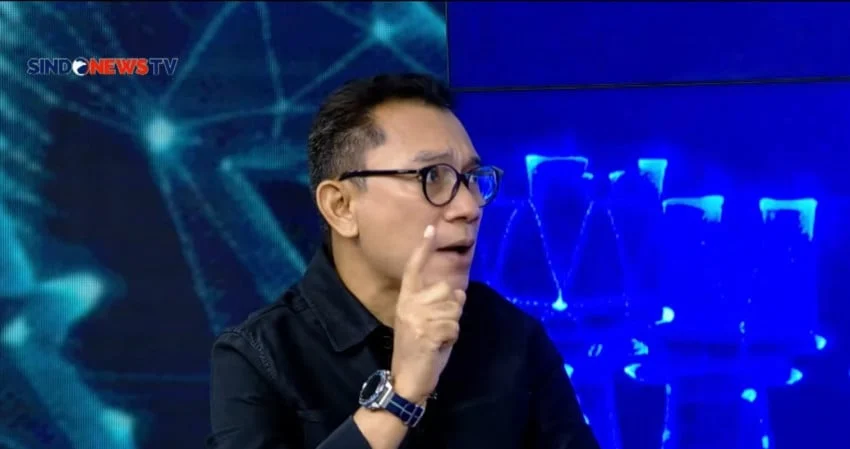
The ongoing discourse surrounding the criteria for Indonesia’s next vice president has intensified, with the Indonesian Democratic Party of Struggle (PDI-P) emphasizing that absolute loyalty and strategic alignment with the head of state must serve as non-negotiable prerequisites. Speaking during a recent political dialogue broadcast on national television, PDI-P Spokesperson Ansy Lema articulated that the selection process for a vice-presidential candidate cannot be detached from contemporary geopolitical and domestic security realities. Specifically, he pointed to sensitive security incidents, including reported foreign intelligence wiretapping targeting President Prabowo Subianto, as a critical variable that fundamentally alters how political partnerships at the highest level of government must be constructed and maintained.
The debate over the ideal profile of a vice president comes at a pivotal juncture for the administration. As Indonesia navigates complex domestic economic reforms alongside shifting regional dynamics, the relationship between the president and the vice president remains the cornerstone of governmental stability. Political observers, party representatives, and legislative stakeholders have increasingly weighed in on whether the nation requires a technocratic administrator, a popular populist figure, or a consolidative political broker to stand alongside President Prabowo. PDI-P’s intervention adds a significant layer to this discourse, framing the vice-presidency not merely as an office of ceremonial representation or electoral balancing, but as a crucial bastion of national security and administrative cohesion.
Security Realities and the Imperative of Unwavering Loyalty
Elaborating on the rationale behind prioritizing loyalty, Ansy Lema stressed that the political landscape in which the current administration operates is fraught with external and internal vulnerabilities. He specifically referenced the modern challenges of cyber espionage and intelligence interception, noting that recent vulnerabilities—such as the reported wiretapping incidents involving President Prabowo Subianto—demand a presidential-vice-presidential partnership characterized by absolute trust and impenetrable discretion.
In a political system that has historically experienced friction between executive leaders, Ansy issued a stern warning against the emergence of dual centers of power. He cautioned against scenarios where a vice president might act as an internal rival or harbor ambitions misaligned with the official state agenda, metaphorically describing such risks as cultivating a potential adversary within one’s own household. Furthermore, he raised concerns regarding premature electoral positioning, warning that individuals who immediately begin jockeying for political advantage ahead of the 2029 general elections risk destabilizing the current governance framework before it has fully established its momentum.
According to PDI-P, true loyalty in this context translates to a vertical alignment with President Prabowo’s core vision, policies, and strategic objectives. Ansy underscored the necessity of authentic interpersonal chemistry, arguing that the absence of psychological and political barriers is essential for fostering institutional soliditas, seamless synergy, governmental efficiency, and long-term national stability. Without this foundational harmony, policy implementation at the ministerial level risks fragmentation, potentially undermining public confidence in the executive branch.
Perspectives on the Constitutional Role of the Vice President
While political parties evaluate candidates through the lens of strategic alignment and security, constitutional scholars and political analysts often view the office through a structural and institutional framework. Speaking on the same platform, prominent political analyst Dedi Kurnia Syah offered a complementary yet distinct perspective on the constitutional boundaries of the vice-presidency in Indonesia.
Dedi noted that under the prevailing presidential system established by the 1945 Constitution, the office of the vice president is structurally designed to be a supportive rather than executive-interventionist role. Regardless of the idealized criteria often debated in the public sphere—such as economic expertise or regional representation—the ultimate constitutional responsibility and authority for governance reside entirely with the president.
Consequently, Dedi argued that the most suitable candidate to accompany President Prabowo would be a consolidative figure—an individual capable of bridging political divides, soothing legislative friction, and managing stakeholder relations without attempting to usurp policy direction. Because all major policy formulations and strategic visions ultimately emanate from and culminate with the president, a vice president functioning primarily as an effective administrative partner and political stabilizer serves the national interest best. Such a figure would provide institutional support without introducing conflicting policy interventions or competing centers of executive gravity.
Background and Context of the Vice-Presidential Discourse
The discussion surrounding the vice-presidential vacancy and selection criteria is deeply rooted in Indonesia’s contemporary political history and the structural evolution of its democratic institutions. Since the constitutional amendments of 1999–2002 that transitioned Indonesia to a direct presidential system, the relationship between presidents and vice presidents has experienced various phases of cooperation and friction. Historical precedents demonstrate that mismatched executive tickets—often formed out of transactional electoral compromises rather than genuine ideological or strategic alignment—frequently lead to administrative paralysis, divided cabinet loyalties, and public policy contradictions.
In the case of the current administration under President Prabowo Subianto, the government faces a unique confluence of domestic and international challenges. Domestically, the administration is tasked with executing ambitious national programs focused on food security, energy transition, downstream mineral processing, and poverty alleviation. Internationally, Indonesia continues to navigate a turbulent multilateral environment characterized by great power competition between the United States and China, volatile global supply chains, and evolving regional security architectures in the Indo-Pacific.
Against this backdrop, the security environment has become an increasingly prominent factor in executive decision-making. Recent disclosures regarding intelligence surveillance and foreign espionage targeting high-ranking Indonesian state officials have heightened awareness regarding operational security at the highest levels of government. Intelligence experts note that secure communications, absolute discretion, and vetted inner circles are paramount to safeguarding state secrets and strategic national policies. PDI-P’s emphasis on loyalty is thus interpreted by analysts not merely as partisan rhetoric, but as a direct reflection of heightened sensitivity surrounding national security and executive vulnerability.
Comparative Analysis: Leadership Styles and Governance Implications
To understand the implications of selecting a vice president based strictly on loyalty versus broader political consolidation, political scientists often analyze the historical performance of previous administrations. When a president and vice president share deep ideological and strategic synergies, policy execution tends to be streamlined, legislative roadblocks managed more efficiently, and executive messaging unified. Conversely, when executive pairs operate with underlying mutual distrust, state institutions can become arenas for proxy political battles, distracting from national development goals.
However, critics of an exclusively loyalty-based selection model argue that prioritizing obedience over competence or broad-based political representation can carry distinct risks. A vice-presidential candidate chosen solely for unwavering personal alignment may lack the independent political capital required to mediate conflicts with the legislature (DPR), regional governments, or powerful economic interest groups. Therefore, a delicate balance must be struck between absolute personal and ideological trust with the president and the capability to perform outward-facing consolidative duties that broaden the administration’s political coalition.
Furthermore, the integration of public expectations into executive selection cannot be understated. Civil society organizations and independent policy institutes have consistently advocated for transparency, meritocracy, and proven administrative competence in the selection of high-ranking state officials. The challenge for President Prabowo and the ruling coalition lies in identifying a candidate who satisfies both the stringent security and loyalty demands highlighted by parties like PDI-P and the practical governance requirements articulated by political analysts.
Broader Impacts on the 2029 Political Landscape
The ongoing debate over the vice-presidency also serves as a crucial barometer for broader political realignments ahead of the 2029 general elections. As political parties begin positioning themselves for the next electoral cycle, executive appointments made during the current term are frequently scrutinized for their potential to alter the balance of power among major political factions.
PDI-P’s vocal stance on the necessity of loyalty and the avoidance of premature rivalries underscores the party’s strategic calculation regarding political stability. By publicly framing potential future presidential aspirants who serve in subordinate roles as a security and administrative liability, the party aims to establish normative boundaries for executive conduct. This positioning reflects a broader institutional desire to protect the current government from internal fractures that could compromise state performance during a critical phase of national development.
As deliberations continue within the corridors of power, the ultimate decision regarding the vice-presidency will set a critical precedent for executive governance in Indonesia. Whether the administration opts for a technocratic consolidator, a security-minded loyalist, or a broad-based political representative, the chosen figure will play a decisive role in shaping the trajectory of President Prabowo’s tenure and the stability of the Indonesian state in an increasingly complex global environment.