In a significant escalation of legal and geopolitical hostilities between Tehran and Washington, a domestic court in Iran has issued a formal ruling demanding that the United States government pay $290 billion in reparations. The judgment, which was announced by Hassan Abdolianpour, the head of the Center for Attorneys at the Iranian Judiciary, marks a new chapter in the long-standing friction between the two nations. This staggering sum, equivalent to approximately Rp5.284 trillion, is framed by Iranian authorities as compensation for decades of perceived interference, economic sanctions, and direct military actions that have purportedly destabilized the Islamic Republic.
The announcement, carried prominently by Iranian state television and disseminated through regional media outlets such as Al Arabiya, underscores the Iranian judicial system’s attempt to institutionalize its grievances against Western powers. While the United States government has not formally recognized the jurisdiction of Iranian domestic courts over its sovereign actions, the ruling provides a legal veneer for Tehran’s domestic policy and its ongoing narrative regarding the "Great Satan."
The Genesis of the Legal Claim
The legal filing is not a reaction to a single incident, but rather a culmination of what Tehran describes as decades of systemic aggression. According to statements provided by the Iranian judiciary, the $290 billion figure was calculated based on damages ranging from the 1953 coup d’état—which saw the CIA orchestrate the overthrow of Prime Minister Mohammad Mossadegh—to the more recent imposition of crippling economic sanctions.
Analysts suggest that this judicial maneuver serves several purposes. Domestically, it provides the Iranian government with a platform to justify its anti-American stance to its citizenry, particularly during periods of economic hardship caused by the current sanctions regime. Internationally, it serves as a symbolic counter-measure to the numerous lawsuits filed against the Iranian government in U.S. federal courts by families of victims of terrorism and other grievances. By establishing its own "court-ordered" debt, Iran is effectively mirroring the legal tactics employed by the U.S. Department of Justice and civil plaintiffs in American courts.
Chronology of Recent Escalations
The current atmosphere of heightened tension finds its immediate roots in the events of early 2024. The geopolitical landscape of the Middle East underwent a seismic shift on February 28, when a coordinated series of operations led by the United States and Israel resulted in the death of Iran’s Supreme Leader, Ali Khamenei. This event shattered the regional status quo, leading to a direct and overt conflict that had previously been fought primarily through proxy groups.
The timeline of the current escalation is as follows:
- February 28: A strategic air strike, attributed to a joint U.S.-Israeli operation, targets key leadership installations in Tehran, resulting in the death of Ali Khamenei.
- March 1–3: Iran initiates a massive retaliatory strike, deploying a combination of ballistic missiles and long-range unmanned aerial vehicles (UAVs) against U.S. and Israeli military assets stationed across the Persian Gulf and the Levant.
- March 5: The Iranian government officially announces the initiation of legal proceedings in Tehran’s Revolutionary Court, citing the February 28 strike as the primary catalyst for the multi-billion dollar damage claim.
- March 10: The White House issues a statement dismissing the court ruling as "legally baseless" and reiterating its commitment to the protection of regional allies.
The Nature of the Damages
The $290 billion figure is an unprecedented sum in international legal disputes. Iranian officials argue that this amount covers the material and non-material losses incurred due to American foreign policy. These claims include:
- Economic Damages: The cumulative impact of the "maximum pressure" campaign, which restricted Iranian oil exports, blocked access to international banking systems (SWIFT), and devalued the national currency, the rial.
- Military Infrastructure: The costs associated with the destruction of Iranian military facilities, which Tehran claims were targeted illegally by Western-backed operations over the last forty years.
- Human Rights and Sovereignty: Claims for compensation regarding the loss of life and perceived violations of national sovereignty, including covert cyber-attacks on Iran’s nuclear infrastructure, such as the Stuxnet worm that compromised the Natanz facility.
International Legal Standing and U.S. Response
From the perspective of international law, the Iranian court’s ruling faces significant hurdles regarding enforceability. Under the principle of sovereign immunity, a domestic court in one nation generally lacks the authority to adjudicate cases against another sovereign state. The United States maintains that its military actions are conducted within the framework of national defense and international coalition agreements.
A spokesperson for the U.S. Department of State indicated that the ruling is a "propaganda exercise" designed to distract from Iran’s own regional policies. "The United States does not recognize the jurisdiction of Iranian courts to issue rulings against the U.S. government," the spokesperson stated. "This is a non-binding, politically motivated decree that holds no weight in international law or the global financial system."
The United States has historically utilized the Foreign Sovereign Immunities Act (FSIA) to protect its assets from such claims. Consequently, there is virtually no mechanism for Iran to collect these funds. Any attempt by Iran to seize American assets globally would likely be met with immediate legal challenges and further sanctions from the U.S. Treasury Department.
Broader Implications for the Middle East
The announcement of this massive financial demand coincides with a volatile period in Middle Eastern politics. The direct confrontation between Iran and the U.S.-Israeli axis has disrupted global energy markets, leading to fluctuations in oil prices as investors fear further blockades in the Strait of Hormuz.
Economic Consequences
The ongoing conflict has forced regional economies to reassess their dependency on Western security umbrellas. Countries in the Gulf Cooperation Council (GCC) are navigating a delicate balance, attempting to maintain their security alliances with the U.S. while simultaneously seeking to de-escalate tensions with Tehran to protect their economic interests and energy infrastructure.
The Shift in Proxy Warfare
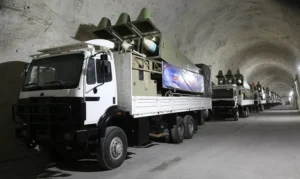
The transition from shadow wars to direct military engagement marks the end of an era of "plausible deniability." Iran’s tactical shift to utilizing mass-produced suicide drones and ballistic missiles suggests a strategy designed to overwhelm defensive systems like the Patriot missile batteries and Israel’s Iron Dome. The court ruling acts as the "legal" component of this new, overt war, signaling to the international community that Iran intends to engage the United States on every front—military, economic, and judicial.
Analysis: The Future of Iran-U.S. Relations
The current legal demand is unlikely to result in a financial transfer, but it serves as a potent tool for Iranian internal consolidation. By framing the conflict as a legal battle for justice, the Iranian leadership seeks to bolster its support base among the population that has suffered under years of economic isolation.
Furthermore, the ruling may be used as a bargaining chip in future, albeit currently unlikely, diplomatic negotiations. Should a future administration in Washington seek a path toward rapprochement, Tehran might point to this "debt" as a point of contention that must be addressed, or conversely, as something that could be waived in exchange for the lifting of specific sanctions.
The legal and military deadlock also highlights the profound failure of existing diplomatic channels to address the core grievances of both parties. With no direct communication lines operating at the executive level, and with the International Court of Justice (ICJ) often bypassed or ignored in such high-stakes disputes, the international community faces a dangerous void in conflict resolution.
As the situation evolves, the global community remains concerned about the potential for further escalation. The intersection of domestic judicial activism and regional military operations creates a complex web of challenges that traditional diplomacy has yet to untangle. Whether this $290 billion demand is a precursor to more severe economic countermeasures or merely a symbolic gesture of defiance, it remains a clear indicator that the normalization of relations between Tehran and Washington remains a distant and increasingly improbable prospect in the current geopolitical climate.
For now, the world watches as Iran continues to challenge the established international order, using every instrument at its disposal—from drones in the sky to gavels in the courtroom—to project its influence and demand a reconfiguration of its relationship with the United States. The repercussions of this ongoing struggle will continue to define the stability of the Middle East for the foreseeable future.