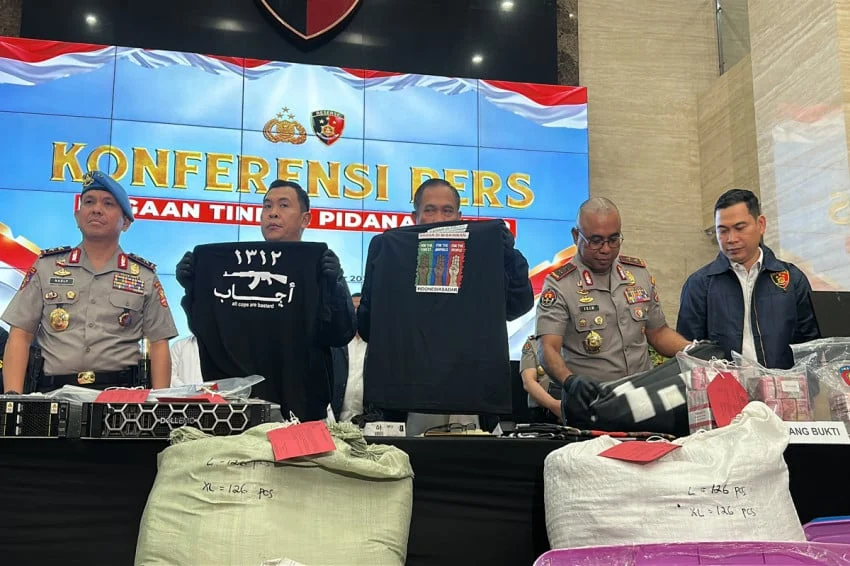
The Criminal Investigation Department (Bareskrim) of the Indonesian National Police (Polri) has deepened its investigation into the sophisticated financial networks supporting an alleged treason plot aimed at undermining the administration of President Prabowo Subianto. During a high-stakes press conference held at the National Police Headquarters in Jakarta on Monday, November 23, 2026, Kabareskrim Polri Commissioner General Asep Safrudin unveiled physical evidence recovered during the ongoing investigation, marking a significant escalation in a case that has sent shockwaves through the nation’s political and security apparatus.
The investigation, which has gripped public attention, centers on a group of high-ranking former and active police officials who allegedly conspired to destabilize the government. Among the six individuals currently held as suspects are former National Police Chief General Listyo Sigit Prabowo (LSP), along with high-ranking officers Irjen Ahrie Sonta Nasution (ASN), Irjen Slamet Uliandi (SU), Irjen Eko Hadi (EH), Brigjen Tedjo Kusumo (TK), and Kombes Iman Imanuddin (II). The breadth of these arrests—spanning various ranks and departments—underscores the complexity of the internal security challenge currently being managed by the administration.
The Financial Web and Operational Logistics
A central pillar of the Bareskrim inquiry is the tracing of illicit financial flows intended to fund the alleged insurrection. Commissioner General Asep Safrudin confirmed that evidence seized by investigators points to a coordinated effort to move capital into the hands of key logistical coordinators, specifically identifying suspect Ahrie Sonta Nasution (ASN) as a primary recipient.
"Regarding the source of the funds, we are currently examining the physical evidence presented today," Asep stated during the briefing. "We have established that suspect ASN received these funds from other suspects within the group. The purpose of these transfers was strictly to facilitate the operational requirements of their activities. The operations were supported and financed by the other suspects involved in this conspiracy."
The investigation has revealed that the group’s activities were not merely ideological but were backed by significant liquidity, intended to support movement-building, mobilization, and the sustainment of clandestine efforts. While the police have successfully intercepted a portion of these funds, the scale of the financial network remains a critical focus for investigators working to determine if external actors or other clandestine organizations were involved.
Addressing Speculation and Disinformation
In the wake of the arrests, various rumors circulated across social media and political discourse regarding the origins of the group’s funding. One prevailing theory suggested that the plot was financed through proceeds from illegal mining operations, a sector often associated with illicit political funding in Indonesia.
However, Commissioner General Asep Safrudin explicitly dismissed these claims during the press conference. He emphasized that, as of the current stage of the investigation, there is no forensic evidence or witness testimony to substantiate links between the funding and the mining industry. By addressing this, the Bareskrim seeks to curb the spread of misinformation that could further polarize public opinion or undermine the legitimacy of the ongoing legal proceedings. The police maintain that the investigation is focused strictly on the evidence of the conspiracy and the internal financial mechanics employed by the suspects.
Chronology of the Alleged Plot
The timeline of the investigation provides critical context to the gravity of the charges. According to official findings, the pemufakatan makar, or the "conspiracy to commit treason," began well before the inauguration of President Prabowo Subianto. The suspects are believed to have engaged in a series of clandestine meetings and communications throughout the transition period, aiming to solidify their influence and organize their resistance ahead of the official change in government.
- Pre-Inauguration Phase: Planning and initial coordination meetings were held by the core group, involving high-ranking officers who sought to leverage their positions to influence or destabilize the upcoming transition.
- Post-Inauguration Monitoring: Following President Prabowo’s rise to power, the suspects allegedly continued to refine their strategy, which triggered heightened surveillance by intelligence and internal affairs units.
- Evidence Collection: Over several months, Bareskrim investigators gathered digital footprints, intercepted communications, and identified financial patterns, leading to the identification of the six suspects.
- The November 2026 Arrests: The culmination of the investigation resulted in the formal detainment of the suspects, representing an unprecedented crackdown on high-level police officials accused of conspiring against a sitting head of state.
Broader Implications for National Security
The involvement of a former National Police Chief, General Listyo Sigit Prabowo, alongside several active-duty generals, creates a precarious situation for the National Police institution. This case poses a significant challenge to the internal integrity of the Polri, forcing a public reckoning with institutional loyalty and the role of police leadership in the nation’s democratic framework.
Political analysts suggest that the swift and decisive action taken by the current administration and the National Police leadership is intended to demonstrate a "zero-tolerance" policy regarding threats to state stability. The case serves as a warning against any faction within the state apparatus attempting to use its resources for political subversion.
Furthermore, the legal implications are profound. Treason (makar) is considered one of the most serious crimes under the Indonesian Criminal Code, and the potential for life imprisonment or death penalties—depending on the severity and impact—looms over the accused. As the legal proceedings progress, the focus will likely shift to the evidentiary threshold required for conviction in the Corruption and Human Rights courts, or the standard District Court, depending on how the prosecution frames the specific articles of the law.
The Role of Institutional Accountability
The ongoing investigation highlights the critical importance of oversight and accountability within Indonesia’s security institutions. The fact that high-ranking officials were capable of orchestrating such a plot suggests a potential failure in internal intelligence and vetting processes. Moving forward, the government is expected to face pressure to implement structural reforms within the police force to prevent the emergence of such factions in the future.
Public confidence in the Polri remains a vital component of domestic stability. By conducting these proceedings with transparency—as evidenced by the public briefing—the police command is attempting to maintain the trust of the Indonesian public. However, the shadow of a former Police Chief being implicated in a treason plot will undoubtedly remain a defining feature of this political cycle.
Looking Ahead: The Judicial Process
As the case moves toward the trial stage, the prosecution is tasked with building a watertight case that connects the financial movements to specific intent. The evidence presented on Monday is merely the tip of the iceberg; the trial will likely involve thousands of pages of dossiers and extensive testimony from intelligence officers who monitored the suspects’ activities.
For President Prabowo Subianto, the successful resolution of this case is essential for asserting his authority and ensuring that the security sector remains unified behind his administration. The case also sends a clear signal to other potential dissenters that the state possesses the capability to identify and neutralize internal threats before they can materialize into widespread unrest.
The coming weeks will likely see further disclosures from the Bareskrim as they finalize the investigation files for submission to the Attorney General’s Office. As the nation watches, the trial of the "Listyo Sigit Group" promises to be a landmark legal event that will define the boundaries of political dissent and the duty of state officials in modern Indonesia. The government’s ability to handle this case with procedural fairness, while firmly upholding the law, will be the ultimate test of its commitment to maintaining order and democratic stability in an increasingly complex security environment.