
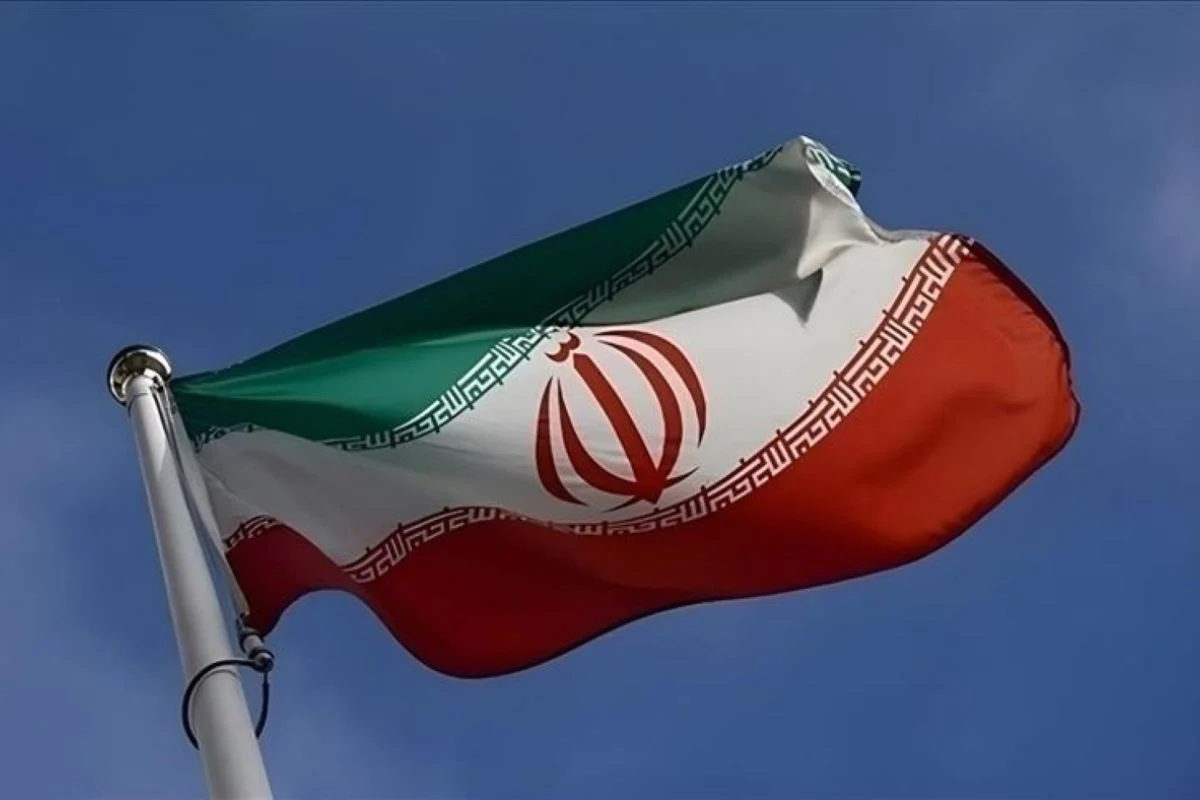
Jakarta (ANTARA) – The Iranian currency has been under an intense global spotlight, grappling with the escalating geopolitical tensions and the far-reaching impact of global economic policies. A defining moment came with the administration of former U.S. President Donald Trump, which enacted stringent measures, including tariffs of up to 25 percent on countries engaging in business cooperation with Iran. This aggressive stance, part of a "maximum pressure" campaign, fundamentally reshaped Iran’s economic landscape and profoundly affected the value of its national currency, the Rial.
The imposition of these punitive tariffs and broader sanctions triggered a cascade of negative reactions, primarily plunging Iran’s economy into a severe downturn. A direct consequence was the dramatic weakening of the national currency. Recent reports indicate that the Iranian Rial (IRR) has plummeted to historic lows against major international currencies, particularly the Euro and the U.S. Dollar. This precipitous decline underscores the immense pressure bearing down on the Iranian economy, a result of prolonged international sanctions, persistent high inflation, and structural economic challenges. The official exchange rate, often controlled, sharply diverges from the more volatile unofficial market rate, where the true depreciation is most acutely felt by ordinary citizens and businesses.
Interestingly, for those venturing into Iran’s bustling traditional bazaars or modern shopping centers, the official term "Rial" is conspicuously absent from everyday transactional conversations. Instead, locals universally employ the term "Toman" when quoting prices for goods and services. This linguistic and practical divergence from the official currency unit highlights a unique economic coping mechanism adopted by the Iranian populace in response to decades of economic volatility and hyperinflation.
This phenomenon is inextricably linked to Iran’s historically high rates of inflation. To simplify price quotations and circumvent the cumbersome use of excessively large numerical figures, Iran’s society has instinctively adopted the Toman as an alternative, de facto unit of account. This informal system has allowed for smoother daily commerce, even as the official currency continues its devaluation.
Given this complex backdrop, questions frequently arise among tourists, international observers, and economic analysts: What is the official currency of Iran? And what is the fundamental difference between the Rial and the Toman, a distinction that so often causes confusion? This comprehensive analysis, drawing from various sources, aims to elucidate these intricacies and shed light on Iran’s ongoing efforts to stabilize its monetary system through a historic redenomination.
The Official Currency of Iran: The Rial (IRR)
Legally and administratively, the Islamic Republic of Iran designates the Rial as its official national currency. All formal banking activities, government documents, official price listings in modern commercial establishments, and international financial transactions utilize the Rial, identified by its international code, IRR. The Central Bank of Iran (CBI) is the sole issuer of banknotes and coins denominated in Rials, bearing official legal tender status. Historically, the Rial replaced the Toman as the official currency in 1932, marking a formal shift that, ironically, has been informally reversed in everyday usage.
The Enduring Dichotomy: Rial vs. Toman in Daily Life
Despite the Rial’s official status, its presence in the daily lives of ordinary Iranians is largely confined to official documentation. In practical, day-to-day transactions, Iranians almost exclusively refer to "Toman" when discussing prices. This ingrained habit permeates traditional markets, small shops, and even many online transactions.
The operational conversion is straightforward: one Toman is equivalent to 10,000 Rials. This means that, in common parlance, prices quoted in Toman are effectively the Rial value with four zeros removed. For instance, if a vendor states a price of 50 Toman, the actual amount to be paid in Rials is 500,000 Rials. This simplification dramatically reduces the number of digits required to state prices, making transactions more manageable and less prone to error in an environment where prices can easily run into millions of Rials.
The historical context of this practice is crucial. Prior to 1932, the Toman was the official currency. When the Rial was introduced, it was set at a rate of 1 Toman = 10 Rials. However, over decades of persistent inflation, the Rial significantly depreciated. As its value eroded, the initial 10-Rial Toman became increasingly cumbersome. To address the overwhelming number of zeros, and perhaps drawing on historical precedent, the public spontaneously adopted a new, informal Toman where 1 Toman effectively equaled 10,000 Rials. This informal redenomination served as a psychological and practical buffer against the perceived worthlessness of the increasingly inflated Rial. This divergence between the official and colloquial currencies has been a source of considerable confusion for foreign visitors and international business partners who are unfamiliar with Iran’s unique monetary landscape.
Iran’s Historic Redenomination Initiative: From Rial to New Toman
Recognizing the long-standing confusion and the practical inefficiencies caused by the Rial/Toman dichotomy, and spurred by the need to streamline its national financial system, the Iranian government, through the Central Bank of Iran (CBI), embarked on a significant currency redenomination policy. This ambitious plan was initially approved in 2020 and is being implemented in a phased approach, with widespread adoption projected between 2025 and 2026.
The core of this policy is the official replacement of the Rial with a new Toman as the primary currency unit, effectively removing four zeros from its value. Under this scheme, 10,000 old Rials will be officially revalued to equal 1 new Toman. This means that the informal Toman that Iranians have been using for decades will now become the formal, legal tender. The new currency will also be subdivided into smaller units called Qiran, with one new Toman comprising 100 Qirans. This introduction of a smaller denomination aims to facilitate smaller transactions and provide a more granular pricing structure.
During the transition period, old Rial banknotes and coins will continue to circulate alongside the newly introduced Toman currency. The CBI has indicated that new banknotes will initially feature smaller nominal values, often accompanied by faint outlines or markings of the removed zeros, to assist the public in gradually adjusting to the new system. This dual circulation strategy is designed to minimize disruption and allow for a smooth, gradual transition, avoiding the shock that can sometimes accompany abrupt currency changes. The ultimate goal is to simplify daily transactions, reduce the psychological burden of dealing with large numbers, and potentially enhance the national currency’s perceived value and stability, both domestically and internationally.
Factors Driving the Iranian Rial’s Weakness
The protracted weakness of the Iranian Rial is not attributable to a single factor but rather a complex interplay of geopolitical pressures, structural economic challenges, and domestic policy choices.
-
Crippling International Sanctions: This remains the most significant external factor. The U.S. withdrawal from the Joint Comprehensive Plan of Action (JCPOA) in May 2018 and the subsequent re-imposition of "maximum pressure" sanctions dealt a devastating blow to Iran’s economy. These sanctions primarily targeted:
- Oil Exports: Historically, crude oil exports accounted for a substantial portion of Iran’s government revenue and foreign exchange earnings. Sanctions severely curtailed Iran’s ability to sell oil on international markets, drastically reducing its access to hard currency.
- Financial and Banking Sector: Restrictions on international banking transactions have largely cut Iran off from the global financial system, making it exceedingly difficult for Iranian businesses to conduct international trade, receive payments, or access foreign credit. This isolation also deters foreign direct investment.
- Key Industries: Sanctions have also targeted other critical sectors, including petrochemicals, shipping, automotive, and mining, further stifling economic growth and export capabilities.
- Impact: The lack of foreign currency inflows weakens the Rial’s demand, while the inability to import essential goods exacerbates domestic inflation.
-
Persistent High Inflation: Iran has suffered from chronic high inflation for decades, a problem exacerbated by sanctions.
- Government Budget Deficits: The government often resorts to printing money to cover budget shortfalls, particularly when oil revenues are constrained, directly fueling inflation.
- Supply Chain Disruptions: Sanctions make it challenging to import raw materials, machinery, and finished goods, leading to domestic supply shortages and higher prices.
- Subsidies: Extensive government subsidies on basic goods and energy, while intended to alleviate poverty, often distort markets and contribute to inflationary pressures.
- Consumer Price Index (CPI): Annual inflation rates have frequently soared into the double digits, often exceeding 40% or even 50% in recent years on an annual basis, severely eroding the purchasing power of the Rial and the savings of ordinary Iranians.
-
Geopolitical Instability and Regional Conflicts: Iran’s involvement in various regional conflicts and its tense relations with several neighboring countries and global powers contribute to an atmosphere of uncertainty. This instability deters foreign investment, encourages capital flight, and creates an environment unconducive to long-term economic planning and growth. The perception of risk associated with Iran further depresses investor confidence and strengthens the demand for foreign currencies as a hedge.
-
Structural Economic Issues and Oil Dependence: Despite efforts to diversify, the Iranian economy remains heavily reliant on oil and gas exports. This dependence makes it vulnerable to global oil price fluctuations and external pressures targeting its energy sector. Furthermore, structural issues such as a large state-owned sector, inefficiencies, and, at times, alleged corruption, can hinder productivity and sustainable economic development.
Reactions, Analysis, and Broader Implications
The Iranian government and the Central Bank of Iran have consistently framed the redenomination initiative as a crucial step towards modernizing the economy, simplifying transactions, and restoring public confidence in the national currency. They argue that it will reduce the burden of calculation for businesses and individuals, streamline accounting, and facilitate a more transparent financial system. Iranian officials often emphasize the nation’s resilience in the face of external pressures, portraying the redenomination as a proactive measure to strengthen internal economic stability.
However, economists offer a more nuanced perspective. While acknowledging the practical benefits of simplifying transactions and potentially boosting psychological confidence, many caution that redenomination is primarily a cosmetic change. It addresses the symptom (too many zeros) rather than the root cause of currency depreciation and inflation. Without fundamental reforms to address structural economic weaknesses, curb government spending, control money supply, and crucially, alleviate the impact of international sanctions, the long-term effectiveness of the redenomination in achieving genuine monetary stability remains debatable. There is a risk that without addressing these underlying issues, the new Toman could eventually suffer the same fate as the Rial, requiring future redenomination.
For Iranian citizens, the currency’s weakness translates into a daily struggle against rising costs of living, eroding savings, and diminished purchasing power. Many resort to converting their savings into hard currencies like USD or EUR, or tangible assets like gold, to protect their wealth from inflation. The redenomination, while simplifying transactions, does not immediately increase their wealth or purchasing power. The transition period will require significant public education to ensure understanding and prevent confusion or exploitation.
Internationally, the redenomination might marginally improve the ease of quoting Iranian economic statistics, but it is unlikely to fundamentally alter Iran’s standing in global finance as long as sanctions persist. The IMF, while generally supporting efforts to modernize monetary systems, would likely emphasize the need for complementary macroeconomic policies to ensure long-term stability. Foreign investors will remain wary, not due to the number of zeros on the currency, but because of the high political risk, the difficulty of doing business under sanctions, and the lack of robust legal and financial frameworks.
In conclusion, the Iranian Rial’s journey is a compelling case study of a currency caught in the crosscurrents of intense geopolitical pressure, deep-seated economic challenges, and ambitious domestic reforms. The move to formally adopt the Toman through redenomination is a bold attempt to bring clarity and psychological stability to a currency system long plagued by inflation and an informal dual existence. Yet, its ultimate success hinges not just on the administrative act of removing zeros, but on Iran’s ability to navigate the treacherous waters of international relations, implement sound economic policies, and foster an environment conducive to sustainable growth and true monetary stability, a challenge that remains profoundly complex and multifaceted.