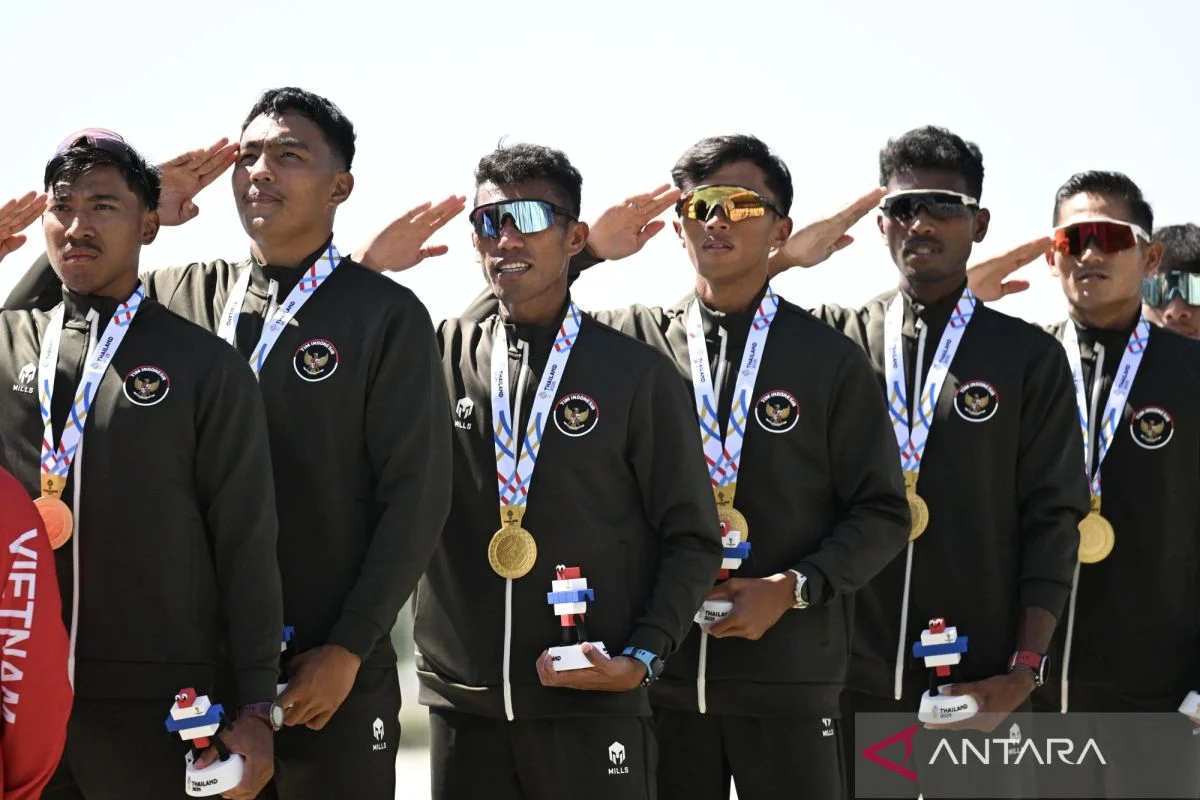
The 33rd Southeast Asian Games (SEA Games) are set to commence from December 9th to December 20th, with Thailand proudly assuming the role of host nation. This biennial multi-sport event, a cornerstone of regional camaraderie and athletic excellence in Southeast Asia, has a rich and evolving history, deeply intertwined with the socio-political landscape of ASEAN nations. Organized every two years in odd-numbered years, the SEA Games stand as the premier sporting spectacle for athletes across the ASEAN bloc, operating under the auspices of the Southeast Asian Games Federation (SEAGF) and receiving oversight from the International Olympic Committee (IOC) and the Olympic Council of Asia (OCA). This upcoming edition in Thailand promises not only fierce competition but also a continued celebration of the unique cultural tapestry that defines the region.
Genesis of a Continental Dream: From SEAP Games to SEA Games
The origins of what we now know as the SEA Games can be traced back to a visionary idea conceived in 1957 by Laung Sukhumnaipradit, then the esteemed Vice President of the Thai Olympic Committee. His proposal, initially termed the Southeast Asian Peninsular Games (SEAP Games), was born from a profound belief in the power of sports to foster stronger bonds of brotherhood and mutual understanding among nations in Southeast Asia. Beyond mere athletic competition, Laung envisioned an event that would mirror the prestige and organizational standards of the Asian Games and the Olympic Games, thereby establishing a common benchmark for athletic development across the ASEAN countries. This aspiration was not just about winning medals; it was about elevating the sporting prowess and shared identity of the region.
This groundbreaking idea was subsequently shared with Dave Kitcher, who served as the coach for the Thai Athletics Association at the time. Kitcher, recognizing the merit and potential of Laung’s vision, took the initiative to advance the proposal. Between February 8th and February 4th, 1958, he engaged in discussions with representatives from Cambodia and Vietnam, who readily embraced and offered their support for the nascent concept. The momentum built from these initial dialogues culminated in a pivotal meeting of the Thai Olympic Committee on February 22nd, 1958. This assembly was attended not only by the initial proponents from Thailand, Cambodia, and Vietnam but also by delegates from Myanmar, Laos, and Malaysia, underscoring the broad regional interest in the initiative.
During this landmark meeting, a significant consensus was reached: the official launch of the Southeast Asian Peninsular Games (SEAP Games) in Bangkok, Thailand, in December 1958. This decision marked a crucial turning point, laying the foundation for a continental sporting tradition. Furthermore, the participating nations agreed to the biennial staging of the Games and the establishment of a dedicated SEAP Games Federation Committee. Thus, Thailand, Vietnam, Malaysia, Cambodia, Myanmar, and Laos were officially recognized as the founding nations of the SEAP Games, setting in motion a legacy of regional sporting cooperation.
The Inaugural Games and Strategic Expansion
The inaugural SEAP Games officially took place in Bangkok, Thailand, from December 12th to December 17th, 1959. This historic event brought together athletes from the founding member nations, showcasing their talents and competitive spirit. Notably, Cambodia was unable to participate in this first iteration, and its place was filled by Singapore. This participation proved to be a precursor to Singapore’s formal integration into the SEAP Games membership in the same year.
The evolution of the SEAP Games continued as the regional sporting landscape matured. A significant expansion occurred at the 8th SEAP Games in 1975, when the Federation Committee made the strategic decision to welcome Indonesia, Brunei Darussalam, and the Philippines as new member nations. These countries officially joined the federation in 1977, marking a substantial growth in participation and representation.
Coinciding with this expansion, 1977 also witnessed a pivotal rebranding. The SEAP Games Federation officially changed its name to the Southeast Asian Games Federation (SEAGF), and consequently, the event itself was renamed the SEA Games. This rebranding signified a broader scope and ambition, moving beyond the peninsular focus to encompass the entire Southeast Asian region.
The most recent addition to the SEA Games family was Timor-Leste, which officially joined in 2003. This brought the total number of participating nations to eleven, the current roster of countries that compete in this prestigious regional event: Brunei Darussalam, Cambodia, Indonesia, Laos, Malaysia, Myanmar, Philippines, Singapore, Thailand, Timor-Leste, and Vietnam.
The Unique Appeal of the SEA Games: A Showcase of Local Culture and Athleticism
One of the most distinctive features of the SEA Games, setting it apart from more globally standardized events like the Olympics, is the prerogative granted to the host nation to include specific sports that highlight their local culture, heritage, and national identity. This policy allows host countries to introduce unique sporting disciplines, providing a platform for both athletes and spectators to experience and appreciate the diverse cultural expressions of Southeast Asia.
This flexibility has led to the inclusion of a fascinating array of sports over the years. For instance, at the 2003 SEA Games hosted by Vietnam, traditional sports such as cyclo racing and pencak silat were featured, offering a glimpse into Vietnamese culture and martial arts traditions. In 2019, the Philippines incorporated obstacle course racing, a discipline that tests agility, strength, and endurance in a dynamic format. More recently, Cambodia, the host for the 2023 SEA Games, showcased its rich martial arts heritage by including Bokator, an ancient Cambodian combat sport that blends animalistic movements with intricate techniques.
The upcoming 33rd SEA Games in Thailand are slated to feature a comprehensive program of 50 sports, reflecting a broad spectrum of athletic disciplines. The logistical and organizational efforts for this massive undertaking will be distributed across three key locations: Bangkok, the bustling capital city; the coastal province of Chonburi, known for its vibrant tourism and sporting facilities; and the southern province of Songkhla, offering a distinct regional backdrop. This dispersal of events aims to showcase Thailand’s diverse landscapes and enhance regional engagement in the hosting duties.
Economic and Social Implications: Beyond the Medals
The SEA Games are more than just a sporting competition; they serve as a significant catalyst for economic activity and social cohesion within the host nation and the broader ASEAN region. The influx of athletes, officials, media, and spectators generates substantial revenue through tourism, hospitality, and related services. Infrastructure development, often undertaken to support the Games, can leave a lasting positive impact, improving transportation networks, accommodation facilities, and sporting venues for future use.
Economically, the direct spending associated with the Games can provide a significant boost to local economies. For Thailand, hosting the 33rd SEA Games is expected to stimulate economic growth, particularly in the tourism sector. The international exposure gained through broadcasting the event globally can also enhance Thailand’s profile as a desirable tourist destination and a capable organizer of large-scale international events.
Socially, the SEA Games foster a powerful sense of regional pride and unity. They provide a platform for young athletes to represent their countries on a continental stage, inspiring future generations and promoting healthy lifestyles. The shared experience of supporting national teams, regardless of the outcome, strengthens interpersonal connections and reinforces the collective identity of Southeast Asia.
Moreover, the Games can serve as a diplomatic tool, facilitating informal interactions and strengthening relationships between participating nations. The spirit of fair play and sportsmanship cultivated during the competition can translate into more cooperative diplomatic ties in other areas.
The Road Ahead: Thailand’s Preparations and Future Prospects
As Thailand gears up to host the 33rd SEA Games, significant preparations are underway. The organizing committee is meticulously planning the logistics, ensuring the smooth execution of events across multiple venues. This includes athlete accommodation, transportation, security, and the operational aspects of each sporting discipline. The success of the Games hinges on effective coordination and a commitment to delivering a world-class experience for all participants and attendees.
The inclusion of various sports, particularly those with local significance, is a strategic move by Thailand to not only showcase its own cultural heritage but also to engage audiences with a broader spectrum of athletic endeavors. This approach aligns with the SEA Games’ tradition of celebrating regional diversity.
The SEA Games continue to evolve, adapting to changing sporting landscapes and geopolitical dynamics. The commitment of the SEAGF and the IOC/OCA ensures that the Games maintain their integrity and uphold the highest standards of sportsmanship and competition. As the 33rd edition approaches, the anticipation is high, not just for the athletic triumphs that will undoubtedly unfold, but also for the continued reaffirmation of Southeast Asia’s vibrant spirit and its enduring commitment to regional unity through the powerful medium of sport. The legacy of Laung Sukhumnaipradit’s vision continues to inspire, with each edition of the SEA Games building upon the foundation of camaraderie and athletic excellence established decades ago. The Games remain a testament to the power of sport to connect nations, foster understanding, and celebrate the shared human pursuit of achievement.