The Communist Party of Indonesia (Partai Komunis Indonesia, or PKI) remains one of the most polarizing, heavily scrutinized, and consequential political entities in modern Southeast Asian history. Before its catastrophic collapse and eventual statutory ban in 1966, the PKI evolved from a modest colonial-era leftist organization into the third-largest communist party in the world, trailing only the Soviet Union and China. Its trajectory spans multiple volatile epochs of Indonesian history: the nascent radical movements of the early 20th century under Dutch colonial rule, armed rebellions during the national revolution, a stunning democratic resurgence through parliamentary politics in the 1950s, deep integration into President Sukarno’s Guided Democracy, and its abrupt, violent decimation in the wake of the 30 September Movement (G30S) in 1965.
Decades after its dissolution, the historiography of the PKI and the tragic purges of 1965–1966 continues to provoke intense academic debate, legal reflection, and institutional re-examination. Modern archival releases from the National Archives of the Republic of Indonesia (ANRI), alongside declassified diplomatic records from the United States, Japan, and other nations, offer historians a multidimensional lens through which to analyze the era. Contemporary historians emphasize the critical necessity of separating documented factual timelines, official state decrees, and evolving interpretations shaped by political shifts. Understanding the PKI requires a rigorous examination of its entire operational lifespan rather than viewing the organization solely through the prism of its violent termination.
Roots of Radicalism: From ISDV to the Colonial Crucible
The ideological roots of Indonesian communism trace back to the twilight years of the Dutch East Indies. In May 1914, a Dutch social democrat named Henk Sneevliet, alongside a small cadre of European and local activists, established the Indische Sociaal-Democratische Vereeniging (ISDV). Initially operating as a radical splinter group within the Dutch colonial infrastructure, the ISDV sought to inject Marxist-Leninist ideology into the burgeoning Indonesian nationalist movement.
By December 1920, the organization underwent a pivotal transformation, shedding its European-centric identity to become the Perserikatan Komunis di Hindia (PKI), which was formally recognized as the Indonesian Communist Party a four years later. Operating under severe surveillance from the colonial security apparatus (the Politieke Inlichtingendienst), the party quickly forged alliances with native mass organizations, most notably the Sarekat Islam, utilizing a strategy of infiltration and alliance-building known as blok disersi.
This strategy of rapid mobilization culminated in a major miscalculation. In November 1926, frustrated by brutal colonial repression and inspired by the global revolutionary wave, radical factions within the PKI launched ill-prepared armed uprisings against the Dutch colonial administration in West Java, subsequently spreading to West Sumatra in early 1927. The rebellions lacked coordination, widespread popular support, and military viability. The colonial government moved swiftly and ruthlessly to crush the revolts. Thousands of PKI members and suspected sympathizers were arrested, imprisoned, or exiled to the notorious Boven Digoel concentration camp in remote Papua, while the party was formally banned. For nearly two decades, the communist movement was forced into clandestine operations, remaining largely fractured and marginalized until the collapse of Dutch hegemony during the Japanese occupation of World War II.
Resurgence and the Madiun Affair of 1948
Following Indonesia’s declaration of independence on August 17, 1945, and the subsequent national revolution against returning Dutch forces, the PKI re-emerged from the shadows into the open political arena. It rapidly reconstituted its organizational apparatus, positioning itself as a staunchly anti-imperialist vanguard of the working class. However, ideological friction within the Republican camp soon reached a boiling point. The polarization between the left wing—represented by the Front Demokrasi Rakyat (FDR), which included the PKI, the Socialist Party, and various labor organizations—and the central government under President Sukarno and Vice President Mohammad Hatta deepened amid severe economic distress and the pressures of the ongoing military struggle against the Dutch.
The friction culminated on September 18, 1948, in what is officially recorded in the National History Encyclopedia of the Ministry of Culture as the Madiun Affair. Local leftist militias and military units aligned with the FDR seized control of the East Javanese city of Madiun and proclaimed the establishment of a "Soviet Republic of Indonesia."
The Republic, fighting for its survival against Dutch military aggression, viewed the rebellion as a treacherous stab in the back. Prime Minister Mohammad Hatta deployed loyal military divisions to crush the insurrection. Within weeks, government forces recaptured Madiun. Thousands of communist leaders and fighters, including prominent figures like Musso, were killed in the fighting or executed in the aftermath, while thousands more were imprisoned. The Madiun Affair left deep scars in the collective memory of the Indonesian military and political elite, cementing an enduring institutional distrust of the political left.
The 1950s: Parliamentary Triumph and Mass Mobilization
Despite its near-total annihilation in 1948, the PKI demonstrated remarkable resilience. In the early 1950s, a new generation of pragmatic, politically astute leaders—most notably Dipa Nusantara (D.N.) Aidit, Mohammad Njoto, Lukman, and Sakirman—took the helm of the party. Abandoning the adventurism of the past, the new leadership adopted a legalistic, nationalist-oriented strategy that aligned the party with President Sukarno’s anti-imperialist rhetoric and championed the immediate economic grievances of peasants, laborers, and youth.
This strategic pivot paid monumental dividends during Indonesia’s first democratic legislative elections in 1955. According to official data from the General Elections Commission (KPU), the PKI secured 6,179,914 votes, translating to 16.36 percent of the national vote and capturing 39 seats in the House of Representatives (DPR). This placed the PKI fourth nationally, just behind major traditional parties like the Indonesian National Party (PNI), Masyumi, and Nahdlatul Ulama (NU). In the subsequent elections for the Constituent Assembly (Konstituante), the PKI expanded its electoral footprint further, garnering roughly 6.23 million votes and 80 seats. By the mid-1950s, the PKI had successfully transformed itself from an underground revolutionary sect into a formidable, legally recognized mass political party deeply embedded within Indonesia’s parliamentary democracy.
Guided Democracy and the Nasakom Framework
The political landscape of Indonesia shifted dramatically following President Sukarno’s issuance of the Presidential Decree on July 5, 1959, which dismantled the parliamentary system and inaugurated the era of "Guided Democracy." Power became increasingly concentrated in the executive branch, anchored by a delicate political equilibrium among three primary pillars: the President, the military (specifically the Indonesian Army), and the PKI.
To navigate this autocratic environment, the PKI fully embraced Sukarno’s political doctrine of NASAKOM—an acronym uniting Nasionalisme (Nationalism), Agama (Religion), and Komunisme (Communism). By positioning itself as the most loyal defender of Sukarno’s revolutionary vision, the PKI cultivated unprecedented state patronage and expanded its mass organizations, such as Berdikari, the labor federation SOBSI, the peasant union BTI, and youth organizations like Pemuda Rakyat. By the early 1960s, the party claimed millions of active members and sympathizers, boasting cultural influence through organizations like Lekra.
However, this rapid expansion amplified systemic tensions. The PKI’s aggressive unilateral actions (aksi sepihak) in rural areas—where party-backed peasants seized land from wealthy landlords and religious institutions—intensified hostilities with rural Muslim communities, particularly the Nahdlatul Ulama. Simultaneously, the PKI’s ideological rivalry with the Indonesian Army escalated sharply. Clashes over agrarian reform, foreign policy, and the PKI’s controversial proposal to arm a "Fifth Force" of workers and peasants outside the conventional military apparatus pushed the nation toward a volatile boiling point.
The 1965 Crisis and the 30 September Movement (G30S)
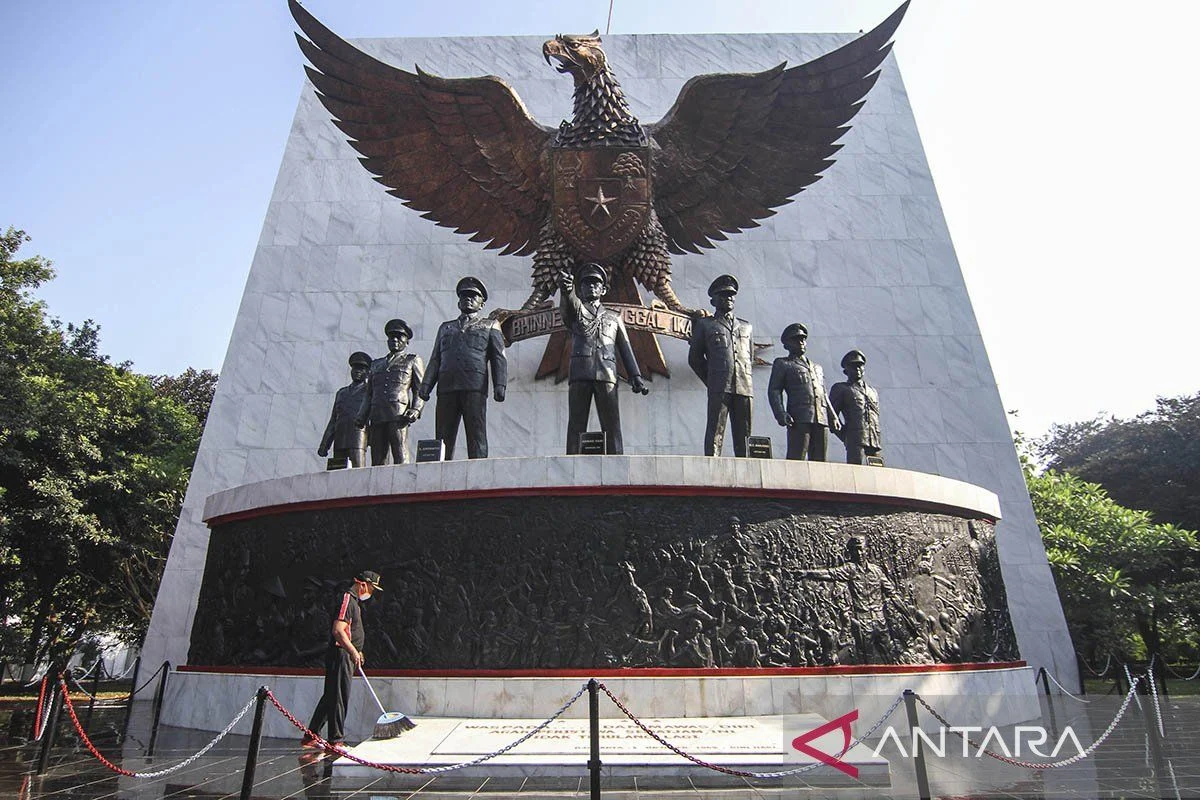
The fragile architecture of Guided Democracy collapsed catastrophically on the night of September 30 to October 1, 1965. A faction of military officers led by Lieutenant Colonel Untung Syamsuri, commander of the Cakrabirawa presidential bodyguard regiment, launched an operation termed the 30 September Movement (G30S). Under the pretext of preempting an alleged coup by a "Council of Generals" backed by the CIA, the movement abducted and murdered six high-ranking Army generals and one lieutenant, dumping their bodies in a well at Lubang Buaya on the southern outskirts of Jakarta.
The exact nature of the PKI’s institutional involvement in G30S remains one of the most intensely debated subjects in modern historiography. The official narrative constructed during the authoritarian New Order regime under President Suharto placed direct, unmitigated blame on the PKI as the mastermind behind the assassination plot, viewing it as an attempted communist takeover. Conversely, subsequent historical research, declassified foreign intelligence records, and independent academic analyses have presented multiple competing hypotheses. These range from viewing G30S as an internal military rebellion with opportunistic communist involvement to a complex web of intelligence maneuvers orchestrated by domestic and international actors.
Regardless of the precise organizational responsibility, the political fallout was immediate and irreversible. Major General Suharto, who assumed control of the military command in Jakarta following the chaos, moved swiftly to neutralize the movement. Within days, the military launched a systematic campaign to purge the capital of suspected communists, dismantle party headquarters, and suppress allied mass organizations.
The 1965–1966 Purges and Human Rights Implications
The failure of the 30 September Movement unleashed a wave of mass violence across the Indonesian archipelago. From late 1965 through 1966, the Indonesian military, working in tandem with civilian paramilitary groups, religious youth organizations, and vigilantes, orchestrated a massive campaign of massacres, arbitrary mass arrests, forced displacement, and systemic human rights violations directed against real and alleged members, sympathizers, and affiliates of the PKI.
Decades later, institutional investigations by independent bodies such as the National Commission on Human Rights (Komnas HAM) documented the staggering human toll of this period. Hundreds of thousands of individuals were killed without trial, while hundreds of thousands more were incarcerated in penal camps—such as the notorious Buru Island penal colony—without due process. Komnas HAM’s official findings classify the events of 1965–1966 as a series of gross human rights violations encompassing extrajudicial killings, enforced disappearances, torture, sexual violence, and forced labor. The psychological, social, and economic trauma inflicted upon the victims, their families, and subsequent generations left deep fissures within Indonesian civil society that persist to this day.
Statutory Ban and the Demise of the Left
The legal dismantling of the PKI was formalized through a sequence of decisive executive and legislative decrees. On March 12, 1966—just months after seizing effective political control—Major General Suharto issued an executive order officially dissolving the PKI and all of its affiliated mass organizations, declaring them illegal entities.
This decree was subsequently codified at the national level through Temporary People’s Consultative Assembly Decree (Ketetapan MPRS) No. XXV/MPRS/1966, enacted on July 5, 1966. This foundational legal instrument explicitly banned the PKI throughout the entire territory of the Republic of Indonesia and outlawed any activities aimed at propagating or developing the teachings of Communism, Marxism, and Leninism.
MprS Decree No. XXV/1966 remains an active component of Indonesia’s constitutional framework. While contemporary legal scholars and human rights advocates continue to debate its alignment with modern democratic principles and international human rights standards, the decree effectively closed the chapter on left-wing parliamentary and ideological politics in Indonesia for over half a century.
The Rise of the New Order and Historical Legacy
The fall of the PKI accelerated the structural collapse of Sukarno’s regime, paving the way for the establishment of the authoritarian New Order under President Suharto. Formally appointed as acting president in 1967 and full president in 1968, Suharto governed Indonesia for over three decades until his resignation amid the Asian Financial Crisis in 1998. Throughout this prolonged period, the official memory of 1965 was tightly controlled by the state through mandatory school curricula, patriotic holidays such as "Pancasila Sanctity Day" (Hari Kesaktian Pancasila), and state-sponsored propaganda films that reinforced the official narrative of the communist threat.
More than six decades after the turbulent events of 1965, the history of the PKI remains an essential field of academic inquiry and national reflection in Indonesia. Archivists and historians continue to emphasize that understanding the trajectory of the party requires looking beyond the violence of 1965 to examine a complex historical continuum: from the early anti-colonial radicalism of the 1910s, through the structural devastation of Madiun in 1948 and the electoral triumphs of the 1950s, to the tragic climax of the Cold War era. As ANRI and academic institutions continue to curate and release diversified archival collections spanning Indonesian, American, and Japanese sources, the historical narrative of the PKI evolves from a monolithic political taboo into a nuanced, multi-faceted study of ideology, statecraft, power struggles, and human rights in the making of modern Indonesia.