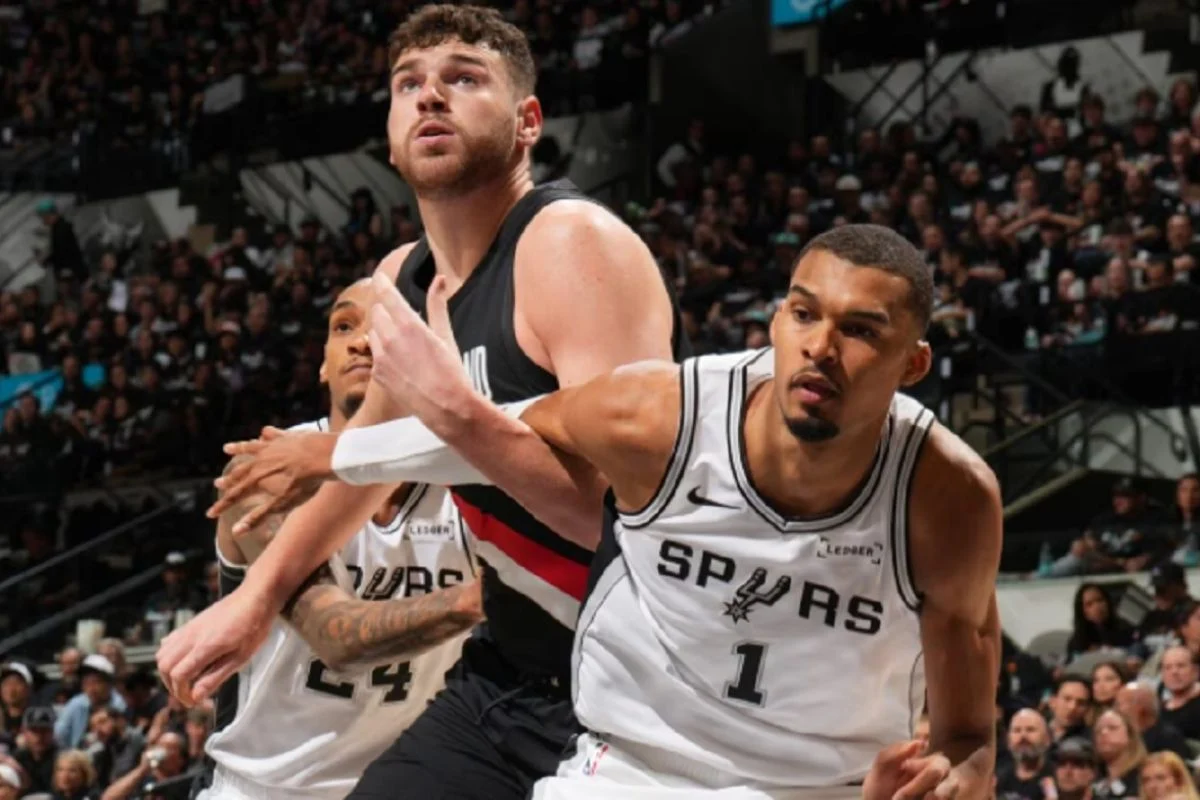
The San Antonio Spurs are no longer the league’s most intriguing developmental project; they are now a legitimate championship contender. After a transformative 2025/2026 campaign that saw the franchise return to the NBA Finals for the first time in over a decade, the organization faces a new set of expectations. As the 2026/2027 regular season tips off on Tuesday, October 20, 2026, in the United States, the Spurs enter the year with a clear mandate: to transform the heartbreak of a Finals defeat into the foundation for a dynasty.
The journey begins with an immediate high-stakes encounter. On Wednesday, October 21, 2026, at 08:30 WIB, the Spurs will host the Oklahoma City Thunder at the Frost Bank Center. This opening-night clash is a rematch of the grueling seven-game Western Conference Finals that defined the previous postseason. For the Spurs, the game serves as both a litmus test for their offseason improvements and a statement of intent to the rest of the Western Conference.
A Meteoric Rise: The 2025/2026 Transformation
The trajectory of the San Antonio Spurs over the last twenty-four months has been one of the most statistically significant turnarounds in modern NBA history. During the 2024/2025 season, the team struggled through a rebuilding phase, finishing with a 34-48 record. The following year, however, the organization achieved a 28-win improvement, concluding the 2025/2026 regular season with a 62-20 record, good for the second seed in the West.
The postseason run was equally historic. By systematically dismantling the Portland Trail Blazers in the first round and the Minnesota Timberwolves in the conference semifinals, the Spurs signaled their arrival as an elite defensive and tactical unit. The Western Conference Finals against Oklahoma City became a battle of wills, ultimately decided in a dramatic seventh game that pushed the Spurs into the NBA Finals.
Although the subsequent 1-4 loss to the New York Knicks in the championship round was a bitter conclusion, the organization has viewed the defeat through a lens of professional growth. Analysts suggest that the high-intensity exposure to the Finals atmosphere—the media pressure, the tactical adjustments, and the physical toll of a long series—has accelerated the maturation of a roster that remains among the youngest in the league.
The Wembanyama Factor: Redefining the Modern Center
At the center of this resurgence is Victor Wembanyama. Standing at 2.24 meters, Wembanyama has transcended the role of a traditional big man, effectively acting as a defensive anchor and an offensive fulcrum simultaneously. His 2025/2026 campaign, which culminated in the Defensive Player of the Year award, demonstrated an unprecedented ability to stifle opposing offenses at the rim while remaining mobile enough to contest perimeter shots.
As he enters his fourth NBA season, the expectations for Wembanyama have shifted. He is no longer just a player with "untapped potential"; he is a primary superstar expected to shoulder the burden of leadership. The technical evolution of his game—specifically his improved decision-making under pressure and his efficiency as a three-point threat—has forced opposing coaches to rethink their defensive schemes. When Wembanyama is on the floor, the spacing of the court shifts, creating gaps that allow the Spurs’ perimeter players to operate with increased freedom.
Strategic Depth: Castle, Harper, and the Supporting Cast
The Spurs’ front office has successfully moved away from an over-reliance on a single star. The development of Stephon Castle and Dylan Harper has been crucial to this structural balance. Castle has evolved into a reliable secondary creator, capable of initiating the offense and drawing defensive attention away from Wembanyama. His growth as a playmaker has reduced the turnover rate that often plagued the team during the early stages of the previous season.
Dylan Harper has provided the team with additional backcourt flexibility. His arrival has allowed coach Mitch Johnson to stagger lineups more effectively, ensuring that the team’s offensive rhythm does not collapse when the starters rotate to the bench. Furthermore, the strategic acquisition of veteran point guard De’Aaron Fox has injected a necessary sense of urgency and pace. Fox’s ability to transition the ball quickly and his proven track record in high-pressure playoff environments provide the stability the young roster requires.
Devin Vassell remains the team’s primary perimeter scoring threat. By maintaining a high efficiency from beyond the arc, Vassell forces defenses to extend their perimeter coverage, which in turn clears the paint for Wembanyama’s inside-out game. This multi-layered approach has turned the Spurs into a complex puzzle for opposing defensive coordinators to solve.
The Coaching Challenge: Mitch Johnson’s Second Act
Head coach Mitch Johnson enters his second full season at the helm with the task of managing heightened expectations. Managing a young, hungry roster that has tasted the Finals is a delicate balancing act. Johnson’s primary objective, according to team insiders, is to maintain the defensive identity that carried the team through the 2026 playoffs while fostering the growth of the team’s youngest assets.
Johnson faces the strategic challenge of optimizing the team’s performance without Wembanyama on the floor. During the previous season, there were periods where the offensive output fluctuated in the absence of their star center. Improving the team’s secondary offensive sets and ensuring that the bench unit maintains a high defensive standard are the stated priorities for the current campaign.
"The goal is not just to return to the playoffs," a team representative noted in a recent briefing. "The goal is to play a brand of basketball that holds up over 82 games and remains sustainable in the high-intensity environment of June."
The Competitive Landscape: The Western Conference Gauntlet
The path to the NBA Finals for the 2026/2027 season remains treacherous. The Oklahoma City Thunder, led by Shai Gilgeous-Alexander, finished the 2025/2026 regular season with 64 wins, and they remain the statistical benchmark for the Western Conference. Their tactical discipline and depth ensure they will be the primary obstacle for any team seeking the top seed.
Beyond the Thunder, the Denver Nuggets remain a perennial threat, with Nikola Jokic continuing to orchestrate one of the most efficient offenses in league history. The Minnesota Timberwolves, meanwhile, have leaned into their physical identity, building a roster designed to punish teams in the paint and on the boards. The Los Angeles Lakers and the Golden State Warriors, while aging, continue to possess the institutional experience required to navigate the rigors of a deep playoff run.
For the Spurs, the objective is to secure a top-four seed in the West to ensure home-court advantage throughout the initial rounds of the postseason. Achieving this requires consistent execution throughout the winter months, avoiding the "championship hangover" that often affects young teams coming off deep runs.
Key Performance Indicators and Future Projections
To evaluate the Spurs’ progress in the 2026/2027 season, analysts will be tracking three key metrics:
- Turnover Management: The Spurs ranked in the middle of the pack for turnovers last season. Reducing these unforced errors is critical to beating elite teams that thrive on transition points.
- Perimeter Defense Efficiency: While the team is excellent at defending the paint, limiting opponent three-point attempts will be the primary focus for the new defensive coaching staff.
- Wembanyama’s Health and Load Management: The team’s reliance on their star player is high. Strategic load management will be vital to ensure he is at 100 percent for the playoffs.
Implications for the League
The ascent of the San Antonio Spurs signals a potential shift in the balance of power in the NBA. If the Spurs can replicate their 60-win pace, they will officially end the era of "rebuilding" and enter a sustained window of championship contention. This shift forces other franchises to accelerate their own timelines, leading to an increasingly aggressive trade market and a higher level of competition across the league.
As the tip-off at the Frost Bank Center approaches, the atmosphere in San Antonio is one of measured anticipation. The franchise has built a foundation that is both deep and highly skilled. Whether this group can take the final step and bring the Larry O’Brien Trophy back to Texas remains to be seen, but one thing is certain: the San Antonio Spurs have returned to the top tier of the basketball world, and they intend to stay there.
The opening game against Oklahoma City is not just a game; it is a declaration of the new status quo. The Spurs are no longer chasing the league leaders—they are the team others are now forced to chase. As the 2026/2027 season unfolds, the world will watch to see if this young, talented, and battle-tested roster can cement its legacy as the next great NBA dynasty.