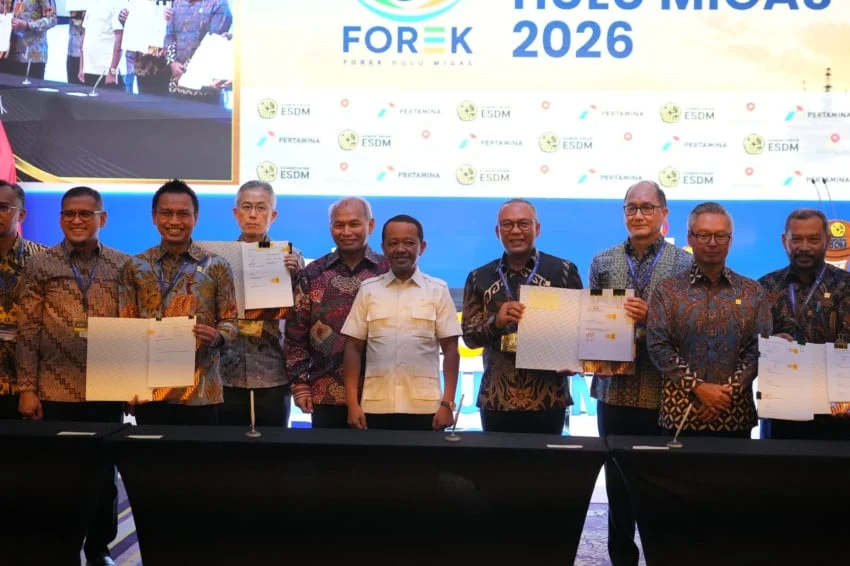
MedcoEnergi, in collaboration with its partners in the Production Sharing Contract (PSC) framework, has solidified its commitment to national energy security by finalizing three pivotal gas agreements. Announced during the Forum on Economics, Finance, and Commercials for Upstream Oil and Gas (FOREK Hulu Migas) 2026 held in Jakarta, these deals represent a significant milestone in Indonesia’s ongoing effort to meet escalating domestic energy demand while transitioning toward a more robust industrial gas infrastructure.
The agreements consist of two new Gas Sales and Purchase Agreements (GSPA) and one significant amendment to an existing contract. These transactions involve key industry players, specifically PT Perusahaan Gas Negara Tbk (PGN) and PT Panca Amara Utama (PAU). By securing these long-term commitments, MedcoEnergi aims to ensure a stable supply of natural gas, a critical component for the country’s power generation, fertilizer production, and petrochemical sectors.
Strategic Context of the FOREK Hulu Migas 2026
The FOREK Hulu Migas forum serves as the premier annual platform for stakeholders in the Indonesian upstream oil and gas sector to align on commercial strategies and regulatory compliance. The 2026 edition focused heavily on the urgency of optimizing domestic gas utilization, particularly as Indonesia navigates a complex global energy landscape characterized by volatile prices and shifting demand profiles.
For MedcoEnergi, the timing of these agreements aligns with its broader strategic pivot toward gas-heavy portfolios. The company has been aggressively expanding its footprint, recently highlighted by the acquisition of a 10% participating interest in the Kutai Basin PSC from Eni. This expansionary phase underscores the company’s confidence in the geological potential of the Indonesian archipelago and its long-term strategy to sustain production levels through the end of the decade and beyond.
Breaking Down the Agreements
The centerpiece of the recent announcement is the GSPA for the Sakakemang Working Area, located in South Sumatra. This agreement, signed by Medco E&P Sakakemang B.V.—acting as the operator on behalf of its partners PC Sakakemang B.V. and MOECO Sakakemang B.V.—establishes a long-term supply relationship with PGN.
Key parameters of the Sakakemang agreement include:
- Total Contracted Volume: 89 trillion British thermal units (TBTU).
- Contract Duration: A ten-year term covering the period from 2027 to 2037.
- Inclusions: The volume includes the state’s share of gas, ensuring that both the government and the contractors are aligned in the commercialization of this resource.
This specific contract is critical for the South Sumatra regional gas market, which provides essential feedstock for industrial hubs and electricity grids. By fixing these volumes through 2037, MedcoEnergi provides the certainty required for downstream industrial planning, particularly for PGN, which manages the extensive gas distribution infrastructure across the island.
Official Perspectives and Industry Implications
Amri Siahaan, Director and Chief Operating Officer of MedcoEnergi, emphasized the significance of these agreements during the press briefing on Wednesday, October 28, 2026. "Rangkaian kesepakatan ini mendukung upaya Pemerintah menjaga pasokan gas domestik. Kami mengapresiasi kerja sama dengan PGN, PAU, dan para mitra KKKS dalam memenuhi kebutuhan gas di dalam negeri," Siahaan stated.
The inclusion of PT Panca Amara Utama (PAU) in these agreements suggests a focus on the fertilizer and petrochemical sectors. PAU, a major player in the ammonia production industry, relies heavily on consistent and affordable gas supplies. By securing these contracts, MedcoEnergi is essentially acting as a bridge between the upstream extraction phase and the downstream manufacturing sector, which is vital for Indonesia’s agricultural productivity and industrial export capabilities.
From a regulatory perspective, the Ministry of Energy and Mineral Resources (ESDM) has been pushing for higher domestic market obligations (DMO) to ensure that the country’s natural resources benefit local industries first. These three agreements serve as a tangible indicator that the upstream industry is responding to this mandate, even as global LNG prices fluctuate.
Analysis: Why Gas Matters for Indonesia’s 2026 Outlook
Natural gas is currently positioned as the primary "transition fuel" in Indonesia’s energy mix. As the nation aims to reach its Net Zero Emission targets by 2060, the role of coal-fired power plants is being slowly curtailed. Natural gas, which burns cleaner than coal and is more flexible for grid balancing, has become the preferred alternative for base-load power.
The impact of these agreements can be categorized into three primary areas:
- Energy Security: By committing volumes through 2037, MedcoEnergi mitigates the risk of gas shortages for major industrial consumers. This long-term horizon provides investors and industrial operators with the predictability needed to invest in plant expansions and infrastructure upgrades.
- Economic Multiplier Effect: Fertilizer production, supported by these gas supplies, is a cornerstone of Indonesia’s food security. Ensuring that firms like PAU have access to stable gas supplies directly influences the cost and availability of urea and other agricultural inputs for Indonesian farmers.
- Fiscal Stability: The government’s role in these agreements, particularly regarding the state’s share of gas, ensures that the exploitation of sub-surface resources translates directly into state revenue. This is vital for the national budget, especially as the government balances subsidies for energy consumers with the need for infrastructure investment.
The Role of PSC Operators in the Modern Market
The collaboration between MedcoEnergi, PC Sakakemang, and MOECO highlights the necessity of consortium-based operations in the modern upstream environment. Developing gas fields requires massive capital expenditure, high-level technical expertise, and an appetite for exploration risk. By pooling resources through the PSC framework, these companies can share the financial burden while ensuring that the infrastructure—such as pipelines and processing facilities—is utilized at maximum efficiency.
The Sakakemang project, in particular, has been a focal point for exploration in recent years. Its integration into the domestic market via PGN is a success story for the monetization of unconventional and deep-field gas deposits. The transition from exploration to sustained production is often the "valley of death" for many energy projects; however, with these new sales agreements, the project’s long-term commercial viability is now firmly established.
Future Outlook and Strategic Direction
Looking beyond 2026, the industry expects further consolidation and more strategic GSPA signings as older fields reach maturity and new, more complex fields come online. MedcoEnergi’s recent activities indicate a strategy of "aggressive maintenance." By acquiring stakes in existing PSCs (like the Kutai Basin) and securing long-term sales for existing producing assets (like Sakakemang), the company is positioning itself as a dominant player in the Indonesian energy landscape.
Market analysts suggest that the next phase for these firms will be the integration of Carbon Capture, Utilization, and Storage (CCUS) technologies. As global demand for "low-carbon" gas increases, companies that can demonstrate a reduced carbon footprint in their extraction and processing stages will be the ones that secure the most favorable terms in future government auctions.
Conclusion
The signing of these three agreements marks a vital step forward for Indonesia’s energy sector. By securing 89 TBTU of gas for the domestic market, MedcoEnergi and its partners are not only ensuring the operational continuity of major industrial players but are also reinforcing the national commitment to energy self-reliance. As the country continues its industrialization drive, the importance of these long-term gas contracts cannot be overstated. They serve as the bedrock upon which the nation’s power, agricultural, and petrochemical sectors will operate for the next decade.
As the industry moves toward 2027, the focus will likely shift from signing agreements to the technical execution of these contracts—ensuring that production targets are met and that the infrastructure required to transport this gas reaches the end-users efficiently. For MedcoEnergi, the challenge will be to maintain this momentum, balancing the demands of stakeholders with the increasing pressures of the energy transition. Nevertheless, the events of the FOREK Hulu Migas 2026 provide a clear signal that the upstream sector remains a vibrant and essential component of the Indonesian economy.