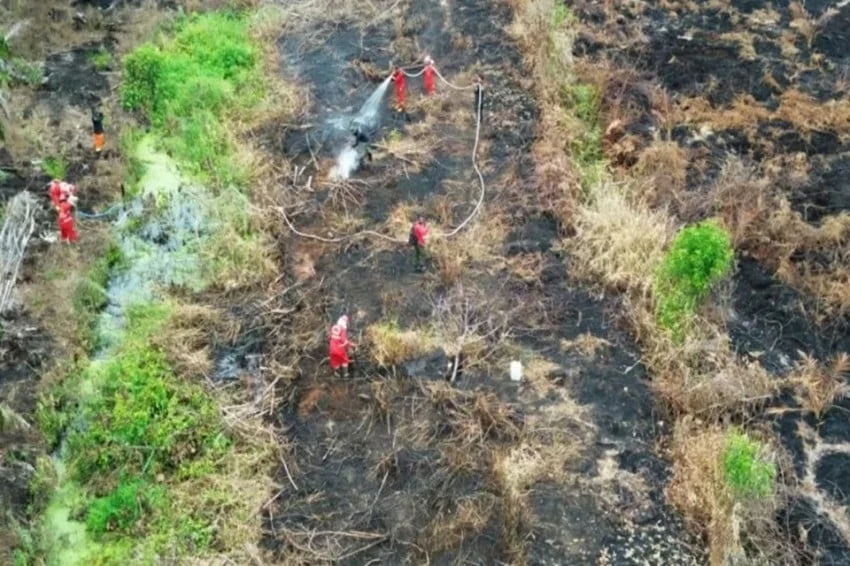
The ongoing ecological and humanitarian crisis posed by forest and land fires, commonly known in Indonesia as karhutla, has prompted intense legislative scrutiny regarding corporate accountability and punitive measures. Wakil Ketua Komisi IV Dewan Perwakilan Rakyat (DPR) Republik Indonesia, Alex Indra Lukman, has formally suggested that law enforcement agencies systematically confiscate the economic profits gained by corporate entities found responsible for igniting forest and land fires. This robust proposal aims to establish a severe deterrent, particularly targeting repeat offenders that routinely exploit environmental loopholes for agricultural and industrial expansion.
During a parliamentary statement released in Jakarta, Alex emphasized that traditional fines and superficial administrative sanctions have proven insufficient in halting the recurring devastation of Indonesia’s rich tropical forests and carbon-rich peatlands. By striking at the financial core of these enterprises through the seizure of illicitly generated or retained profits, the state can fundamentally alter the risk-reward calculus that currently favors illegal clearing practices. As environmental degradation accelerates across vulnerable regions, lawmakers are pushing for an aggressive paradigm shift in how ecological crimes are prosecuted and penalized under Indonesian law.
The Urgent Need for Cumulative Charges and Maximum Penalties
The call for profit confiscation is not merely a punitive gesture but a strategic necessity rooted in the nature of modern environmental crime. Large-scale agricultural operations, particularly those involved in palm oil and pulpwood production, often calculate the standard fines associated with environmental violations as a routine cost of doing business. When the profits accrued from illegally cleared land far outweigh the penalties imposed by courts, the incentive to use fire as a cheap, rapid land-clearing method remains high.
To dismantle this economic incentive, Alex Indra Lukman has urged prosecutors to apply cumulative charges against suspect corporations. A cumulative indictment would combine violations of environmental protection laws, forestry regulations, and criminal codes, thereby exposing culpable entities to maximum legal penalties. Crucially, the integration of an additional criminal penalty—specifically, the seizure of economic advantages gained through illegal land clearance—would ensure that corporations do not retain any financial fruits of their unlawful operations.
Reports received by legislative committees indicate that a disturbing number of corporate actors implicated in karhutla are repeat offenders. These entities manage to weather periodic crackdowns while preserving the wealth generated from past environmental infractions. By targeting these accumulated economic gains, the state can effectively neutralize the financial capacity of rogue corporations to re-offend, safeguarding both public health and national ecological integrity.
Background and Context of Indonesia’s Karhutla Crisis
Forest and land fires have long plagued Indonesia, posing severe annual challenges to regional air quality, public health, agricultural productivity, and global climate stability. The crisis typically peaks during the prolonged dry season, which is frequently exacerbated by climatic anomalies such as El Niño. While natural factors like lightning strikes or extreme heat can trigger localized blazes, a vast majority of large-scale fires are human-induced.
Historically, slash-and-burn techniques have been deployed as the most cost-effective method to clear land for commercial plantations. The cleared land is typically converted into oil palm estates or industrial timber plantations. When fires escape containment, they rapidly spread across millions of hectares of dense forests and fragile peatlands. Indonesia’s peatlands, when drained and ignited, release staggering quantities of greenhouse gases into the atmosphere, transforming the country into one of the world’s leading carbon emitters during severe fire seasons.
The transboundary haze resulting from these fires frequently blankets neighboring nations such as Malaysia and Singapore, straining diplomatic relations and triggering regional health emergencies. Domestically, millions of Indonesians suffer from acute respiratory infections, schools are routinely forced to close, and economic activity grinds to a halt in affected provinces across Sumatra and Kalimantan. Despite decades of governmental intervention, stricter regulations, and heightened public awareness, the structural drivers of karhutla—namely weak local enforcement, complex land tenure systems, and high corporate profitability from converted land—have proven exceptionally resilient.
The Growing Roll of Corporate Suspects
The urgency of Alex Indra Lukman’s proposal is underscored by recent law enforcement data concerning corporate culpability in environmental crimes. Recent tracking reports from national law enforcement agencies and environmental watchdogs have highlighted a substantial number of corporate entities formally designated as suspects in ongoing karhutla investigations. A comprehensive list of approximately 20 major corporations currently facing criminal charges illustrates the scale of institutional involvement in illegal burning practices.
These corporate suspects span various operational sectors, including plantation development, timber concession management, and general agricultural supply chains. Investigators have gathered substantial evidence—ranging from satellite thermal imaging and drone surveillance to soil samples and eyewitness testimonies—linking corporate negligence or deliberate intent to massive blazes within their concession boundaries.
Despite these high-profile designations, the path from suspect status to definitive judicial conviction and asset recovery remains fraught with legal and bureaucratic hurdles. Cases often face prolonged litigation processes, challenges in establishing definitive corporate liability, and difficulties in proving the precise economic nexus between the fires and corporate revenue generation. Consequently, the introduction of streamlined legal mechanisms to target corporate balance sheets represents a vital upgrade to the existing prosecutorial framework.

Institutional Coordination: Ministry of Forestry and Mabes Polri
Implementing a policy of economic asset confiscation requires seamless, high-level coordination among multiple state institutions. In his recent statements, the DPR Vice Chairman specifically called upon the Ministry of Forestry (Kemenhut) to forge a tighter operational alliance with investigators from the Indonesian National Police Headquarters (Mabes Polri).
This inter-agency synergy is critical for tracking down and holding accountable corporations with documented histories of chronic environmental violations. The Ministry of Forestry possesses extensive geographic data, concession licensing histories, and ecological monitoring tools that can map out historical fire incidents within specific corporate footprints. Meanwhile, Mabes Polri holds the investigative authority to subpoena financial records, interrogate corporate directors, and freeze commercial assets pending judicial resolution.
By cross-referencing ministry audit reports with police investigative dossiers, authorities can build airtight cases that not only establish physical liability for the fires but also trace the flow of capital derived from the illegally cleared lands. This cooperative approach ensures that investigations move beyond low-level field operators or local contractors to target the ultimate corporate beneficiaries and parent companies seated in major urban centers.
Legal Mechanisms and the Application of Cumulative Indictments
The legal framework supporting the confiscation of corporate profits draws upon existing provisions within Indonesian environmental jurisprudence, though its application has historically been underutilized. Law Number 32 of 2009 regarding Environmental Protection and Management contains provisions that allow for strict liability, corporate criminal responsibility, and the restitution of environmental damage costs. However, securing verdicts that mandate the complete disgorgement of corporate profits requires proactive judicial interpretation and aggressive prosecutorial strategies.
Legal experts note that cumulative indictments allow prosecutors to target corporations across multiple statutory fronts simultaneously. For instance, a corporate entity can be charged under forestry laws for unauthorized land use, under environmental statutes for causing pollution and habitat destruction, and under criminal provisions for corporate negligence resulting in public endangerment.
When prosecutors explicitly demand additional criminal penalties—such as the forfeiture of revenues generated from commodities produced on burned land—they create a powerful legal precedent. This strategy aligns Indonesian anti-karhutla enforcement with international best practices in environmental crime fighting, where financial deterrence is recognized as the most effective method to curb corporate malfeasance. Furthermore, confiscated funds can theoretically be redirected toward ecological restoration projects and community health reparations in the affected regions.
Broader Economic, Environmental, and Social Implications
The implications of adopting a profit-confiscation model extend far beyond individual courtroom battles; they strike at the heart of sustainable economic development in Indonesia. As global markets increasingly demand ethically sourced and environmentally sustainable commodities—driven by strict regulations such as the European Union Deforestation Regulation (EUDR)—Indonesian palm oil and pulp industries face intense scrutiny regarding their supply chain transparency.
If Indonesia demonstrates a zero-tolerance policy toward corporate environmental crimes through aggressive financial penalties, it significantly enhances the international reputation of its agricultural export sector. Conversely, failing to curb recurring forest fires risks severe trade retaliations, loss of market access, and reputational damage for compliant businesses operating within the country.
Domestically, the enforcement of maximum punitive measures helps rectify the profound social injustice inherent in karhutla. Local communities, indigenous populations, and smallholder farmers frequently bear the brunt of environmental devastation, losing their traditional lands, clean water sources, and livelihoods, while corporate boardrooms thousands of kilometers away reap the financial rewards of land conversion. Ensuring that these corporations are stripped of their ill-gotten gains restores a measure of economic justice to the affected regions.
Conclusion and Future Outlook
The recommendation put forth by DPR Commission IV leadership marks a critical juncture in Indonesia’s ongoing battle against forest and land fires. By shifting the enforcement focus toward the systematic confiscation of corporate economic profits and the application of cumulative indictments, lawmakers have outlined a clear roadmap for strengthening ecological accountability.
As the Ministry of Forestry and Mabes Polri intensify their collaborative investigations into the growing list of corporate suspects, the success of this initiative will ultimately depend on judicial resolve and unwavering political will. If fully realized, the seizure of illicit corporate gains could transform the landscape of environmental law enforcement in Indonesia, turning forest protection from an elusive regulatory challenge into an enforceable economic imperative for all commercial actors.