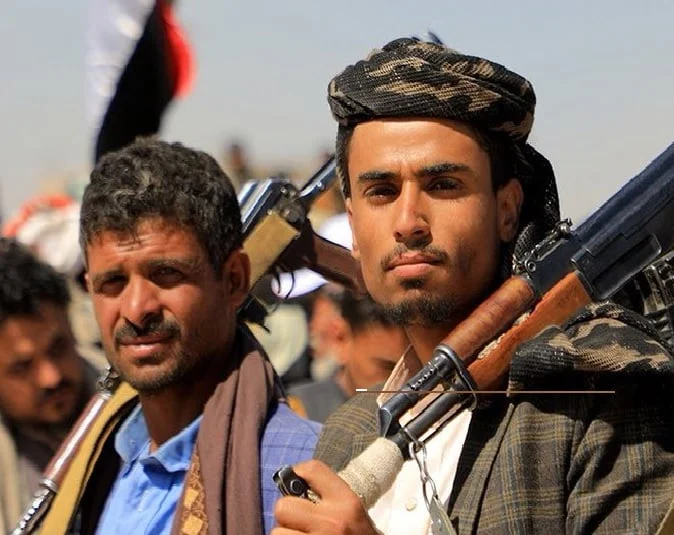
Hizam al-Assad, a high-ranking official within Yemen’s Ansarullah movement—commonly referred to as the Houthi movement—has issued a direct and severe warning to the Kingdom of Saudi Arabia, stating that the nation’s oil facilities and critical infrastructure will become primary targets for missile and drone strikes should Riyadh initiate a comprehensive military aggression against Yemen. The statement, which highlights a significant escalation in the rhetoric between the two neighboring nations, underscores the fragile nature of the current regional stability and the potential for a return to large-scale hostilities that have characterized the Arabian Peninsula for over a decade.
Assad, a member of the Ansarullah political bureau, articulated these threats through a public statement on the social media platform X. He emphasized that any renewed offensive by the Saudi-led coalition would meet with a symmetrical and devastating response aimed at the heart of the Saudi economy. The warning specifically identified a wide array of targets, including oil wells, transmission pipelines, maritime tankers, refineries, export ports, fueling stations, and petrochemical complexes.
The Ansarullah official further noted that the Saudi leadership would be held directly responsible for the catastrophic environmental and humanitarian consequences resulting from such strikes. He pointed to the inevitable "intense fires and thick black smoke" that would result from the destruction of petrochemical and oil facilities, suggesting that the local populations in Saudi Arabia would bear the brunt of the atmospheric and ecological fallout. According to Assad, the Yemeni people are prepared to reclaim their sovereign rights and break the "suffocating siege" that has been imposed on their nation for nearly eleven years.
The Immediate Catalyst: Friction at Sana’a International Airport
The recent spike in tensions can be traced back to an incident on Monday involving the Sana’a International Airport. According to reports from Yemeni sources, Saudi authorities allegedly intervened to prevent an Iranian aircraft from landing in the Yemeni capital. The aircraft was reportedly carrying a high-level Ansarullah delegation returning from Tehran, where they had participated in state ceremonies following the tragic death of Iranian President Ebrahim Raisi and Foreign Minister Hossein Amir-Abdollahian in a helicopter crash.
The interference with the flight, which was viewed by Sana’a as a violation of humanitarian and diplomatic norms, has reignited long-standing grievances regarding Saudi control over Yemeni airspace. Since the beginning of the conflict in 2015, the Saudi-led coalition has maintained a blockade on Sana’a International Airport, severely limiting civilian travel and the delivery of essential medical supplies. While a UN-brokered truce in 2022 led to a partial reopening of the airport for limited commercial flights to Jordan, the recent incident suggests a hardening of positions and a potential rollback of the diplomatic progress made over the last year.
A Decade of Conflict: The Historical Context
The warning from Hizam al-Assad is rooted in the protracted conflict that began in late 2014 when Ansarullah forces seized the capital, Sana’a. In March 2015, Saudi Arabia assembled a coalition of Arab states to launch "Operation Decisive Storm," aimed at restoring the government of Abdrabbuh Mansur Hadi. What was initially expected to be a short military campaign evolved into a grueling war of attrition that has resulted in one of the world’s worst humanitarian crises.
For over nine years, the coalition has utilized air superiority to target Ansarullah positions, while the Yemeni movement has increasingly relied on asymmetric warfare, utilizing domestically produced and Iranian-designed drones and ballistic missiles. The conflict has seen several phases of escalation, including previous successful strikes on Saudi Aramco facilities in 2019, which temporarily halved the Kingdom’s oil production.
The "11 years of aggression and blockade" referenced by Assad includes the period of political instability leading up to the war and the subsequent military intervention. Throughout this time, Yemen’s infrastructure has been decimated, and millions of citizens have been pushed to the brink of famine. The Ansarullah leadership maintains that their military actions are a defensive necessity aimed at forcing the coalition to lift the blockade and pay the salaries of Yemeni civil servants using the country’s own oil and gas revenues.
Saudi Arabia’s Strategic Vulnerability and Vision 2030
Saudi Arabia’s vulnerability to such threats is profound. As the world’s largest exporter of crude oil, its economic stability is inextricably linked to the security of its energy infrastructure. The Kingdom is currently in the midst of "Vision 2030," a massive socio-economic transformation project led by Crown Prince Mohammed bin Salman. This initiative requires hundreds of billions of dollars in foreign investment and a stable regional environment to succeed.
A return to active conflict with Yemen would not only jeopardize these investments but also threaten the safety of "Giga-projects" like Neom and the Red Sea Project, which are located within range of Ansarullah’s long-range drone fleet. Furthermore, any disruption to Saudi oil exports would have immediate and severe consequences for global energy markets, likely driving up Brent crude prices and causing economic ripples across Europe and Asia.
The 2019 Abqaiq and Khurais attacks serve as a chilling precedent for the Saudi leadership. Despite being protected by advanced Western air defense systems, including the Patriot missile batteries, the facilities were penetrated by low-flying drones and cruise missiles. This event demonstrated that even the most sophisticated defenses can be overwhelmed by high-volume, low-cost asymmetric technology.
The Red Sea Dimension and the Gaza Factor
The current threats must also be viewed through the lens of the broader regional situation, particularly the ongoing conflict in the Gaza Strip. Since late 2023, Ansarullah has significantly expanded its military operations to include the targeting of commercial vessels in the Red Sea and the Gulf of Aden that they claim are linked to Israel or heading to Israeli ports.
This maritime campaign has successfully diverted a large portion of global shipping away from the Suez Canal, forcing vessels to take the longer and more expensive route around the Cape of Good Hope. By positioning themselves as a key player in the "Axis of Resistance" against Israel, Ansarullah has gained significant political capital domestically and across the Arab world.
The warning to Saudi Arabia serves as a signal that the movement is willing to expand its theater of operations if Riyadh is perceived to be aligning too closely with Western efforts to protect Red Sea shipping or if it attempts to use the current regional chaos to gain an advantage in the Yemeni theater.
Chronology of Recent Escalations (2023-2024)
- March 2023: Saudi Arabia and Iran sign a China-brokered deal to restore diplomatic relations, raising hopes for a permanent peace settlement in Yemen.
- September 2023: An Ansarullah delegation visits Riyadh for direct talks with Saudi officials, marking the most significant step toward peace since the war began.
- October 2023: Following the outbreak of the war in Gaza, Ansarullah begins launching missiles toward southern Israel.
- November 2023 – Early 2024: Ansarullah intensifies attacks on shipping in the Red Sea; the United States and the United Kingdom launch "Operation Prosperity Guardian" to conduct retaliatory strikes on Yemeni soil.
- May 2024: Following the death of Iranian President Raisi, Ansarullah delegations travel to Tehran. Friction arises over flight paths and airport access.
- June 2024: Hizam al-Assad issues the warning regarding Saudi oil infrastructure, citing "renewed aggression" and the blockade.
Fact-Based Analysis of Implications
The implications of a renewed conflict between the Ansarullah movement and Saudi Arabia are multifaceted. Diplomatically, it would signal the collapse of the 2023 Saudi-Iran rapprochement, as Riyadh would likely blame Tehran for providing the technology used in any strikes. This could lead to a broader regional conflagration involving multiple proxies and direct military engagement between major powers.
Economically, the "petrochemical and oil" targets mentioned by Assad are the lifeblood of the global economy. The Ras Tanura refinery and the East-West Pipeline (Petroline) are critical nodes. If Ansarullah were to successfully strike these facilities again, the global supply chain, already strained by the Red Sea crisis and the war in Ukraine, could face a catastrophic shock.
From a humanitarian perspective, a return to full-scale war in Yemen would end the period of relative calm that has allowed for a minimal increase in aid delivery. The threat of burning oil wells also introduces a new environmental dimension; the 1991 Kuwaiti oil fires provide a historical example of the long-term health and climate damage such actions can cause.
International Response and the Path Forward
The international community, led by the United Nations Special Envoy for Yemen, Hans Grundberg, has repeatedly called for restraint. The UN’s strategy has focused on transitioning from the 2022 truce to a permanent ceasefire and a comprehensive political process. However, the lack of progress on economic issues—specifically the payment of public sector wages and the sharing of oil revenues—remains a major sticking point.
The United States has condemned the Houthi threats, emphasizing its commitment to the defense of Saudi Arabia. Nevertheless, the Biden administration has also expressed a desire to avoid a direct war with the Houthis, focusing instead on maritime security and targeted strikes on launch sites.
As the situation stands, the rhetoric from Sana’a suggests that the "neither war nor peace" status quo is becoming unsustainable for the Ansarullah leadership. By threatening Saudi Arabia’s most prized economic assets, they are attempting to exert maximum leverage to force a total end to the blockade and a favorable political settlement. Whether Riyadh responds with further diplomatic concessions or a return to military force will determine the trajectory of the Middle East for the foreseeable future.