Major League Soccer (MLS) has officially entered a new financial era, cementing its position as a global sports powerhouse as the latest Forbes 2026 valuation report reveals a dramatic surge in franchise worth across the North American circuit. For the first time in the league’s history, five separate clubs have eclipsed the USD 1 billion valuation mark, underscoring a period of unprecedented commercial growth, international interest, and infrastructure development. Leading this economic charge is Inter Miami CF, whose rapid ascension from a nascent franchise to a global brand mirrors the broader upward trajectory of the league itself.
The Rise of Inter Miami: A Global Commercial Phenomenon
Inter Miami CF has claimed the top spot in the 2026 Forbes valuation list, currently holding an estimated value of USD 1.35 billion. This figure makes it the only franchise in the league to cross the 1.3 billion threshold, a testament to the transformative impact of global superstar Lionel Messi. Since the Argentine icon’s arrival in South Florida, the club has experienced a vertical growth trajectory that few sporting organizations in history have matched.
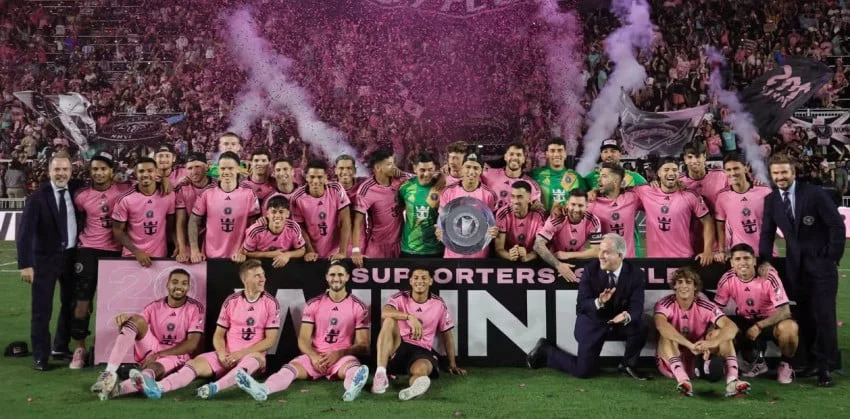
Data indicates that Inter Miami’s revenue skyrocketed from a modest USD 56 million in 2022 to a staggering USD 200 million by 2025. This 257% increase in revenue is directly tied to a synergy of high-profile sporting success and commercial expansion. The 2025 calendar year was particularly pivotal, as the club secured its first-ever MLS Cup, validating the immense financial investment made by owners Jorge and Jose Mas, alongside David Beckham.
The club’s financial outlook remains robust as it prepares for the transition to the new, state-of-the-art Nu Stadium at Miami Freedom Park. This development is not merely a venue upgrade but a strategic move to unlock secondary revenue streams, including premium hospitality, naming rights, and year-round entertainment capabilities. Analysts suggest that the move to a dedicated, purpose-built stadium will likely solidify Inter Miami’s position as the primary commercial engine of the league for the foreseeable future.
The Competitive Landscape: LAFC and the Billion-Dollar Club
While Inter Miami holds the top position, the competition for the pinnacle of the league’s financial hierarchy remains fierce. Los Angeles FC (LAFC) occupies the second position with a valuation of USD 1.32 billion. Having held the top spot for three consecutive years prior to the 2026 report, LAFC remains a benchmark for operational excellence. With a 2025 revenue of USD 167 million, the club continues to lead in brand identity and fan engagement.
LAFC’s commitment to maintaining its elite status is evidenced by its aggressive recruitment strategy. In a landmark move that set a new benchmark for the league, LAFC finalized the acquisition of South Korean superstar Son Heung-min from Tottenham Hotspur. The transfer, valued at approximately USD 26.5 million, represents a record-breaking expenditure for the league, signaling a shift in MLS’s international standing. By attracting elite talent in their prime, rather than solely at the twilight of their careers, clubs like LAFC are elevating the on-field product, which in turn drives global broadcasting rights and sponsorship interest.
Rounding out the top three is the historic powerhouse, LA Galaxy, valued at USD 1.08 billion. As a foundational franchise, the Galaxy continues to leverage its deep-rooted history and six MLS Cup titles to maintain commercial viability, reporting USD 106 million in revenue for 2025. The stability of the Galaxy, combined with the rising tide of newer franchises, demonstrates a healthy ecosystem where heritage and innovation coexist.
Chronology of Commercial Maturation
The current financial state of MLS is the result of a deliberate, long-term strategy implemented by the league’s board of governors over the last two decades.
- 2010–2015: The Infrastructure Phase. During this period, the league prioritized the construction of soccer-specific stadiums. This transition away from shared NFL venues allowed clubs to control their revenue streams more effectively.
- 2015–2020: The Expansion Era. The league aggressively expanded its footprint into key media markets, including Atlanta, Los Angeles, and Cincinnati, driving up the cost of entry for new ownership groups and signaling the league’s long-term value to institutional investors.
- 2020–2023: The Digital and Global Pivot. The introduction of the Apple TV broadcasting partnership transformed how fans consume the sport, providing a global distribution platform that removed the barriers of regional blackouts.
- 2023–2026: The Messi Effect and Beyond. The arrival of Lionel Messi served as a catalyst for a massive influx of global sponsorships, kit deals, and international merchandise sales, effectively ending the era where MLS was considered a secondary market.
Economic Implications and Industry Analysis
The shift toward billion-dollar valuations carries significant weight for the broader sports industry. First, it marks the normalization of MLS as a primary investment vehicle for private equity firms and global media conglomerates. The influx of capital has enabled clubs to improve scouting networks, training facilities, and academy systems, which has created a virtuous cycle of talent development.
From an economic perspective, the league’s revenue growth is no longer dependent solely on ticket sales. The diversification of income—spanning broadcasting, digital streaming, international licensing, and real estate development (as seen with Miami Freedom Park)—has insulated the league against the volatility often associated with professional sports.
Furthermore, the record-breaking transfer fees, such as the Son Heung-min deal, indicate that MLS is no longer a "retirement league." The league is increasingly becoming a destination for mid-career players from Europe and South America, which enhances the quality of play and justifies the higher ticket prices and sponsorship valuations.
Stakeholder Perspectives and Future Projections
While official statements from league executives maintain a focus on collective growth, the sentiment among ownership groups is one of aggressive optimism. Sources within the league indicate that the threshold of USD 1 billion is expected to become the baseline for all major-market franchises within the next five years.
"The goal has always been to build a league that stands on its own merits on the global stage," noted one league representative during a recent stakeholders’ summit. "The current valuations are a reflection of the trust that investors, players, and fans have placed in the vision of Major League Soccer. We are not just building clubs; we are building community anchors that hold immense cultural and financial value."
Looking ahead, the expansion of the league remains a core component of its strategy. However, the focus has shifted from mere quantity of teams to the quality of the market and the commercial sophistication of the ownership groups. With the 2026 FIFA World Cup set to be hosted by the United States, Canada, and Mexico, the visibility of soccer in North America is poised for another massive spike.
Conclusion: A New Paradigm for North American Sports
The transition of five MLS franchises into the billion-dollar bracket is a milestone that confirms the league’s transition from a developmental entity to a mature, high-revenue commercial juggernaut. Through strategic infrastructure investment, global talent acquisition, and the modernization of broadcast rights, MLS has successfully captured a significant share of the global sports market.
As Inter Miami, LAFC, and LA Galaxy continue to push the boundaries of valuation, they are setting a precedent that will undoubtedly drive further competition and innovation across the league. For the investors and stakeholders involved, the message is clear: Major League Soccer is no longer just a growing project; it is a fundamental pillar of the international sports economy, projected to continue its upward trajectory well into the next decade. The coming years will likely see even more clubs reach the billion-dollar milestone, further solidifying the league’s status as a premier destination for athletes and commercial partners worldwide.