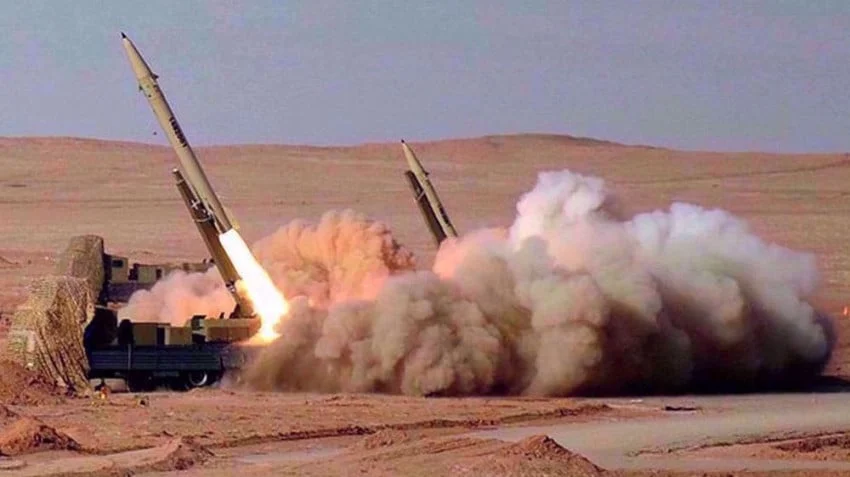
In a significant escalation of regional tensions, the Islamic Republic of Iran has officially declared that it is no longer bound by its self-imposed 2,000-kilometer range limitation for ballistic missiles. This announcement, delivered by Brigadier General Hossein Mohebbi, a spokesperson for the Islamic Revolutionary Guard Corps (IRGC), signals a fundamental shift in Tehran’s military doctrine. As geopolitical frictions intensify across the Middle East, Iranian officials have explicitly warned that any future military aggression from the United States or Israel would trigger a retaliatory response targeting U.S. military installations located across Europe. This policy pivot marks a departure from the restraint Tehran had previously exercised regarding the operational range of its missile arsenal, raising concerns among Western intelligence agencies regarding the reach and lethality of Iran’s conventional capabilities.
Chronology of Escalation: From Strategic Restraint to Open Deterrence
For years, the Iranian military leadership, specifically under the direction of the late Supreme Leader Ayatollah Ali Khamenei’s guidance, had maintained a strategic cap on the range of its ballistic missile program. This 2,000-kilometer limit—roughly the distance between Tehran and various key cities in Southeastern Europe—was marketed as a policy of strategic patience, intended to avoid triggering an existential conflict with Western powers. However, the dynamics of the last 24 months have rendered this policy increasingly obsolete in the eyes of the IRGC.
The current trajectory began in earnest with the increased frequency of shadow warfare in the Levant and the Persian Gulf. Following a series of high-profile strikes against Iranian assets in Syria and Iraq—often attributed to Israeli intelligence—Tehran transitioned from proxy-based retaliation to direct confrontation. The watershed moment arrived in April 2024, when Iran launched an unprecedented direct drone and missile strike against Israel. This event, known as Operation True Promise, shattered the long-standing shadow-war paradigm and forced a recalibration of military postures across the region. The recent declarations by Brigadier General Mohebbi represent the next logical step in this doctrine of "active deterrence," where the threshold for retaliation has been widened to include non-regional U.S. assets.
Technical Capabilities and the ICBM Debate
The removal of the 2,000-kilometer barrier raises urgent questions regarding the technological maturity of Iran’s domestic aerospace industry. While the IRGC has not formally showcased an operational Intercontinental Ballistic Missile (ICBM), Western defense analysts have tracked the rapid progress of the "Shahab" and "Ghadr" series, as well as the more recent "Kheibar" and "Fattah" hypersonic platforms.
U.S. intelligence officials have long monitored the development of Iran’s satellite launch vehicles (SLVs), such as the Zuljanah and Qaim-100. These systems utilize multi-stage, solid-fuel propulsion technologies that are dual-use in nature; the same mechanics required to place a satellite into orbit are essentially those required for a long-range ballistic strike. According to reports from the Associated Press and various defense think tanks, the underlying engineering for a missile capable of reaching beyond 3,500 kilometers is already present within the Iranian military-industrial complex. By officially removing the self-imposed range limit, Tehran is effectively signaling that it is moving from the research and development phase into an active deployment strategy, prioritizing the operational integration of longer-range systems.
Official Responses and Geopolitical Implications
The rhetoric emanating from Teheran has not gone unnoticed in Washington, Brussels, or Tel Aviv. While the U.S. Department of Defense has not issued a specific rebuttal to every individual statement from the IRGC, the general policy remains one of heightened force protection. U.S. bases in Europe—such as Ramstein Air Base in Germany and Incirlik in Turkey—serve as critical nodes for NATO’s collective security architecture. Any credible threat to these installations necessitates a review of regional missile defense batteries, including the Aegis Ashore systems stationed in Romania and Poland.
Ezzatollah Zarghami, a member of Iran’s Cyber Space Council, noted in a recent interview that Iran’s defense policies are being "redefined" to align with the modern reality of global threats. This sentiment underscores a broader shift in the Iranian worldview: the belief that the U.S. security umbrella is no longer a deterrent, but rather a targetable vulnerability. By expanding the potential theater of operations to Europe, Iran is attempting to broaden the cost-benefit analysis for any nation considering an attack on its soil. They are betting that by threatening European security, they can exert diplomatic pressure on Western leaders to restrain Israeli military actions.
Fact-Based Analysis of the Current Strategic Stance
The implications of this shift are profound. First, it complicates NATO’s regional security planning. If Iran possesses—or is on the verge of possessing—missiles capable of reaching Southern Europe, the security of the Mediterranean basin becomes a matter of direct confrontation rather than distant regional stability.
Second, the psychological aspect of "surprises on the battlefield," as mentioned by General Mohebbi, suggests a transition toward asymmetrical warfare in the technological domain. This could involve not just traditional ballistic missiles, but a coordinated effort involving electronic warfare, cyber-attacks on infrastructure, and the deployment of advanced cruise missiles.
Third, the removal of the 2,000-kilometer limit serves as a domestic political tool. It projects an image of strength to the Iranian populace, reinforcing the narrative that the state is prepared to defend its sovereignty against perceived imperialist encroachment. However, this posture carries the risk of isolating Iran further, as it provides a pretext for renewed international sanctions and potentially a tightening of the military encirclement currently managed by the United States and its regional allies.
The Role of Hypersonic Technology
Central to the discussion of these new range capabilities is the introduction of hypersonic glide vehicles (HGVs). Iran has claimed significant breakthroughs in this field, specifically with the Fattah-1 missile. Unlike traditional ballistic missiles, which follow a predictable, parabolic trajectory, hypersonic weapons can maneuver at extreme speeds, making them exceptionally difficult to intercept with current anti-ballistic missile (ABM) systems like the Patriot or THAAD.
If Iran integrates its newly unrestricted range with hypersonic technology, the defensive landscape for U.S. and allied forces changes significantly. The speed of these weapons reduces the reaction time for command and control centers, necessitating an investment in space-based sensor layers to track threats from their launch phase. The threat is no longer theoretical; it is a driving force behind current defense budget allocations in the Middle East and Europe.
Economic and Diplomatic Ramifications
The geopolitical consequences of these threats extend beyond military hardware. Increased tensions invariably impact the global energy market, given that a significant portion of the world’s oil supply flows through the Strait of Hormuz—an area heavily patrolled by the IRGC. The threat of a broader conflict involving European bases creates a "risk premium" on energy prices, as markets anticipate supply chain disruptions.
Diplomatically, the move by Iran places the Joint Comprehensive Plan of Action (JCPOA) and its remnants in an even more precarious position. With the expiration of various UN-mandated restrictions on Iran’s missile program, and with Iran now openly declaring its intent to exceed its self-imposed limits, the window for a negotiated settlement regarding its military capabilities is rapidly closing. The international community is left with a limited set of options: renewed diplomatic engagement, which appears unlikely given the current climate, or a significant increase in conventional deterrence and containment efforts.
Conclusion: A New Era of Risk
The declaration by Brigadier General Hossein Mohebbi is a watershed moment in the regional history of the Middle East. By explicitly stating that the range of its ballistic missiles is no longer limited, and by naming European bases as potential targets, Iran has raised the stakes of any future military engagement to a continental scale. This is not merely a statement of intent; it is a declaration that the Iranian military has reached a level of technological confidence that allows it to project power far beyond its immediate neighborhood.
As the international community watches these developments, the focus will remain on the balance of power. Whether this rhetoric is a genuine indicator of a new strategic capability or a calculated move to deter Western intervention remains the subject of intense debate among security analysts. What is certain, however, is that the strategic environment has shifted. The era of localized, contained conflict in the Middle East is being challenged by a new doctrine that seeks to ensure that any attack on Iran will have global consequences. Moving forward, the interaction between Iran’s expanding missile program and the defensive posture of U.S. and European forces will be the defining feature of regional security, demanding constant vigilance and a sophisticated understanding of the evolving technological landscape. The coming months will likely see an intensification of monitoring efforts, increased naval deployments, and a complex diplomatic dance as all parties navigate this volatile new reality.