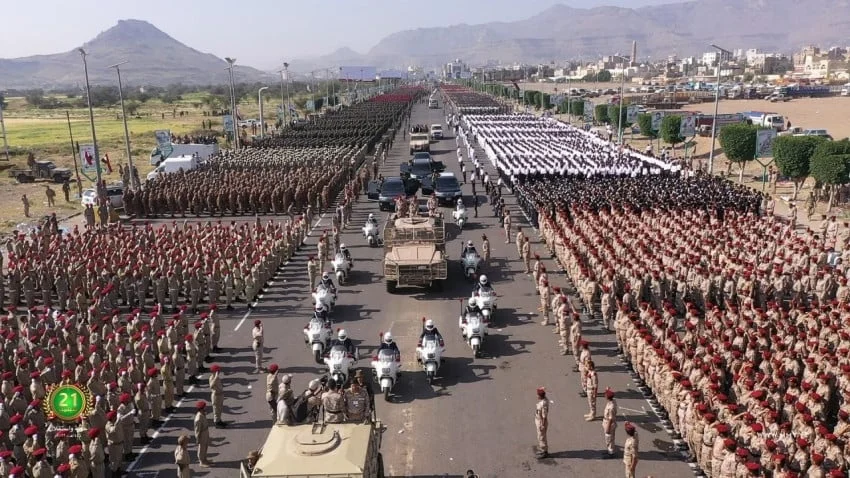
The Houthi movement, officially known as Ansar Allah, has issued a formal warning of renewed military confrontation against the Kingdom of Saudi Arabia, signaling a potential collapse of the fragile peace process that has largely held since 2022. Yahya Saree, the military spokesperson for the Houthi forces, announced in a televised statement that the group is prepared to transition from a state of "no war, no peace" to active combat operations if their demands regarding the lifting of the blockade on Sanaa International Airport and other critical infrastructure are not met. This development comes at a precarious moment for Middle Eastern stability, as the region remains on edge due to the ongoing conflict in the Gaza Strip and the heightened state of alert between Iran and its regional adversaries.
The Houthi leadership has characterized the continued restrictions on Sanaa’s air and sea ports as a form of "economic warfare" that they are no longer willing to tolerate. Saree emphasized that the Houthi military command has adopted a doctrine of "escalation for escalation," warning that any perceived aggression or continued economic strangulation by the Saudi-led coalition will be met with direct strikes on high-value targets within the Kingdom. This rhetoric marks a significant departure from the more diplomatic tone observed during the China-brokered rapprochement between Riyadh and Tehran in 2023, suggesting that the domestic pressures within Yemen and the broader regional geopolitical shifts are pushing the Houthis back toward an offensive posture.
The Catalyst: The Sanaa Airport Blockade and Recent Strikes
The immediate spark for this renewed hostility is the dispute over Sanaa International Airport, which has been under the control of the Houthi movement since 2014 but has faced varying degrees of blockade by the Saudi-led coalition since 2015. While some commercial flights to Jordan were reinstated following the UN-brokered truce in April 2022, the Houthis claim that the number of flights remains insufficient to meet the humanitarian needs of the population under their control. They further allege that the Saudi-led coalition has intentionally sabotaged the expansion of flight routes to other destinations, such as Cairo or Mumbai, which are critical for Yemenis seeking medical treatment abroad.
The situation escalated last week when the Houthis accused Saudi Arabia of conducting renewed aerial operations near Sanaa, an allegation that Riyadh has not formally confirmed. In retaliation, Houthi officials claimed to have targeted the Abha International Airport in southern Saudi Arabia. While the extent of the damage from these alleged drone or missile strikes remains unclear, the exchange has shattered the relative calm that had persisted in the border regions. Saree’s statement that the "blockade will be met with a blockade" implies that the Houthis may once again use their arsenal of long-range drones and ballistic missiles to target Saudi civilian and energy infrastructure, a tactic that previously caused significant disruptions to global oil markets.
Historical Context: A Decade of Conflict in Yemen
To understand the gravity of the current threats, one must look at the trajectory of the Yemeni Civil War, which began in late 2014 when Houthi rebels seized the capital, Sanaa, forcing the internationally recognized government into exile. In March 2015, a coalition led by Saudi Arabia and the United Arab Emirates intervened with the stated goal of restoring the government of President Abdrabbuh Mansur Hadi. What followed was a protracted conflict that the United Nations has frequently described as the world’s worst humanitarian crisis.
For nearly a decade, the conflict was characterized by a stalemate: the Houthis maintained control over the northern highlands and the capital, while the coalition-backed forces held much of the south and east. During this period, the Houthis demonstrated a rapidly advancing military capability, evolving from a localized militia into a regional actor capable of launching sophisticated "suicide drones" and precision-guided missiles. High-profile attacks, such as the 2019 strike on Saudi Aramco’s processing facilities at Abqaiq and Khurais, demonstrated the vulnerability of the Kingdom’s economic heartland to Houthi projectiles.
The 2022 truce brought a much-needed reprieve, leading to a significant reduction in cross-border attacks and civilian casualties. However, the failure of the parties to formally renew the truce after its expiration in October 2022 left the country in a state of "frozen conflict." The current Houthi rhetoric suggests that the "frozen" nature of the war is thawing in favor of renewed violence.
The Geopolitical Dimension: Iran and the "Axis of Resistance"
The Houthi threat against Saudi Arabia cannot be viewed in isolation from the broader regional dynamics involving Iran. As members of the so-called "Axis of Resistance," the Houthis have aligned their strategic goals with Tehran’s regional agenda. Following the outbreak of the war in Gaza in October 2023, the Houthis expanded their military operations to include the targeting of commercial shipping in the Red Sea and the Gulf of Aden, claiming these actions were in solidarity with the Palestinian people.
This maritime campaign has had a profound impact on global trade, forcing major shipping companies to reroute vessels around the Cape of Good Hope, thereby increasing costs and delivery times. The United States and the United Kingdom responded by launching Operation Prosperity Guardian and conducting several rounds of airstrikes against Houthi military installations in Yemen. However, these Western interventions have not deterred the group; instead, they appear to have emboldened the Houthi leadership to project power more aggressively against regional neighbors whom they perceive as being complicit in the "Western-Israeli agenda."
The recent Iranian retaliatory strikes against Israel have further complicated the situation. As Riyadh attempts to navigate a middle path—maintaining its security partnership with the U.S. while avoiding a direct confrontation with Iran—the Houthis are using this leverage to press their demands. By threatening Saudi Arabia, the Houthis are effectively signaling that Riyadh’s internal stability and its "Vision 2030" economic development goals are contingent upon a resolution of the Yemeni conflict on Houthi terms.
Military Capabilities and Strategic Vulnerabilities
The Houthi military arsenal has grown substantially in both quantity and quality. Their inventory now includes the Burkan-3 long-range ballistic missile, which has a range estimated at over 1,200 kilometers, and the Samad-3 "kamikaze" drone, capable of reaching deep into Saudi territory. Furthermore, the Houthis have developed naval capabilities, including remote-controlled explosive boats and anti-ship cruise missiles, which pose a direct threat to Saudi Arabia’s western coastline and its ambitious tourism projects along the Red Sea.
From a strategic perspective, Saudi Arabia is currently in a vulnerable position. Crown Prince Mohammed bin Salman has staked his legacy on Vision 2030, a massive economic diversification plan that requires significant foreign investment and a stable regional environment. A return to active warfare with the Houthis, characterized by frequent missile sirens in Riyadh and drone strikes on oil refineries, would severely undermine investor confidence and divert billions of dollars back into defense spending.
Official Responses and International Concerns
While the Saudi government has remained relatively quiet in the immediate aftermath of Yahya Saree’s latest statement, diplomatic sources indicate that Riyadh is working behind the scenes to de-escalate the situation. The Saudi leadership is reportedly in contact with Omani mediators, who have historically acted as a bridge between the Houthis and the coalition.
The United Nations Special Envoy for Yemen, Hans Grundberg, has expressed "deep concern" over the escalatory rhetoric. In recent briefings to the UN Security Council, Grundberg has warned that the progress made over the last two years is at risk of being completely undone. "The path to peace in Yemen is long and fragile," Grundberg noted. "Any return to hostilities will not only exacerbate the humanitarian suffering of the Yemeni people but will also have catastrophic consequences for regional security."
The United States State Department has also condemned the Houthi threats, reiterating its commitment to the defense of Saudi Arabia. However, Washington is also wary of being drawn into another protracted conflict in the Middle East, especially as it manages the fallout from the Gaza crisis and the ongoing war in Ukraine.
Humanitarian and Economic Implications
The human cost of a renewed war would be devastating. According to UN data, over 24 million Yemenis—more than 80% of the population—are in need of some form of humanitarian assistance. A total of 17 million people are considered food insecure, and the healthcare system has largely collapsed. The blockade of the Sanaa airport is not merely a political issue; it is a life-or-death matter for thousands of patients who cannot access specialized care within the country.
Economically, the impact would be felt far beyond the borders of Yemen and Saudi Arabia. The Bab el-Mandeb Strait, located off the coast of Yemen, is a chokepoint through which nearly 10% of global seaborne petroleum passes. Any escalation that leads to further disruption of this route or a direct attack on Saudi oil infrastructure would likely cause a spike in global energy prices, adding inflationary pressure to a global economy that is already struggling.
Analysis: The Road Ahead
The Houthi movement’s declaration of war is a high-stakes gamble. By threatening Riyadh, they are attempting to force a final settlement that secures their control over northern Yemen, ensures a share of the country’s oil and gas revenues, and ends all foreign intervention. They are betting that Saudi Arabia’s desire for regional stability and economic growth will outweigh its willingness to continue a costly and unpopular war.
However, this strategy carries the risk of a miscalculation. If the Houthis launch a major attack that results in significant Saudi casualties or catastrophic damage to infrastructure, Riyadh may feel compelled to respond with overwhelming force, potentially dragging the region into a broader conflict that could involve direct participation from Iran and the United States.
In conclusion, the situation in Yemen has reached a critical juncture. The "blockade for blockade" rhetoric from the Houthi military command is a clear indication that the period of relative calm is coming to an end. Whether through renewed diplomatic efforts or a return to the battlefield, the coming weeks will determine the future of Yemen and the stability of the entire Middle East. The international community faces the urgent task of bringing both sides back to the negotiating table before the rhetoric of war translates into a new wave of regional destruction.