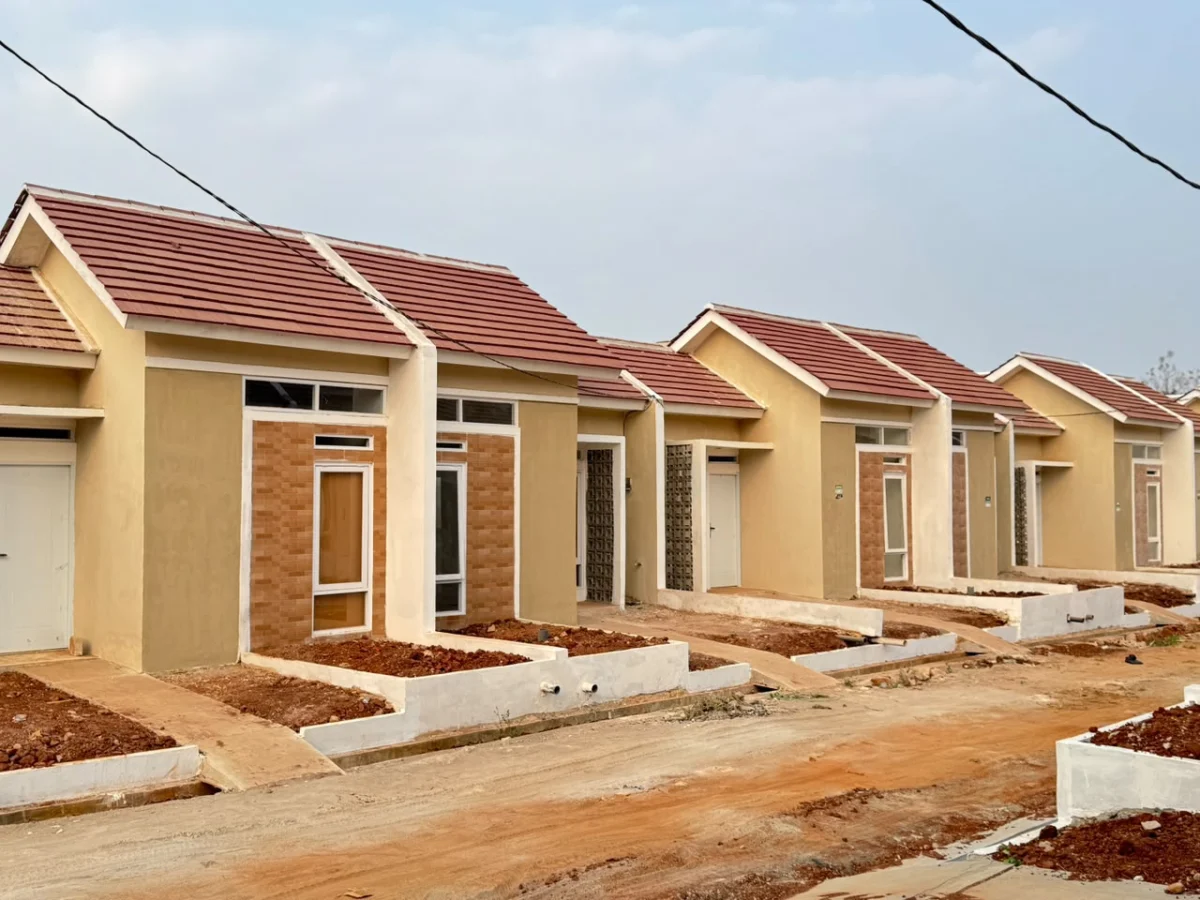
The Indonesian government is confronting a formidable challenge in its housing sector as the year 2026 enters its final two months. Recent performance data reveals that the ambitious target of channeling 350,000 subsidized housing units through the Housing Financing Liquidity Facility (FLPP) remains significantly behind schedule. As of October 31, 2026, the cumulative realization reached only 194,360 units, accounting for just 55.53 percent of the government’s full-year target. This leaves a massive deficit of 155,640 units that must be successfully distributed, processed, and finalized before the fiscal year closes on December 31.
This shortfall underscores the immense pressure mounting on the Ministry of Housing and Residential Areas (PKP) and related financial institutions, such as the Housing Savings Management Agency (BP Tapera). Beyond the primary subsidized mortgage scheme, parallel infrastructure initiatives—including permanent housing (huntap) developments for disaster victims across Sumatra—are also exhibiting sluggish physical progress. As the Ministry of PKP evaluates its end-of-year execution rates, stakeholders are urging synchronized administrative, financial, and construction efforts to mitigate the risk of widespread target shortfalls under the broader National Three Million Houses Program.
Comprehensive Evaluation of Year-End Housing Targets
The urgency behind the current acceleration strategy came to light during a high-level ministerial evaluation meeting held by the Ministry of PKP. Officials convened to assess both the fiscal absorption rates and the physical completion milestones of various national housing schemes heading into the final stretch of 2026.
Sid Herdi Kusuma, Deputy Commissioner for Fund Utilization at BP Tapera, detailed that the 194,360 FLPP units delivered by late October were supported by a DIPA (Budget Implementation Document) allocation amounting to Rp15.5 trillion. Despite the substantial capital injected into the system, the remaining 155,640 units present a logistical bottleneck. Achieving this volume in roughly 60 days requires seamless coordination among commercial and state-owned banks, property developers, and prospective homeowners from lower-income brackets (MBR).
Industry analysts point out that accelerating FLPP realization is not solely a matter of capital availability or quota expansion. The pipeline relies heavily on the timely supply of completed, habitable houses from developers, rigorous yet efficient administrative verification of beneficiary eligibility, and the swift approval of mortgages by participating financial institutions. Any friction in these components risks carrying unabsorbed quotas into the subsequent fiscal year, directly impacting low-income families awaiting housing security.
Sluggish Progress in Disaster Recovery Housing Across Sumatra
Compounding the challenges in the subsidized mortgage sector, the reconstruction of permanent housing (huntap) for communities displaced by natural disasters in Aceh, North Sumatra, and West Sumatra has encountered critical delays. The Ministry of PKP has been tasked with accelerating the construction of 7,952 housing units under 54 active contract packages—comprising 29 physical construction packages and 25 supervision packages—with a strict contractual deadline of December 31, 2026.
However, official evaluations from early November indicate that the combined physical progress for these disaster-relief housing projects stands at a mere 7.20 percent, while financial realization is lagging at 15.17 percent.
A regional breakdown reveals severe disparities in execution speeds. The Aceh province holds the largest allocation, slated for 6,220 units. Despite this massive volume, physical progress in the region has only reached 5.67 percent. Construction activities in Aceh have largely been confined to preliminary stages, including land clearing, foundation laying, and the structural fabrication of RISHA (Simple Healthy Instant House) components.
Meanwhile, progress in neighboring provinces fares only marginally better. The development of 919 huntap units in North Sumatra has achieved a physical progress rate of 9.75 percent. In West Sumatra, the construction of 813 units lags at 6.19 percent. With only two months remaining, contractors and regional implementing units face an unprecedented hurdle to complete the heavy engineering and assembly phases before the year concludes.
Fiscal Absorption and Budget Realization Dynamics
On the financial front, the Ministry of PKP reported that its overall expenditure realization reached Rp8.62 trillion, or 68.79 percent of its total ceiling of Rp12.527 trillion, following adjustments made through additional budget allocations (ABT).
Didyk Choiroel, Secretary-General of the Ministry of PKP, clarified the nuance behind these fiscal figures. When calculated independently of the ABT, the ministry’s baseline budget absorption actually stands at a robust Rp8.2 trillion, representing 80.33 percent of the original Rp10.3 trillion ceiling. However, the introduction of the supplementary budget diluted the overall percentage metric down to 68.79 percent.
Despite this mathematical adjustment, the ministry has established aggressive financial targets for the remainder of the fourth quarter. "The Ministry of PKP continues to strive for budget realization to increase to 94.60 percent by early December and reach 97.37 percent by the end of fiscal year 2026," Didyk stated.
To achieve this upward trajectory, the ministry is closely monitoring Multi-Year Contract (MYC) projects, particularly the construction of vertical residential towers (rusun). Current data for rusun development—spanning 22 towers and 1,044 units with a total budget ceiling of Rp391.76 billion—shows a financial absorption of Rp295.32 billion, or 75.38 percent. In contrast, the combined physical progress for these vertical structures rests at 48.85 percent. This gap signifies that while funds are flowing into the projects, physical construction on the ground must accelerate to bridge the discrepancy between financial expenditure and structural completion.
Bright Spots: Self-Help Housing Stimulus Program Exceeds Expectations
While large-scale subsidized mortgages and disaster-relief construction face steep hurdles, other segments of the national housing agenda are demonstrating stellar performance. Notably, the Self-Help Housing Stimulus Program (BSPS), widely known as the "Bedah Rumah" (House Renovation) program, has emerged as a high-performing initiative.
Fitrah Nur, Director General of Housing and Residential Areas, reported that the national physical progress of the BSPS program has touched 83.11 percent. This translates to the successful renovation and upgrading of 332,453 housing units out of the total 400,000 units targeted for the year. Financially, the program has absorbed Rp7.1 trillion, representing 82.24 percent of its allocated budget ceiling.
Regional achievements under the BSPS framework have been particularly noteworthy. West Java leads the national rankings with a physical realization rate of 96.85 percent, successfully renovating 48,774 units out of its 49,880 target. Close behind are the Special Region of Yogyakarta at 96.84 percent, Bali at 95.90 percent, Riau at 95.64 percent, and Bengkulu at 95.63 percent.
The success of the BSPS program is largely attributed to its community-based implementation model, which relies on local participation, direct oversight, and shorter bureaucratic supply chains compared to large-scale high-rise or regional infrastructure developments.
Strategic Outlook and Implications for National Housing Policy
The duality of the 2026 housing performance data highlights the structural complexities of managing Indonesia’s massive residential development goals. While community-driven initiatives like the BSPS program prove that grassroots execution can yield high compliance and rapid turnaround times, capital-intensive and geographically dispersed projects—such as disaster huntap and large-scale FLPP distribution—require tighter orchestration.
Out of its total operational budget, the Ministry of PKP has systematically channeled 92.64 percent of funds directly into physical housing programs, reserving only 7.36 percent for administrative management and institutional overhead. This heavy weighting toward direct development emphasizes the administration’s intent to maximize on-the-ground impact.
As the ministry navigates the final weeks of 2026, leadership has signaled a reinforcement of internal controls. Enhanced periodic monitoring, intensive coordination with regional implementing units, and proactive problem-solving with financial partners will be decisive in determining whether the government can narrow the 155,640-unit FLPP deficit and pull disaster-recovery housing construction across the finish line. The coming weeks will serve as a critical test of administrative agility and inter-agency cooperation in fulfilling the constitutional mandate of housing for all Indonesian citizens.