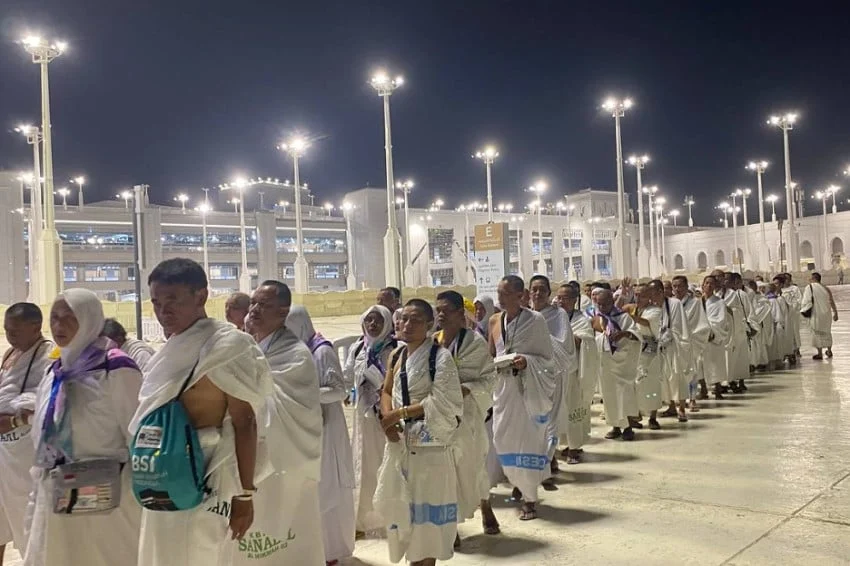
The Ministry of Hajj and Umrah (Kemenhaj) of the Republic of Indonesia has officially released an updated registry concerning the list of Hajj Khusus (Special Hajj) pilgrims eligible to settle their payment for the 1448 H/2027 M Hajj season. This significant administrative update, disseminated through a formal circular letter to all leadership of the Special Hajj Organizing Providers (PIHK), serves as a critical regulatory mechanism to ensure that the Hajj departure process remains transparent, orderly, and compliant with both Indonesian national regulations and Saudi Arabian Hajj policies.
Administrative Verification and Regulatory Framework
The recent update is the culmination of an intensive data verification process conducted by the Center for Data and Information (Pusdatin) of the Ministry of Hajj and Umrah. According to the Director of Special Hajj Services, Tuti Rianingrum, the directive was formalized under the Director General of Hajj Services Circular Number S-103/PL/2026, dated November 19, 2026. This action functions as a direct continuation of the previous administrative directive, Circular Number S-100/PL/2026, issued on November 5, 2026, which initially outlined the framework for the 2027 Hajj payment settlement and the management of Bipih (Direct Hajj Cost) deposits.
The verification process is not merely a bureaucratic formality; it is a vital step in maintaining the integrity of the national Hajj quota. By cross-referencing individual data against the national database, the Ministry aims to eliminate discrepancies that could potentially disrupt the visa issuance process or lead to complications upon arrival in Saudi Arabia.
Key Findings and Grounds for Status Adjustment
The Ministry’s decision to update the eligibility list stems from two primary findings identified by the Pusdatin verification team. These findings highlight the strict enforcement of regulations intended to ensure equitable access to the Hajj pilgrimage.
The first finding concerns the "18-year rule." Under current Indonesian and Saudi Arabian Hajj policies, individuals who have previously performed the Hajj pilgrimage are prohibited from doing so again within a period of less than 18 years. This regulation is designed to provide opportunities for first-time pilgrims to fulfill their religious obligation, given the immense demand and the limited annual quota allocated to Indonesia. The data cleansing process identified a segment of applicants who, despite having registered for the special Hajj, were found to have fulfilled their Hajj obligation within the restricted timeframe.
The second finding pertains to age requirements. Indonesian Hajj regulations mandate that a pilgrim must reach a minimum age of 16 years at the time of departure. This age threshold is established to ensure that pilgrims possess the physical and cognitive maturity required to navigate the rigors of the Hajj, which involves strenuous physical activity and complex logistics. The Ministry discovered that several individuals on the previous list had not yet met this age requirement, necessitating their removal or deferral from the current "eligible to pay" status.
Detailed Transparency and Reporting
The updated "List of Eligible Pilgrims for Special Hajj 1448 H/2027 M" provides an unprecedented level of granular detail. To ensure accountability, the Ministry has included comprehensive data points for each registrant, including:
- Unique portion numbers (nomor porsi)
- Full legal names and current age verification
- Payment status and category of the portion
- The identity of the managing PIHK
- Geographic data (district, city, and province of domicile)
- The designated Bank Penerima Setoran (BPS) Bipih
- Detailed validation status of the pilgrim’s administrative documentation
This transparency allows both the PIHK and the individual pilgrims to verify their status independently, reducing the likelihood of last-minute administrative failures that have historically plagued Hajj preparation cycles.
Chronology of the 2027 Hajj Preparation
The timeline leading up to this announcement reflects the Ministry’s proactive stance in managing the 2027 Hajj season. The preparatory phase began in early 2026, with the government emphasizing the need for professional, competent, and pilgrim-oriented services.
- Early 2026: Initial planning for the 2027 Hajj season commences, focusing on infrastructure and human resource development, including the recruitment of 1,970 prospective Hajj officers.
- November 5, 2026: Issuance of Circular S-100/PL/2026, establishing the foundational criteria for the 1448 H/2027 M payment period.
- November 6–18, 2026: The Pusdatin team performs an exhaustive audit of the applicant database, identifying discrepancies regarding repeat pilgrims and age eligibility.
- November 19, 2026: Issuance of Circular S-103/PL/2026, which formalizes the adjustments to the eligibility list based on the audit findings.
- November 23, 2026: Official public statement by Director Tuti Rianingrum regarding the status update.
Broader Implications for the Hajj Ecosystem
The Ministry’s strict enforcement of these eligibility criteria carries significant implications for the broader Hajj ecosystem in Indonesia. First, it reinforces the authority of the Ministry of Hajj and Umrah over the PIHK. By mandating that the PIHK adhere strictly to the updated list, the government ensures that private travel agencies are held accountable for the data they submit on behalf of their clients. Failure to comply with these updates could result in administrative sanctions or the revocation of operational licenses for errant providers.
Second, the move is a response to the increasing demand for Hajj slots. As the waiting list for Hajj in Indonesia grows, the importance of maintaining a fair and accurate selection process becomes paramount. By filtering out ineligible applicants, the Ministry ensures that the available quota is utilized by those who meet all legal and religious requirements, thereby maximizing the efficiency of the national quota.
Third, this development highlights the digitalization of Hajj services. The role of the Pusdatin (Center for Data and Information) has become the backbone of the Ministry’s operations. As the government continues to modernize its databases, the reliance on digital, real-time verification is expected to increase, further reducing human error and potential fraud in the registration process.
Challenges and Future Outlook
While the update brings clarity, it also presents logistical challenges for the PIHKs, who must now inform the affected pilgrims and manage the financial adjustments associated with those who are no longer eligible to pay. Managing the return of deposits or the rescheduling of Hajj dates for those impacted by the 18-year rule or age restrictions requires delicate coordination between the banks, the Ministry, and the private providers.
Looking ahead, the Ministry is expected to continue its focus on professionalizing the Hajj service sector. With the upcoming recruitment of 1,970 Hajj officers, the emphasis remains on service quality and the ability of staff to handle the complexities of the pilgrimage. The focus on "competence and orientation toward the pilgrim" suggests that the 2027 season will prioritize operational excellence, with data accuracy being a cornerstone of that mission.
In conclusion, the release of the updated list of eligible Hajj Khusus pilgrims for 1448 H/2027 M is a testament to the Indonesian government’s commitment to orderly, transparent, and compliant Hajj management. By prioritizing regulatory adherence and administrative precision, the Ministry of Hajj and Umrah seeks to safeguard the rights of legitimate pilgrims and ensure that the sacred journey remains a well-organized endeavor for all Indonesian participants. Pilgrims and PIHKs are advised to consult the official documentation provided by the Ministry to verify their status and ensure all documentation is finalized before the payment deadlines pass.