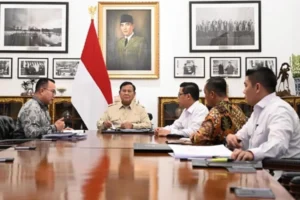
The discourse surrounding the potential revision of Law Number 20 of 2001 concerning the Eradication of Corruption Crimes (UU Tipikor) has gained significant momentum in Jakarta. Following a proposal by the Coordinating Minister for Law, Human Rights, Immigration, and Correctional Affairs, Yusril Ihza Mahendra, the House of Representatives’ Commission III—the body overseeing legal affairs—has signaled its formal support for a legislative overhaul. This initiative aims to modernize Indonesia’s anti-corruption framework, bringing it into closer alignment with global standards, specifically the United Nations Convention Against Corruption (UNCAC), and addressing sophisticated financial crimes such as under-invoicing.
The Urgency of Legislative Reform
The current legal framework governing corruption in Indonesia, primarily rooted in the 2001 revision of the 1999 Anti-Corruption Law, has served as the backbone of the nation’s legal battle against graft for over two decades. However, legal experts, policymakers, and government officials argue that the law is increasingly ill-equipped to combat the evolving complexities of white-collar crime.
Yusril Ihza Mahendra’s push for a revision is grounded in the necessity of legislative synchronization. Since Indonesia ratified the UNCAC through Law Number 7 of 2006, there has been a persistent gap between domestic regulations and international mandates. Furthermore, the government is currently advancing the Asset Recovery Bill (RUU Perampasan Aset), which necessitates a cohesive legal environment to function effectively. Without a corresponding update to the Anti-Corruption Law, the legal system risks fragmentation, potentially hindering the prosecution of complex financial crimes.
Addressing Under-Invoicing and Economic Integrity
A focal point of the proposed revision is the inclusion of "under-invoicing" as a criminal act within the scope of the Anti-Corruption Law. Under-invoicing involves the deliberate manipulation of trade documents—such as invoices—to report lower transaction values, volumes, or prices than those actually occurring. This practice is frequently employed to evade taxes, bypass customs duties, and facilitate illicit capital flight.
Ahmad Sahroni, Deputy Chair of Commission III of the DPR, emphasized that this move is not merely a technical adjustment but a strategic priority aligned with the vision of President Prabowo Subianto. "I support the proposal to incorporate under-invoicing into the Anti-Corruption Law. It is a critical consideration because this deceitful practice has become a matter of serious concern for the President," Sahroni stated.
However, the political support for this measure comes with cautionary caveats. Sahroni stressed the need for precision, noting that the definition of such financial crimes must be robust enough to prevent "gray areas" that could disrupt legitimate business and trade activities. The fear is that if the language is too ambiguous, it could lead to excessive regulatory interference or create legal uncertainty that deters foreign and domestic investment.
Chronology of Legislative Developments
The evolution of Indonesia’s anti-corruption legal landscape provides necessary context for these proposed changes:
- 1999: The enactment of Law Number 31 of 1999, the first comprehensive anti-corruption law in the post-Soeharto era.
- 2001: The passage of Law Number 20 of 2001, which amended the 1999 law, specifically strengthening provisions regarding the state’s financial losses and the status of the Corruption Eradication Commission (KPK).
- 2006: Indonesia ratifies the United Nations Convention Against Corruption (UNCAC), committing the state to international standards of asset recovery and transnational crime cooperation.
- 2019: Controversial amendments to the KPK Law (Law No. 19 of 2019) sparked national debate, leading to structural changes in how corruption cases are handled and overseen.
- 2024: The current administration under President Prabowo pushes for a new wave of legal reforms, including the Asset Recovery Bill and the potential overhaul of the 2001 Anti-Corruption Law to sync with the revised Criminal Code (KUHP).
Challenges and Stakeholder Perspectives
The revision process is expected to be lengthy and highly debated. Experts warn that simply tightening laws does not always correlate with a reduction in corruption if the enforcement institutions lack the necessary autonomy and resources. Academics and civil society organizations have previously urged the government to ensure that any revision serves to strengthen the independence of anti-graft bodies rather than limiting their investigative powers.
Sahroni’s position reflects a cautious optimism. By insisting that the revision process must involve a broad spectrum of stakeholders—including legal scholars, practitioners, and trade experts—the DPR aims to mitigate potential backlash from the business community. "We must ensure the process is inclusive. We cannot afford to rush this and create a framework that is either unenforceable or overly punitive toward legitimate commerce," he added.
Comparative Analysis: UNCAC and Global Standards
The synchronization with UNCAC is perhaps the most compelling argument for the revision. UNCAC requires signatory nations to criminalize a broader range of acts, including bribery of foreign public officials and embezzlement in the private sector. Currently, the Indonesian Anti-Corruption Law focuses heavily on state financial losses, a metric that sometimes complicates the prosecution of private-sector corruption or complex trade-based money laundering.
By broadening the definition of corruption, Indonesia could enhance its ability to recover stolen assets held in offshore jurisdictions. This is particularly relevant given that many cases of grand corruption involve illicit financial flows disguised as standard commercial transactions.
Economic and Legal Implications
The inclusion of under-invoicing in the Anti-Corruption Law would represent a significant shift in how customs and trade disputes are adjudicated. Currently, many such cases are handled primarily through administrative penalties under customs law. Moving these into the criminal domain under the anti-corruption umbrella would increase the potential for stiffer sentencing and expanded investigative powers for law enforcement agencies, including the ability to utilize wiretapping and asset freezing measures more aggressively.
However, analysts point to the risk of "regulatory capture" or the weaponization of such laws against competitors in the business sector. For the reform to be successful, the judiciary must be equipped with specialized expertise to distinguish between genuine accounting errors or aggressive tax planning and criminal intent to defraud the state.
The Path Forward
As the government prepares to draft the revisions, the focus will likely remain on the delicate balance between state control and economic freedom. The coordination between the Ministry of Law, the DPR, and various law enforcement agencies will be the primary determinant of the bill’s success.
The integration of the Asset Recovery Bill remains the most anticipated component of this legislative cycle. With the support of key legislative leaders like Sahroni, the government appears poised to move forward. Yet, the final version of the bill will be subjected to intense public scrutiny, particularly regarding how it defines the boundary between systemic corruption and standard commercial practice.
For now, the consensus among the political elite is that the 2001 law has reached the limit of its utility. As Indonesia seeks to improve its standing in the Global Corruption Perceptions Index and ensure a more transparent business environment, the revision of the Anti-Corruption Law is viewed by many as an unavoidable, albeit challenging, step toward national reform. The upcoming legislative sessions will reveal whether the government can deliver a law that effectively deters corruption while maintaining the stability and clarity required for a growing economy.