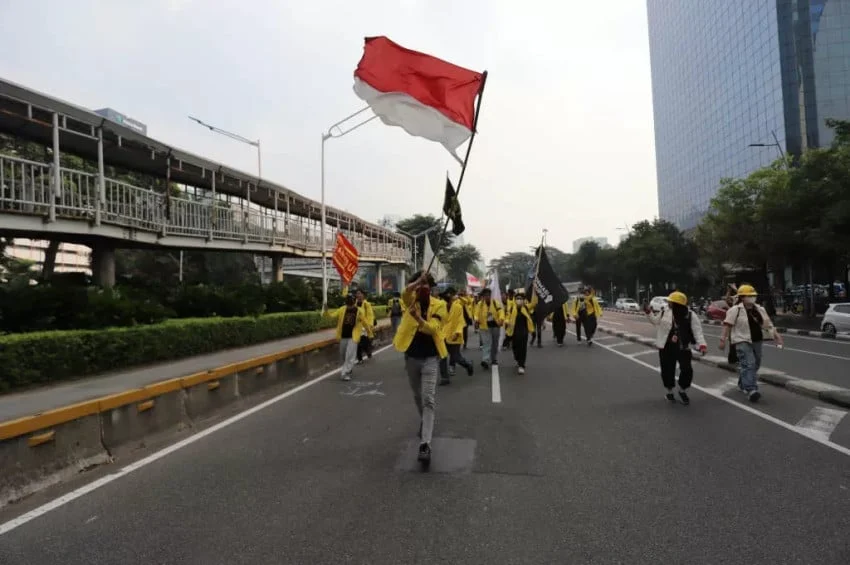
Jakarta is bracing for significant traffic disruptions and heightened security measures on Wednesday, October 28, 2026, as various student organizations, prominently led by the Student Executive Council of the University of Indonesia (BEM UI), alongside broader civil society coalitions, prepare to take to the streets. The demonstrations, which are scheduled to commence at 10:00 AM WIB, are expected to concentrate on critical nodes of the capital, including the DPR/MPR RI complex, the iconic Bundaran HI, the National Monument (Monas) area, and the Tugu Tani intersection.
The mobilization serves as a critical juncture for student activism in Indonesia, echoing historical patterns of protest that have often defined the country’s socio-political landscape. As thousands of students prepare to voice their grievances, the Polda Metro Jaya (Jakarta Metropolitan Police) has issued formal notices regarding potential gridlock, signaling a proactive approach to managing the city’s infrastructure during the high-stakes event.
Strategic Traffic Management and Public Advisory
Recognizing the intensity of the planned demonstrations, the Polda Metro Jaya has announced the implementation of situational traffic engineering. Through its official communication channels, including the TMC Polda Metro Instagram account, authorities have urged commuters to exercise caution and plan their journeys well in advance.
The police have specifically identified the four aforementioned locations—DPR/MPR, Bundaran HI, Monas, and Tugu Tani—as "hotspots" where significant congestion is anticipated. "We advise the public to avoid these areas if possible and to utilize alternative routes to prevent further strain on the city’s transportation arteries," a police spokesperson noted. The situational nature of the traffic rerouting implies that closures and diversions will be managed in real-time, depending on the volume of protesters and the physical footprint of the marchers.
The Chronology of Mobilization
The build-up to the October 28 event has been marked by a series of coordinated meetings and announcements by student leaders. While the specific demands of the protesters remain multifaceted—ranging from economic policy critiques to concerns regarding governance and legislative transparency—the mobilization reflects a growing sentiment among the youth demographic regarding their role in the national discourse.
The events of the coming Wednesday are expected to follow a pattern similar to previous mass protests in the capital. Typically, student groups assemble at university campuses or designated meeting points early in the morning before moving in a long-march formation toward the central government buildings. The choice of October 28 is symbolically significant, as it coincides with Indonesia’s Youth Pledge Day (Sumpah Pemuda), a date historically celebrated for the unified spirit of the nation’s youth, which adds a layer of political weight to the current grievances.
Human Rights and the Role of Law Enforcement
A pivotal aspect of the lead-up to the demonstration has been the involvement of the National Commission on Human Rights (Komnas HAM). Recognizing the potential for friction between protesters and security personnel, the Chairperson of Komnas HAM, Anis Hidayah, issued a stern advisory to the authorities on Monday, October 26, 2026.
Anis emphasized that the freedom of expression is not merely a privilege but a fundamental right guaranteed by the Indonesian Constitution and international human rights frameworks. "The responsibility of the security apparatus is to ensure that this right is exercised in a peaceful environment," Anis stated. She explicitly cautioned against the use of excessive force, emphasizing that the role of the police is to maintain public order without infringing upon the democratic right to dissent.
This intervention by Komnas HAM is particularly important given the historical context of student-led protests in Indonesia, which have occasionally devolved into confrontations between police and demonstrators. By setting clear expectations for professional conduct and adherence to human rights standards, human rights advocates aim to minimize the risk of violence and ensure that the voice of the students is heard without unnecessary escalation.
Contextualizing the Student Movement
Student activism in Indonesia has historically acted as a barometer for the nation’s political health. From the fall of the New Order in 1998 to the protests against controversial legislative revisions in the 2020s, the student body has consistently proven its capacity to mobilize large numbers and influence public opinion.
The current demonstration by BEM UI and its partners is part of a broader cycle of civil society engagement. Analysts suggest that the themes driving the October 28 protests are rooted in a combination of long-term structural concerns and immediate economic pressures. The inflation of living costs, transparency in legislative processes, and the perceived narrowing of space for public participation are recurring motifs in the manifestos currently circulating among student activist networks.
Socio-Economic Implications
The impact of such mass demonstrations extends beyond traffic congestion. For a bustling metropolis like Jakarta, the suspension of normal business operations and the temporary restriction of movement in the central business district carry economic costs. However, many political observers argue that these disruptions are a necessary trade-off for the vitality of a democratic society.
"When citizens, particularly the youth, feel the need to occupy the streets to be heard, it signals a need for the government to recalibrate its communication channels," said a political analyst observing the situation. The government’s response to these demonstrations—both in terms of security and policy engagement—will likely shape the political climate for the remainder of the year. If the protest remains peaceful and the government responds with institutional engagement rather than purely security-focused measures, it could de-escalate tensions. Conversely, any mishandling of the event could lead to a broader, more entrenched period of civil unrest.
Preparing for the Day Ahead
As of the evening of October 27, the atmosphere in Jakarta is one of high anticipation. Public transport providers, including the TransJakarta bus system and MRT Jakarta, have indicated that they are preparing for potential service adjustments should the protests impact their routes. Businesses operating in the vicinity of Bundaran HI and the DPR building have also taken precautionary measures, with some advising staff to work remotely to avoid potential delays or safety risks.
The success of the protest from the students’ perspective will be measured by their ability to maintain order, keep the focus on their core demands, and successfully deliver their message to the relevant legislative or executive representatives. For the authorities, the benchmark of success will be their ability to protect public property and maintain order while upholding the human rights principles advocated by Komnas HAM.
Broader Implications for Indonesian Democracy
The events of October 28, 2026, serve as a reminder of the ongoing maturation of Indonesia’s democratic processes. While the immediate focus is on the logistics of traffic and the security of the protest, the underlying reality is a clash between the aspirations of the younger generation and the current legislative trajectory.
Data on protest participation and success rates in Indonesia suggests that while mass demonstrations are effective at generating headlines and forcing issues onto the national agenda, their long-term efficacy depends on sustained dialogue. The collaboration between students and civil society organizations represents a broader coalition than seen in previous years, potentially increasing the pressure on policymakers to address the specific points of contention.
As the city wakes up on Wednesday, the eyes of the nation will be on the streets of Central Jakarta. Whether the day marks a peaceful assertion of rights or a day of friction remains to be seen. What is clear, however, is that the commitment of the students to their cause remains undiminished, and the city’s ability to manage this expression of democracy will once again be tested.
In the final analysis, the situation underscores the necessity for constant vigilance in protecting the democratic space. As Jakarta braces for the surge in activity, both the protesters and the security forces hold the responsibility of ensuring that the day concludes with the integrity of the democratic process intact. The citizens of Jakarta are encouraged to stay informed via official channels, remain vigilant, and prioritize safety as the city navigates this significant day of civic engagement.