The Corruption Eradication Commission (KPK) has officially addressed the potential of summoning the Minister of Agrarian Affairs and Spatial Planning/Head of the National Land Agency (ATR/BPN), Nusron Wahid, in connection with an ongoing corruption investigation. The case centers on alleged bribery and the unlawful receipt of gratifications related to the issuance and processing of Hak Guna Bangunan (HGB)—Right to Build titles—within the jurisdiction of Bogor Regency, West Java. The unfolding legal proceedings have sent ripples through the central government and the bureaucracy of the land agency, particularly as the anti-graft body has already named four individuals closely tied to the minister as formal suspects in the sprawling land-mafia-style conspiracy.
The prospect of summoning a sitting cabinet minister has naturally drawn intense public interest, elevating the profile of an already high-stakes investigation. While investigators have exercised caution regarding a definitive timeline for any potential questioning of the minister himself, the commission’s leadership has emphasized that no individual is beyond the reach of the law if the gathering evidence points toward their involvement or administrative oversight.
Investigation Scope and the Status of Minister Nusron Wahid
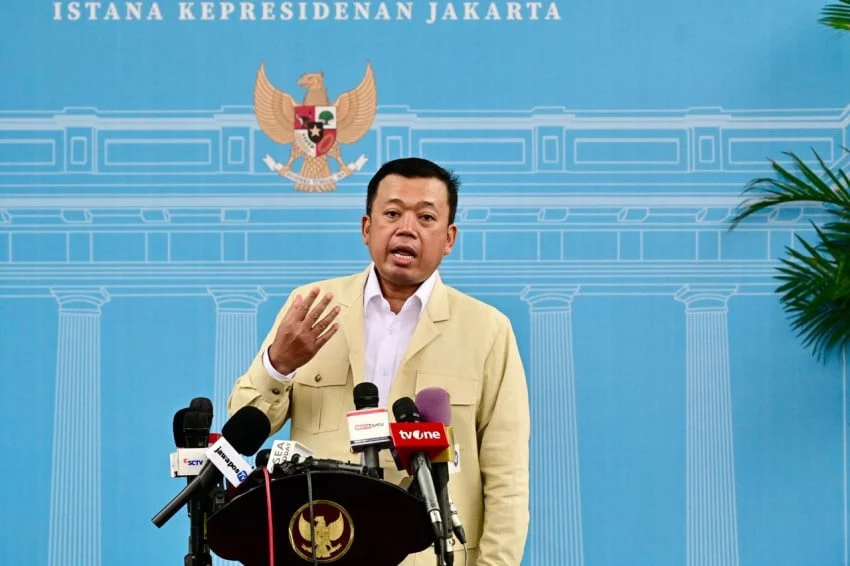
Speaking to reporters regarding the trajectory of the investigation, the Acting Director of Investigation at the KPK, Achmad Taufik Husein, clarified the agency’s official stance on whether Minister Nusron Wahid would be called in for questioning. He noted that any decision to summon the cabinet member would be strictly dictated by the investigative necessities determined by the case handlers as the inquiry deepens.
Whether or not Brother NW will be summoned depends entirely on the evolving needs of the investigation going forward, Achmad Taufik Husein stated on Tuesday, September 15, 2026. He elaborated that the investigative team retains the sole prerogative to evaluate who among the wider network of public officials and private actors must be summoned to provide formal testimony to illuminate the underlying conspiracy.
According to Taufik, the anti-graft institution relies heavily on the steady accumulation of documentary evidence, electronic trails, and witness testimonies. Whether his presence is deemed genuinely necessary or not will become clear as we continuously monitor the updates of the ongoing investigative process, he added. The measured response underscores the KPK’s procedural methodology, avoiding premature declarations while keeping all legal avenues wide open.
Chronology and Background of the Bogor Regency HGB Scandal
The roots of this high-profile legal battle trace back to systemic vulnerabilities deeply embedded within regional land administration offices, particularly in high-demand economic zones bordering the capital city like Bogor Regency. Bogor has long been a major target for massive commercial developments, real estate expansion, and industrial investments, making its land titles immensely valuable commodities on the open market.
Over the past several months, intelligence units and investigators within the KPK monitored suspicious financial transactions and administrative irregularities regarding the fast-tracking of HGB applications. Property developers and corporate entities seeking to secure expansive land rights allegedly engaged in systematic bribery schemes, channeling illicit funds through intermediaries to bypass standard bureaucratic hurdles, environmental assessments, and legal mandates.
As the inquiry matured, the anti-graft body executed a series of targeted operations, unearthing a web of corruption that directly touched the inner circle of the current ATR/BPN leadership. Investigators uncovered that several individuals operating as trusted aides, consultants, and close associates of Minister Nusron Wahid allegedly served as conduits for these corrupt payoffs. These four primary suspects, whose identities have been formally registered in the KPK detention warrants, are accused of acting on behalf of influential syndicates to manipulate land titling processes in Bogor Regency for private enrichment.
The systemic nature of the allegations points to the classic modus operandi of the land mafia—a notorious network of corrupt bureaucrats, rogue notaries, speculators, and fixers who exploit ambiguities in land laws to issue, duplicate, or accelerate land titles in exchange for multi-million-rupiah kickbacks.
Recent Engagement Between the Ministry and the Anti-Graft Body
Adding a compelling layer of institutional complexity to the unfolding drama, Minister Nusron Wahid himself had previously visited the KPK headquarters just weeks prior to the public announcement regarding his associates. During a focused, two-hour dialogue with KPK leaders, the minister proactively discussed what he termed the foundational "diseases" plaguing the ATR/BPN apparatus—structural vulnerabilities that inherently harbor high potentials for systemic corruption, bribery, and bureaucratic abuse.
During that high-level meeting, the minister and anti-graft commissioners deliberated on sweeping preventive strategies, digital transformation initiatives to minimize human discretion in land services, and internal disciplinary crackdowns aimed at rooting out rogue elements within the national land registry.
However, critics and legal observers now point out the stark irony of that visit. While the ministry was publicly projecting an image of reform and cooperative governance from the top down, federal investigators were quietly tightening the legal net around the minister’s inner circle. The juxtaposition of Nusron Wahid’s proactive anti-corruption dialogue with the subsequent arrest and designation of his four close confidants as suspects has intensified scrutiny from civil society organizations and anti-graft watchdogs.
Data and Vulnerabilities in Indonesia’s Land Sector
To fully understand the gravity of the Bogor Regency HGB case, one must examine the broader systemic risks inherent to Indonesia’s land administration framework. Historically, the Ministry of ATR/BPN has consistently ranked among the public service sectors most vulnerable to maladministration, extortion, and bribery, according to periodic surveys conducted by the Indonesian Ombudsman and transparency watchdogs.
Key institutional bottlenecks that drive corruption in land offices include:
- High Discretionary Power: Local land office heads and regional officials often possess wide-ranging discretionary authority to approve, delay, or reject land conversion and titling applications without transparent tracking mechanisms.
- Complex Regulatory Overlaps: Conflicting agrarian laws, spatial planning decrees, and forestry boundaries create legal ambiguities that desperate property developers and landowners are willing to pay enormous sums to navigate.
- Manual Archival Systems: Despite ongoing digitization efforts, vast tranches of historical land records remain paper-based, making them susceptible to physical tampering, disappearance, and fraudulent duplication by organized syndicates.
- The Land Mafia Phenomenon: Syndicates often exploit weak inter-agency coordination between regional governments, the National Land Agency, and the court system to fabricate ownership histories, resulting in overlapping certificates and protracted legal battles.
The case in Bogor Regency serves as a textbook example of how these macro-level vulnerabilities manifest in localized corruption, directly undermining national economic development goals and foreign investment confidence.
Official Responses and Institutional Reactions
In the wake of the announcement naming his four close aides as suspects, Minister Nusron Wahid and his institutional representatives have maintained a posture of formal cooperation with the law enforcement authorities. The Ministry of ATR/BPN issued a brief official statement emphasizing its respect for the legal processes currently underway at the Corruption Eradication Commission.
The ministry respects the ongoing legal proceedings and fully supports efforts to uphold clean governance and bureaucratic integrity within our ranks, a senior ministry spokesperson noted. The administration has reiterated its commitment to internal administrative reforms, promising not to shield any employee, official, or affiliated party found to have abused their authority for personal or collective financial gain.
Meanwhile, legal experts and anti-graft activists have weighed in on the political and administrative implications of the case. Indonesia Corruption Watch (ICW) and similar oversight bodies have urged the KPK to pursue the investigation fearlessly, regardless of political affiliations or high-ranking titles. Observers emphasize that probing the potential involvement of the minister is not merely an option, but an investigative imperative if the state is to dismantle the entire chain of command responsible for corrupt land governance.
Broader Impact and Implications for the ATR/BPN
The unfolding scandal carries profound implications for the credibility and reform agenda of the Ministry of ATR/BPN. As one of the most vital government bodies tasked with managing the country’s agrarian assets, investment permits, and spatial layouts, public trust is the cornerstone of the ministry’s operational legitimacy.
The immediate fallout of the Bogor HGB bribery case includes:
- Intensified Internal Surveillance: Regional BPN offices across Indonesia are facing heightened scrutiny from internal inspectorates and external watchdogs, leading to a temporary slowdown in certain bureaucratic processes as officials exercise extreme caution.
- Pressure for Accelerated Digitalization: The scandal has renewed political momentum for the complete digitalization of land registration services, electronic certificates (sertipikat elektronik), and blockchain-based land tracking to eliminate face-to-face interactions between applicants and bureaucrats.
- Political and Administrative Ramifications: Even if Minister Nusron Wahid is ultimately not implicated by the findings of the investigation, the fact that four of his closest confidants have been designated as suspects casts a long administrative shadow over his leadership tenure, demanding robust institutional damage control.
- Deterrence in the Real Estate Sector: Commercial developers operating in high-value regions like Bogor, Jakarta, Tangerang, and Bekasi are being forced to re-evaluate their compliance frameworks, steering away from illicit "fast-track" practices and relying strictly on transparent, legal procedures.
Conclusion and Future Outlook
As the investigation progresses through its critical phases, all eyes remain fixed on the KPK headquarters in South Jakarta. The ultimate decision on whether to summon Minister Nusron Wahid will depend entirely on the documentary evidence seized, the financial tracing of illicit funds, and the testimonies extracted from the four detained suspects currently facing corruption charges.
For the administration of President Prabowo Subianto, whose official platform heavily emphasizes anti-corruption, bureaucratic efficiency, and the eradication of the land mafia, the case represents a definitive test of political will. The ability of the KPK to conduct an independent, thorough, and transparent investigation into a ministry directly linked to the executive branch will serve as a crucial barometer of the nation’s ongoing crusade against systemic public sector corruption.