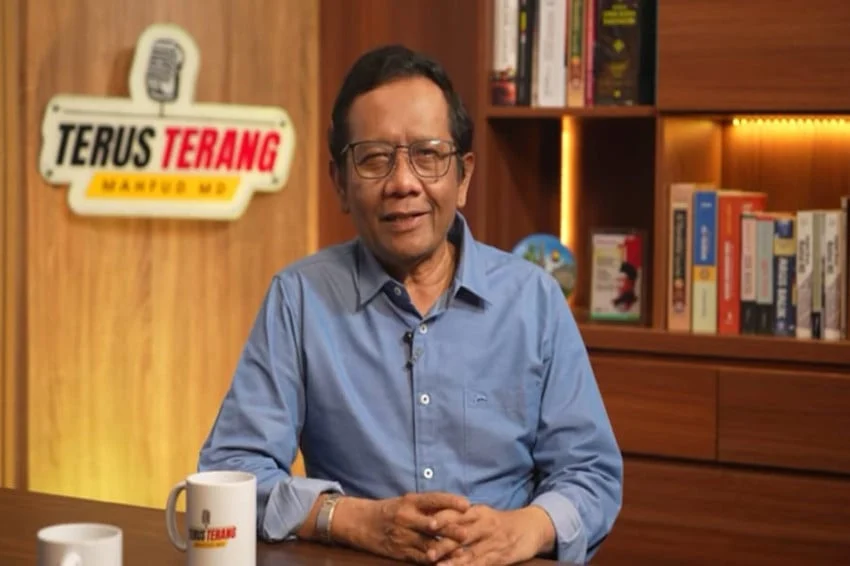
The political landscape in Jakarta has been unsettled by a sharp exchange between former Coordinating Minister for Political, Legal, and Security Affairs (Menko Polhukam) Mahfud MD and the Chairman of Commission III of the House of Representatives (DPR RI), Habiburokhman. The discourse centers on the dramatic fall from grace of former National Police Chief (Kapolri) Jenderal Pol Listyo Sigit Prabowo, who now faces serious legal charges related to illicit wiretapping. This development has triggered a reassessment of his tenure, with Mahfud MD publicly challenging Habiburokhman’s previous high praise for the former police chief.
The Context of the Leadership Transition
The controversy emerged following the appointment of Jenderal Suyudi Ario Seto as the new Chief of the Indonesian National Police, replacing Listyo Sigit Prabowo. The transition occurred under the direction of President Prabowo Subianto, who reportedly sought a significant reform of the police institution. According to Mahfud MD, the President took a direct role in selecting Suyudi, viewing him as a professional figure capable of navigating the complex institutional challenges facing the National Police.
Mahfud noted that the directive for the new leadership was clear: "clean up" the institution. The mandate included purging the police force of lingering influences from the previous administration and dismantling entrenched networks involved in illegal mining operations. The instruction, according to accounts from insiders, was to prioritize law enforcement integrity over political allegiances that had allegedly flourished during the prior term.
Chronology of the Controversy
The tension surrounding the leadership shift reached a boiling point during the parliamentary vetting process. When the Presidential Letter (Surpres) nominating Suyudi Ario Seto was presented to the House of Representatives, the Chairman of Commission III, Habiburokhman, appeared visibly surprised.
Historical records of the Commission III proceedings indicate that Habiburokhman had been a vocal proponent of Listyo Sigit Prabowo, frequently labeling him as the "best police chief" in the history of the Republic. This public endorsement was based on Sigit’s management of the police force during various national crises, including the COVID-19 pandemic and the general election cycle. However, when the shift in leadership was announced, Habiburokhman’s initial reaction was one of skepticism, questioning the necessity of replacing a figure he deemed highly effective.
Mahfud MD’s recent commentary serves as a direct critique of this narrative. He recounted his amusement upon seeing the lawmaker’s reaction, pointing out the irony of defending a leader who has now been officially named a suspect in a major criminal case.
From "Best" to "Worst": The Legal Downfall
The pivot from being celebrated as the best police chief to becoming a suspect in a wiretapping scandal represents a historic low point for the Indonesian National Police. The charges against Listyo Sigit Prabowo concern the unauthorized monitoring of state officials and private citizens, a breach that undermines the core legal mandate of the police force.
For legal analysts, this shift is a sobering reminder of the volatility of political appointments within Indonesia’s security apparatus. If the allegations of illegal wiretapping are proven in court, the tenure of Listyo Sigit Prabowo will likely be recorded as the most controversial in the history of the police force. The shift in public perception—from the optimism of his early term to the disgrace of his current status—highlights the systemic issues regarding institutional accountability.
Institutional Challenges and the Mandate for Reform
The mandate given to the newly appointed Jenderal Suyudi Ario Seto by the President is indicative of a broader strategy to restore public trust. The Indonesian National Police, as the primary law enforcement agency, has struggled with issues of internal corruption and public perception for years.
Supporting data from recent surveys conducted by reputable public policy institutes suggests that public trust in the police fluctuates significantly based on high-profile corruption cases. The involvement of top-tier officials in criminal activities often results in a double-digit percentage drop in institutional approval ratings. The current administration appears to be betting on a "clean-slate" approach to reverse these trends.
The focus on "cleansing" the institution of elements associated with illegal mining is particularly significant. Illegal mining remains a major economic and environmental issue in Indonesia, often involving complex webs of protection from local officials and law enforcement. By prioritizing this, the new leadership aims to show that the police force is no longer a tool for private interests.
Political Implications for Commission III
The friction between Mahfud MD and Habiburokhman underscores the complexities of the oversight function of the House of Representatives. As the Chairman of Commission III, which acts as the primary partner to the National Police, Habiburokhman’s previous defense of Sigit now invites scrutiny.
Political observers suggest that this episode may lead to a more cautious approach from parliamentary leaders when endorsing government officials. The "best-to-worst" narrative is not just a personal jab; it serves as a warning about the risks of political sycophancy. When parliamentary oversight is perceived as mere endorsement of the executive’s choices, the checks-and-balances system weakens. The subsequent criminalization of a police chief who was previously shielded from criticism by lawmakers highlights the danger of such dynamics.
Broader Impact and Future Outlook
The impact of this case extends beyond the individuals involved. It signals to the rank-and-file officers of the National Police that the "culture of impunity" is being actively challenged. By allowing a former chief to be investigated and prosecuted, the state is attempting to establish a precedent that no official, regardless of their past status, is above the law.
However, the transition remains fraught with challenges. The internal bureaucracy of the National Police is notoriously resistant to rapid reform. Suyudi Ario Seto faces the daunting task of re-orienting an institution that has been accustomed to specific power structures for years. His success will likely be measured by whether he can institutionalize these changes, rather than merely replacing personnel.
Furthermore, the legal proceedings against Listyo Sigit Prabowo will be closely monitored by both the public and international human rights observers. The integrity of the investigation will be a test case for the current administration’s commitment to the rule of law. If the process is perceived as being transparent and based on solid evidence, it could restore a degree of public faith. Conversely, if it is seen as a political maneuver or a "purge," it could lead to further instability.
Conclusion: A Lesson in Governance
The discourse surrounding the transition of leadership at the top of the Indonesian National Police serves as a case study in the fragility of institutional reputation. Mahfud MD’s critique, while biting, touches on a fundamental requirement for a democratic state: the necessity of objective oversight.
As the legal system processes the case against Listyo Sigit Prabowo, the focus remains on whether the Indonesian National Police can shed its recent baggage and emerge as a more professional and accountable entity. For leaders like Habiburokhman, the episode serves as a reminder that political loyalty is no substitute for institutional integrity. The future of the police force will depend not on the accolades of the past, but on the tangible results of its current reform efforts. The path forward for Jenderal Suyudi Ario Seto is clear but difficult: to rebuild the force, he must navigate not only the legal challenges of the past but also the deep-seated political expectations of the present. As Indonesia moves toward this new chapter, the public remains the ultimate judge of whether this transition will truly lead to a "cleaner" and more professional law enforcement agency.