The confirmation from the newly appointed Coordinating Minister marks a significant escalation in what is being described as one of the most sensitive national security breaches in Indonesia’s recent history. The allegations center on the unauthorized surveillance of the Head of State and several cabinet members, an act that has sent shockwaves through the nation’s political and security establishments.
The Official Confirmation from the Coordinating Ministry
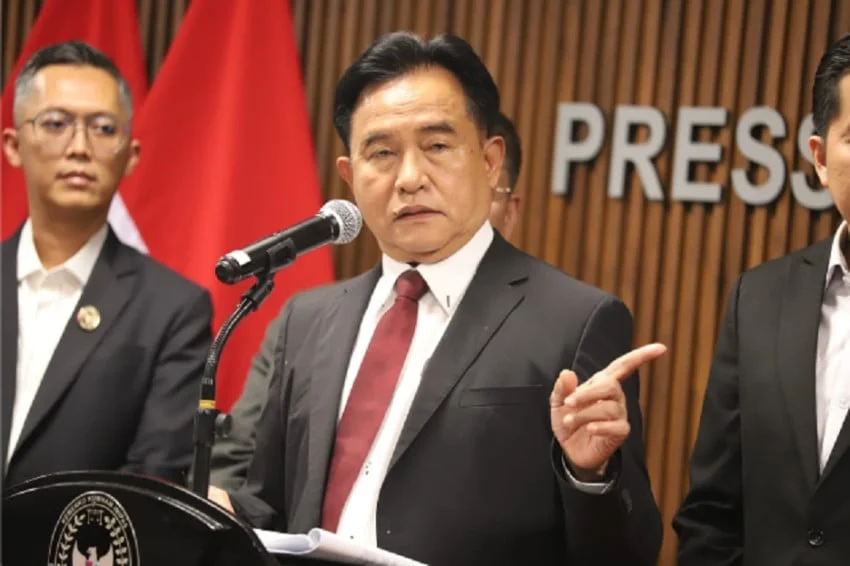
Speaking during a press conference held at his office in Jakarta on Tuesday, November 3, 2026, Yusril Ihza Mahendra addressed the growing public speculation surrounding the status of General Listyo Sigit Prabowo. When pressed by journalists regarding whether the current administration was aware of the extent of the wiretapping operation, Yusril provided a definitive response.
"It is, of course, a matter of record that the President is fully aware of the situation, as he has been directly briefed on these developments by the current leadership of the National Police," Yusril stated. He emphasized that the gravity of the accusations—involving the surveillance of the President himself—transcends typical disciplinary issues within the force. According to Yusril, the case is being handled with the highest level of scrutiny due to its implications for national sovereignty and the integrity of executive communications.
The Minister’s statement serves as the first official acknowledgment from the cabinet level that the investigation into the former police chief has moved beyond internal police oversight and into the domain of national security oversight.
Chronology of the Crisis: From Command to Custody
The downfall of General Listyo Sigit Prabowo has been rapid and dramatic. To understand the current climate, one must look at the timeline leading up to his detention.
- October 2026: Reports began to surface in independent media outlets suggesting irregularities within the police intelligence apparatus. These reports hinted at "unauthorized surveillance protocols" being executed by high-ranking officials.
- Late October 2026: General Listyo Sigit Prabowo concluded his tenure as the Chief of the Indonesian National Police. Initial reports cited a standard transition of power.
- November 2026: Barely one month after leaving his post, investigators from the Internal Affairs Division (Propam) and specialized task forces took the former Chief into custody.
- November 3, 2026: Coordinating Minister Yusril Ihza Mahendra confirms the President’s awareness of the situation, effectively legitimizing the legal actions being taken against the former police chief.
The transition from the top law enforcement official in the country to a detainee within the same institution underscores the severity of the charges. Legal experts note that the arrest of a former National Police Chief is unprecedented in the post-reform era of Indonesian policing.
The Scope of the Alleged Wiretapping
The accusations against the former General involve the illegal interception of communications belonging to President Prabowo Subianto and several members of his ministerial cabinet. In a democratic state, such actions are considered a grave violation of constitutional norms and a direct assault on the separation of powers.
Wiretapping, or "penyadapan," is strictly regulated under Indonesian law. Generally, surveillance of public officials must be authorized by judicial warrants and must be tied to ongoing, legitimate criminal investigations. If the surveillance conducted by the former police chief was done without the appropriate legal framework or under the guise of "national security" without proper oversight, it constitutes a massive breach of trust.
Security analysts have pointed out that the technical sophistication required to intercept communications at the presidential level suggests a misuse of high-end surveillance technology originally intended for counter-terrorism or organized crime prevention. This has raised concerns regarding the security of the Indonesian government’s digital infrastructure.
Institutional Implications and Police Reform
The detention of General Listyo Sigit Prabowo has forced the National Police (Polri) into a period of deep introspection and potential restructuring. Critics of the current police structure argue that the centralization of power in the hands of the National Police Chief has historically lacked the necessary checks and balances to prevent such abuses.
"This incident is a watershed moment," says a senior political analyst. "The police institution is now tasked with investigating one of its own at the highest level. If they can demonstrate transparency, it will save the institution’s credibility. If they fail to provide a transparent trial, the public trust in law enforcement will be severely compromised for years to come."
The Ministry of Law, Human Rights, Immigration, and Correctional Affairs is expected to play a major role in ensuring that the legal process is handled impartially. Minister Yusril Ihza Mahendra has indicated that the government is committed to maintaining the rule of law, regardless of the former official’s past status.
Impact on the Prabowo Administration
For the administration of President Prabowo Subianto, this incident represents an early test of its commitment to cleaning up state institutions. The President, who campaigned on a platform of strengthening the nation’s security and sovereignty, now faces the challenge of managing a potential internal crisis within the security apparatus.
The fact that the wiretapping reached the presidential level suggests that the motive behind the surveillance was likely political, aimed at gathering intelligence on the government’s policy decisions or private deliberations. The administration’s response—acknowledging the breach and allowing the judicial process to proceed—is being viewed as a move to stabilize the political environment and project a "business as usual" stance to international observers.
However, the ripple effects are expected to reach far beyond the detention center. Questions regarding who else was involved, what information was accessed, and whether this surveillance extended to the judiciary or the legislature remain unanswered.
Fact-Based Analysis of the Legal Framework
Under the prevailing Indonesian laws, specifically the Electronic Information and Transactions (ITE) Law and the Criminal Procedure Code (KUHAP), the unauthorized interception of electronic communications is a criminal offense. Should the evidence presented in the case against Listyo Sigit Prabowo prove that he orchestrated these actions for personal or political gain, he could face significant prison time.
Furthermore, the legal precedent being set is significant. It signals that no individual, regardless of their rank or past service to the state, is immune from the legal consequences of breaching national security. As the case progresses, the public and the media will be looking for answers regarding:
- The Evidence: What specific data was collected, and for what purpose was it intended?
- The Accomplices: Was this an isolated act by the former Chief, or was there a network of officers involved in the execution of the surveillance?
- The Security Upgrades: What measures are being taken to ensure that the President and the cabinet are no longer vulnerable to such internal threats?
Conclusion: A Nation Watching
As the investigation continues, the focus will remain on the integrity of the judiciary. The detention of a figure as prominent as a former National Police Chief serves as a grim reminder of the dangers of unchecked power.
For the people of Indonesia, the coming weeks will be critical. The transparency of the legal proceedings will determine whether this incident leads to a long-overdue reform of the security agencies or if it becomes yet another chapter in the country’s complex history of political maneuvering.
The Coordinating Ministry, under the direction of Yusril Ihza Mahendra, remains the primary point of contact for the government’s official position. As the legal proceedings move forward, the government is expected to continue providing updates, balancing the need for public transparency with the sensitive nature of the national security information involved in the case.
This case is not just about the fall of a general; it is about the resilience of Indonesia’s democratic institutions in the face of internal subversion. The world, and the Indonesian citizenry, awaits the next developments in a case that is far from concluded.