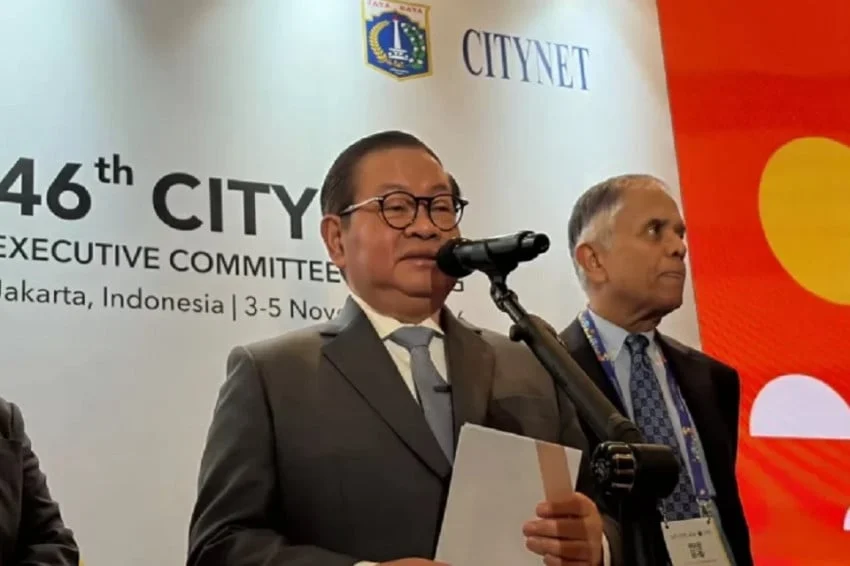
Jakarta Governor Pramono Anung has officially commenced a high-profile working visit to Australia, running from November 23 to November 26, 2026, upon the official invitation of the Australian Government. This strategic diplomatic engagement aims to deepen and expand bilateral cooperation between the capital city of Indonesia and Australian federal and state authorities. While preliminary notes within the administrative agenda touched upon cooperative frameworks with international partners, the core of this mission centers on robust partnerships with Australian counterparts across vital urban sectors, including modern public transportation networks, advanced education systems, sustainable tourism, and the burgeoning creative economy.
The diplomatic outreach underscores Jakarta’s ongoing transformation into a globally competitive metropolis. As Governor Pramono navigates the complex socio-economic landscape of Indonesia’s primary economic hub, securing international knowledge transfer and technological investment remains a cornerstone of his administration’s policy execution.
Background Context and Diplomatic Genesis
The invitation extended to Governor Pramono Anung is not a sudden development but rather the culmination of sustained diplomatic dialogue. According to the Jakarta Provincial Administration, the proposal was formally reiterated on multiple occasions during official audiences by the Ambassador Extraordinary and Plenipotentiary of the Commonwealth of Australia to the Republic of Indonesia, Roderick Brazier.
Ambassador Brazier and municipal officials in Jakarta have spent the past year laying the groundwork for deepened sub-national diplomacy. City-to-city and province-to-state relations have increasingly become vital instruments of foreign policy, allowing local governments facing similar urban hurdles—such as rapid urbanization, traffic congestion, environmental sustainability, and economic inclusivity—to share best practices directly.
Governor Pramono emphasized the practical orientation of the diplomatic mission prior to his departure. The overarching objective is to ensure that international agreements translate into tangible advantages for ordinary Jakartans.
"The invitation has been conveyed several times during audiencies, and this time I am fulfilling that invitation. We want this cooperation to deliver real benefits for the residents of Jakarta, especially in public transportation, education, tourism, and the creative economy," stated Governor Pramono on Monday, November 23, 2026.
Comprehensive Itinerary and Bilateral Meetings
During his four-day tour spanning Sydney and Canberra, Governor Pramono has an aggressive schedule featuring high-level diplomatic engagements. The itinerary has been meticulously crafted to connect Jakarta’s leadership with key decision-makers across Australia’s federal and state administrative tiers.
Upon arrival, the Governor is scheduled to hold crucial bilateral meetings with prominent Australian leaders, including:
- Sam Mostyn, Governor-General of Australia, representing the federal head of state in discussions regarding broader civic cooperation and bilateral goodwill.
- Chris Minns, Premier of New South Wales (NSW), focusing heavily on sub-national governance, urban planning, and metropolitan mass transit management—areas where Sydney holds considerable expertise.
- Senator Don Farrell, Minister for Trade and Tourism, addressing avenues to boost bilateral commerce, visitor exchanges, and sustainable tourism frameworks.
- Matt Thistlethwaite, Assistant Minister for Foreign Affairs and Trade, engaging in strategic dialogues concerning regional integration and multilateral urban development goals.
These discussions are expected to yield foundational agreements and memorandums of understanding (MoUs) designed to institutionalize ongoing cooperation between Jakarta and Australian institutions well beyond the tenure of current administrations.
Chronology and Timeline of the 2026 Mission
- Mid-2025 to Early 2026: Sustained preliminary discussions take place in Jakarta between the Provincial Government and Australian Ambassador Roderick Brazier, culminating in formal standing invitations for a gubernatorial state visit.
- November 20, 2026: Finalization of the delegation’s itinerary, security protocols, and thematic policy briefs concerning public transport integration and creative sector investments.
- November 23, 2026: Governor Pramono Anung officially departs Jakarta for Australia, marking day one of the diplomatic mission with arrival briefings in Sydney.
- November 24–25, 2026: Core bilateral meetings take place in Sydney and Canberra with Premier Chris Minns, Minister Don Farrell, and Assistant Minister Matt Thistlethwaite.
- November 26, 2026: Concluding engagements with Governor-General Sam Mostyn, followed by a press briefing summarizing the outcomes of the official visit prior to the delegation’s return flight to Jakarta.
Sectoral Focus: Transport, Education, and the Creative Economy
The choice of Australia as a primary partner for Jakarta’s international outreach is underpinned by structural synergies between the two economies.
1. Public Transportation and Urban Mobility
Jakarta has made monumental strides in recent years with the integration of its mass rapid transit (MRT), light rail transit (LRT), TransJakarta bus rapid transit systems, and commuter rail networks. However, optimizing last-mile connectivity, ticketing integration, and sustainable urban mobility remains a continuous challenge. Australia—specifically New South Wales—boasts world-class multimodal transport networks regulated by sophisticated data-driven frameworks. Collaborating with Sydney’s transit authorities allows Jakarta’s technical agencies to study advanced congestion pricing, smart card innovations, and pedestrian-centric urban design.
2. Education and Capacity Building
Human capital development is central to Jakarta’s vision of becoming a global city. Through this diplomatic mission, the administration aims to facilitate academic exchanges, vocational training partnerships, and institutional linkages between Jakarta-based universities and Australian tertiary institutions. Strengthening technical education ensures that the local workforce is adequately equipped to meet the demands of emerging digital and green economies.
3. Tourism and the Creative Economy
As Jakarta transitions out of its status as Indonesia’s national capital—following the ongoing relocation of administrative functions to Nusantara (IKN)—the city is aggressively rebranding itself as a premier national and regional hub for business, finance, culture, and the creative arts. Australia’s vibrant arts scene, robust intellectual property frameworks, and successful creative industry incubation models offer valuable blueprints for Jakarta’s burgeoning creative sector, which encompasses film, fashion, design, and digital media.
Broader Economic Backdrop in Jakarta
The timing of Governor Pramono’s international mission coincides with critical domestic policy rollouts within the capital. Just prior to his departure, the Jakarta Provincial Government made national headlines by officially ratifying the Provincial Minimum Wage (UMP) for 2027 at Rp6,136,000. This significant wage adjustment has triggered widespread discussions regarding labor costs, corporate compliance, and regional economic competitiveness. Governor Pramono has maintained a firm stance on enforcement, threatening strict administrative sanctions against businesses that fail to comply with the mandated compensation standard.
This domestic economic balancing act highlights the multifaceted pressures facing the gubernatorial office. While managing labor rights, inflation, and corporate obligations at home, the administration must simultaneously look outward to secure foreign direct investment, strategic partnerships, and global best practices that guarantee long-term economic resilience.
Fact-Based Analysis of Implications
The diplomatic engagement between Jakarta and Australia carries several long-term implications for the capital’s administrative trajectory:
- Enhanced Technical Capacity: Direct collaboration with Australian urban planners and transit operators provides Jakarta’s municipal agencies—such as the Jakarta Transportation Agency (Dishub) and the Jakarta Regional Development Planning Board (Bappeda)—with actionable data and operational frameworks to accelerate infrastructure efficiency.
- Diplomatic Visibility: Proactive sub-national diplomacy elevates Jakarta’s profile within the Indo-Pacific region, positioning the city not merely as a domestic administrative center, but as an active diplomatic actor capable of forging meaningful international partnerships.
- Investment Inflows: By fostering open dialogues with Australian trade ministers and commercial leaders, the visit lays the groundwork for future private-sector investments in Jakarta’s transit-oriented developments (TODs) and creative tech hubs.
As Governor Pramono Anung concludes his itinerary across Sydney and Canberra, the ultimate metric of success will rest upon the swift and effective implementation of the cooperative frameworks established during these high-level talks, translating international diplomacy into measurable improvements for the citizens of Jakarta.